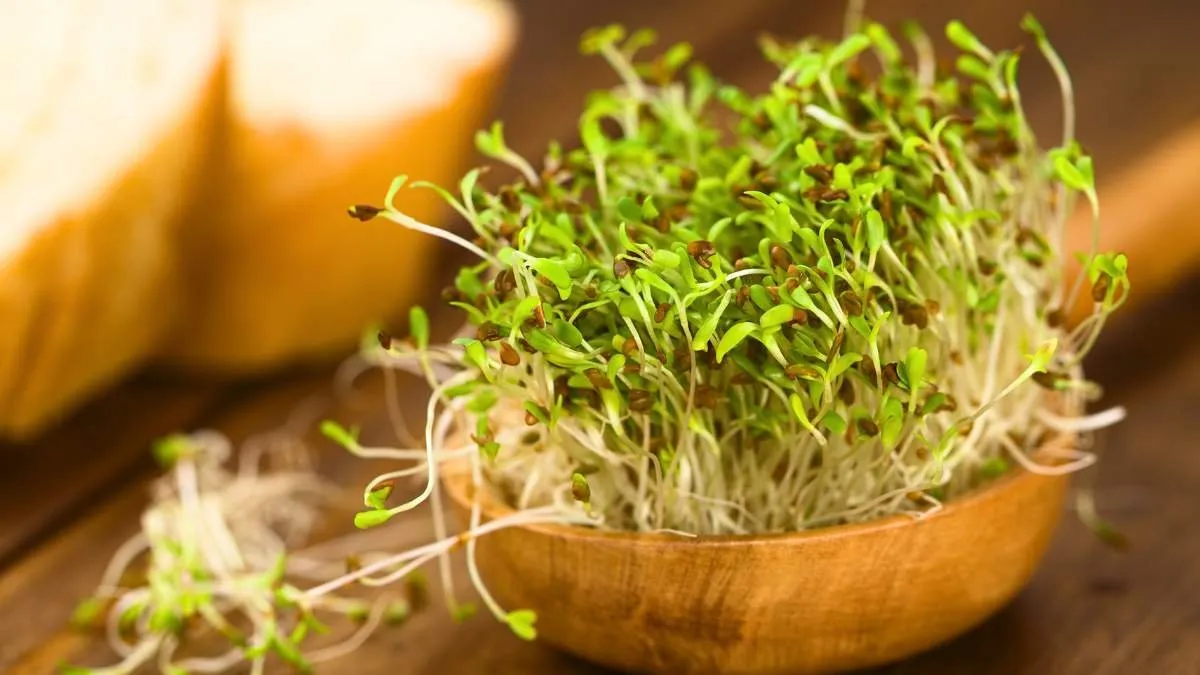
Definition: what is alfalfa?
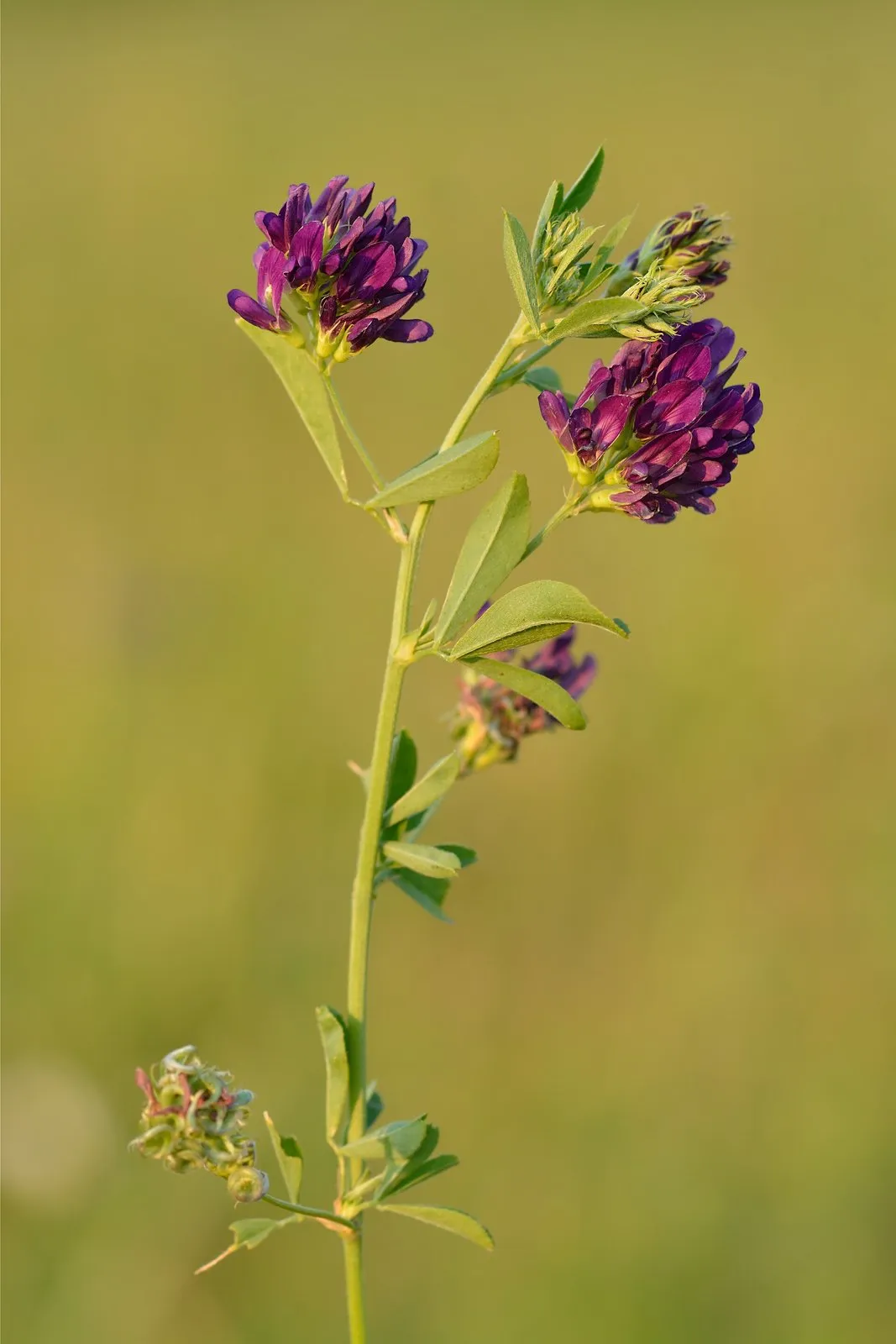
Alfalfa, known scientifically as Medicago sativa, is a leguminous plant widely used in both animal feed and human food. Native to south-central Asia, this plant is valued for its many nutritional benefits and its versatility in the kitchen. Alfalfa sprouts, in particular, are highly prized in salads and smoothies for their mild flavour and healthy properties.
Botanically it belongs to the Fabaceae family, that of the legumes, and it’s a perennial forage crop: it’s sown once and cut for years. Botanical sources place its specific origin in Persia, present-day Iran, from where it travelled first to Greece and, over the centuries, to the rest of the world.
Where the word “alfalfa” comes from
The name doesn’t speak of salads: it speaks of horses. “Alfalfa” comes from Old Persian aspa-asti, literally “horse food” (aspa, horse; asti, food). It’s one of those words that keep intact the reason the plant was cultivated for centuries.
The journey to Spanish is long and passes through four languages: from Old Persian to Pahlavi (aspast or aspist), from there to Aramaic (ˀaspestā), then to Arabic —faṣfaṣa in the classical form, faṣṣa in the Moroccan dialect— and finally to Spanish, which takes it from the Arabic al-faṣfaṣ with its article attached, like so many other pantry words. The word most likely entered through Valencia in the thirteenth century: there are Valencian texts from that period that already write “alfálfe”.
From fodder for the Persian cavalry to the kitchen
The adoption of alfalfa as a crop dates back to the Bronze Age, in Persia, and had a very specific purpose: feeding the horses that arrived from Central Asia. Hence its name, and hence also its first documented journey westward.
It reached Greece around 490 BC, during the first Greco-Persian War, and almost certainly in the most prosaic way possible: as seeds within the fodder of the Persian cavalry. Once established in the Mediterranean, alfalfa became the standard forage of classical antiquity for feeding horses, to the point that it’s documented in writing by both Virgil and Pliny the Elder.
The plant from the inside: deep roots and nitrogen from the air
Two traits explain why alfalfa has been grown continuously for millennia. The first is its root system: the roots usually reach between 2 and 3 metres deep, and can reach 15 metres or more when they need to seek out groundwater. That makes it resilient in soils and climates where other forage crops don’t hold up.
The second is that it feeds on air. Alfalfa fixes atmospheric nitrogen in symbiosis with the bacterium Sinorhizobium meliloti, which colonises its roots; the result is that it naturally improves soil fertility as it grows, instead of depleting it. Add to that the longevity of the crop, which isn’t replanted each season.
| Trait | Figure |
|---|---|
| Usual root depth | 2-3 m |
| Maximum documented depth | 15 m or more |
| Crop lifespan | 5-12 years (up to 20 in optimal conditions) |
| Nitrogen-fixing symbiotic bacterium | Sinorhizobium meliloti |
| Botanical family | Fabaceae (legumes) |
Where it’s grown: the world map of alfalfa
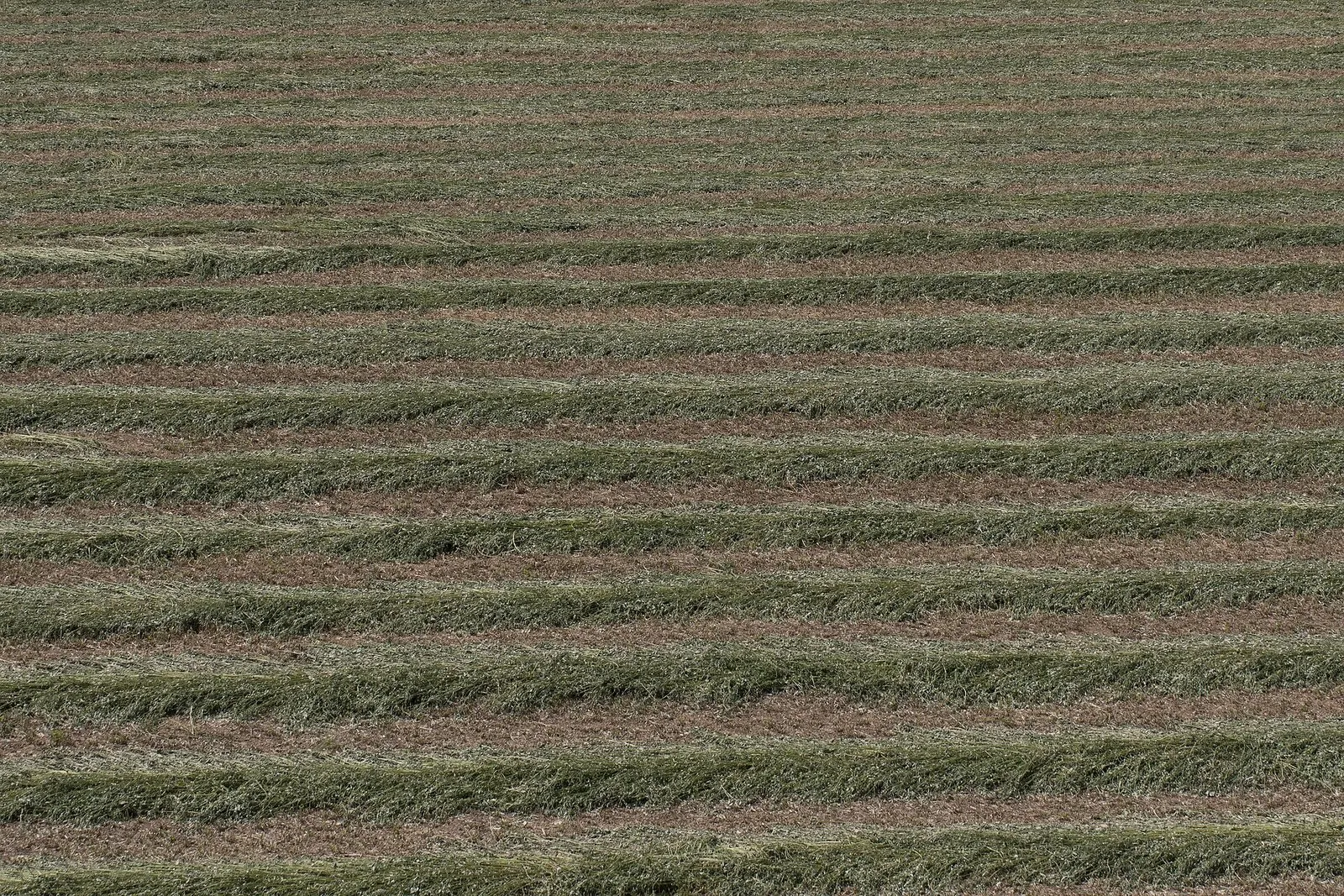
Alfalfa is one of the most widespread crops on the planet, even though almost none of that volume ever ends up on a plate: world production was estimated at around 436 million tonnes (2006 figure) and the area under cultivation at around 30 million hectares (2009), of which North America accounts for 41%.
| Country | Area under cultivation (2009) |
|---|---|
| United States | 9 million hectares |
| Argentina | 6.9 million hectares |
| Canada | 2 million hectares |
| Russia | 1.8 million hectares |
| Italy | 1.3 million hectares |
| China | 1.3 million hectares |
Argentina, second in the world
The figure that stands out most in that table is second place: Argentina grows 6.9 million hectares of alfalfa, more than double Canada and behind only the United States. It’s by far the largest producer in the southern hemisphere by area.
It’s worth not going beyond the figure. It’s tempting to link that number to Argentine pasture-based livestock farming and, from there, to asado; but the explicit link between the two isn’t documented in the sources consulted for this entry, so here it stays with what is verified: the area.
Spain: a living forage crop, without a designation
In Spain there’s no alfalfa with a designation of origin nor a distinct culinary use, but there is an active and monitored crop. The Ministerio de Agricultura, Pesca y Alimentación includes it in its official fodder crop statistics, with provisional data by autonomous community and province for the 2025 season. And there’s an agronomic clue that confirms it from the other side: the lucerne flea (Sminthurus viridis), one of its pests, is described as “significant across the whole of southern Spain”. Where there’s a pest, there’s a crop.
Nutritional characteristics of alfalfa
Alfalfa is an excellent source of essential vitamins and minerals. Below is a detailed table of its nutritional values per 100 grams of alfalfa sprouts:
| Nutrient | Amount |
|---|---|
| Energy | 23 kcal |
| Carbohydrates | 3.78 g |
| Protein | 4 g |
| Total fat | 0.7 g |
| Saturated fat | 0.1 g |
| Unsaturated fat | 0.5 g |
| Fibre | 2.5 g |
| Simple sugars | 0.2 g |
| Sodium | 6 mg |
| Vitamin A | 155 IU |
| Vitamin C | 8.2 mg |
| Vitamin K | 30.5 µg |
| Folic acid (B9) | 36 µg |
| Calcium | 32 mg |
| Potassium | 79 mg |
| Phosphorus | 70 mg |
Alfalfa stands out for being low in calories and fat, and rich in protein and fibre, which makes it an ideal food for a balanced diet.
Those figures match those published by independent sources for the raw sprout: around 93% water, 4% protein, 2% carbohydrates, 1% fat and 23 kcal per 100 grams. The nutrient that stands out most in relative terms is vitamin K: 100 grams of sprouts provide the equivalent of a quarter of the daily reference value.
Health benefits
Bone strengthening
Alfalfa contains high levels of calcium and phosphorus, essential for strengthening bones and teeth, helping to prevent diseases such as osteoporosis.
Cardiovascular health
Alfalfa sprouts help reduce cholesterol levels thanks to their phytoestrogen and saponin content, which can contribute to better cardiovascular health.
Antioxidant properties
Rich in vitamins C and E, alfalfa helps fight oxidative stress in the body, protecting cells from damage caused by free radicals. It is, in fact, one of the plant examples cited on the glossary page dedicated to antioxidants.
Digestive improvement
Alfalfa sprouts are a good source of fibre, which improves digestion and prevents constipation. In addition, its regular consumption can promote a healthy gut flora.
Safety: what you should know before eating it raw
This is the part usually missing from lists of “alfalfa benefits”, and the one most worth reading. There are two distinct risks, with two distinct causes.
The first is chemical. Raw alfalfa seeds contain canavanine, a non-protein amino acid capable of triggering symptoms similar to those of lupus erythematosus in susceptible people. The effect is reversible: it disappears once consumption stops. This is the reason —rarely explained until now— why people with lupus are advised to avoid alfalfa.
The second is microbiological and affects all sprouted seeds, not only alfalfa. Sprouts are classed as a high-risk food for Salmonella and E. coli, and they lie behind numerous documented product recalls and outbreaks of poisoning, especially in the United States. The reason is structural: it takes just one surviving bacterium in a kilo of seeds to contaminate an entire batch, because the constant heat and humidity that germination requires are exactly the conditions that favour bacterial growth. That’s why the FDA and Health Canada require specific manufacturing guidance for sprouts —good agricultural and hygiene practices, seed disinfection and microbiological testing before sale.
To put the scale of the category’s risk into perspective, it’s worth recalling the largest European outbreak linked to sprouted seeds: Germany, 2011, caused by E. coli O104:H4 in fenugreek seeds imported from Egypt, with 2,987 cases without haemolytic uraemic syndrome and 855 with it, and 51 deaths in Germany (53 in total). It wasn’t alfalfa —it was fenugreek— but it was the same product family and the same contamination mechanism.
| Who | Recommendation | Reason |
|---|---|---|
| People with lupus or susceptible to it | Avoid alfalfa | Canavanine in raw seeds |
| Older people | Don't eat raw sprouts of any kind | Microbiological risk (Salmonella, E. coli) |
| Pregnant women | Don't eat raw sprouts of any kind | Microbiological risk |
| Immunocompromised people | Don't eat raw sprouts of any kind | Microbiological risk |
Culinary uses of alfalfa
What reaches the table is almost always the sprouts, germinated from the seed and eaten raw, although the plant’s leaves are also nutritious. Their role on the plate is that of a fresh, crunchy element, mild in flavour, that competes with nothing.
Salads
Alfalfa sprouts are popular in salads, adding a crunchy, fresh touch. They can be combined with other vegetables, fruit and light dressings. The sandwich is their other classic destination, for the same reason: texture without an invasive flavour.
Smoothies and juices
Adding alfalfa sprouts to fruit smoothies increases their protein and vitamin content, providing a nutritious, energising drink.
Infusions
Alfalfa infusions are used for their digestive properties and can be a good option for improving how the urinary system works.
Soups and stews
Alfalfa can be added to soups and stews, adding nutritional value without significantly altering the flavour of the dishes.
At Taste 1973: alfalfa in Diego Schattenhofer’s cooking
In the research into Canarian goat carried out at Taste 1973, alfalfa doesn’t come in as the lead but as a counterpoint: the fresh, raw vegetable element that lightens a fatty, matured meat. It appears in two dishes published as part of the work on gastronomic innovation in goat products.
The first is the matured goat tartare with smoked cheese foam and seaweed crisp, where the alfalfa sprouts top off the plating of the dish. The second belongs to the goat charcuterie line: a goat liver pâté in which alfalfa is combined with local aromatic herbs.
It’s a use consistent with everything above. In a kitchen that works with long maturations, the raw sprout brings exactly what the meat lacks: water, freshness and a texture that breaks.
Related terms
- Antioxidants — the family of compounds referred to in the section on alfalfa’s vitamins C and E; its page already cites it as a plant example.
- Amino acids — the group canavanine belongs to, although it’s an atypical case: it isn’t part of proteins.
- Non-essential amino acids — the other side of the classification, useful for placing what plant protein actually provides.
- Water activity (a_w) — the parameter that explains why a warm, humid environment, like that of germination, favours microbial growth.
- Gastronomic innovation in goat products — the two Taste 1973 dishes in which alfalfa sprouts appear.
Sources consulted
Frequently asked questions
What is alfalfa?
Where does the word "alfalfa" come from?
What health benefits does alfalfa have?
How can alfalfa sprouts be eaten?
Is alfalfa safe for everyone?
Why should people with lupus avoid alfalfa?
Are raw alfalfa sprouts safe for everyone?
How many calories do alfalfa sprouts have?
Where is most alfalfa grown in the world?
Why is alfalfa said to improve the soil?
Does chef Diego Schattenhofer use alfalfa?
Also in the glossary
Alkalisation
A process that decreases the amount of acid in a solution.
Allicin
Allicin is an organosulfur compound that forms when raw garlic is crushed or chopped.
Amino acids
Amino acids are organic compounds that combine to form proteins, essential for the function and structure of living cells.