Water Activity (a_w) in Gastronomy: Food Science and Preservation
- Term
- Water activity (a_w)
- Tags
- Food science · Preservation · Maturation
- Published
- Updated
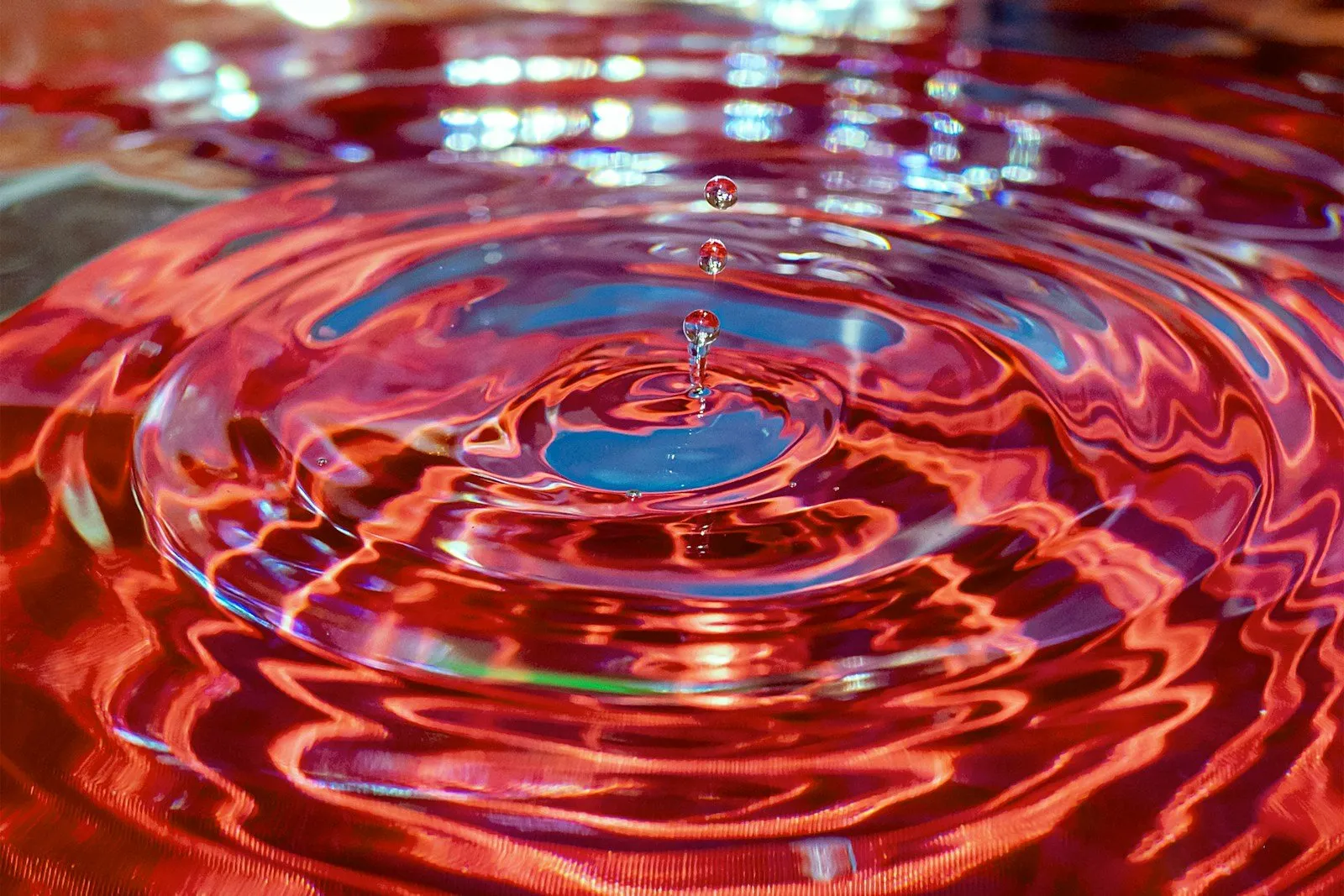
Water activity (a_w) is a crucial concept in food science that refers to the amount of free water available to take part in chemical reactions and microbial growth in food. It should not be confused with total water content, since water activity focuses on the fraction of water that can actually influence a food’s stability, preservation and quality.
What water activity actually measures
Behind that general idea lies a precise definition: a food’s water activity is the ratio between its water vapour pressure and the vapour pressure of pure water at the same temperature.
a_w = p / p₀
p is the food’s water vapour pressure and p₀ that of pure water. The result is a unitless number on a scale from 0 (no available water) to 1 (pure water). Because both pressures in the formula depend on temperature, an a_w value is only comparable with another measured at the same temperature.
“Water activity” is not general vocabulary but technical terminology from food science and technology: the Real Academia Española’s Diccionario de la lengua española does not include an entry for “actividad de agua” or “actividad acuosa”.
Free water and bound water
Part of a food’s water is bound to its molecular structure and unavailable; water activity measures only the other fraction, the one that remains free and that microorganisms and spoilage reactions can make use of.
That is why total moisture content does not predict a product’s stability: it can have a lot of water and still be stable if that water is bound, or little water and still be unsafe if it is free.
Where the concept comes from
The notion of “activity” of a substance dissolved in a non-ideal solution — the thermodynamic foundation on which water activity is later built — comes from the physical chemistry of solutions developed by Gilbert N. Lewis and Merle Randall in the early twentieth century.
Food science’s own milestone has a name and a date: in 1953 the microbiologist W. J. Scott showed that microbial growth in food is governed by water activity rather than by total water content, a finding regarded as foundational in food microbiology. Four years later he established the concept of minimum water activity for microbial growth, which still organises today’s threshold tables. In the Spanish-speaking world the parameter has been established for decades: the FAO’s agricultural science system (AGRIS) catalogues Spanish-language studies on water activity in Spanish cheese varieties and in “intermediate-moisture foods”.
Microbiological thresholds
Each group of microorganisms stops growing below a known a_w value. Most bacteria do not grow below 0.91, although some halophilic bacteria — adapted to high salinity — withstand as low as 0.75. Moulds and yeasts tolerate greater dryness, which is why a cured sausage grows mould before it becomes dangerous.
| Microorganism | Minimum a_w to grow |
|---|---|
| Clostridium perfringens and Escherichia coli | 0.95 |
| Salmonella spp. | 0.93 |
| Listeria monocytogenes | 0.92 |
| Most bacteria | 0.91 |
| Most yeasts | 0.87-0.91 |
| Most moulds | 0.80-0.87 |
| Halophilic bacteria | 0.75 |
| Any microorganism, including xerophiles and osmophiles | below 0.60 there is no growth |
European regulation also counts a_w
One of these thresholds is not merely technical guidance: it is a legal criterion and has been in force for years. Regulation (EC) No 2073/2005 on microbiological criteria for foodstuffs, in note 8 of chapter 1 of Annex I, considers a ready-to-eat food not to support the growth of Listeria monocytogenes when it has a pH of 4.4 or below, or a water activity of 0.92 or below, and also when it combines a pH of 5.0 or below with an a_w of 0.94 or below. That combination explains why acidification and drying are used together: each barrier on its own can fall short. The other figures in the table above are technical reference values in food microbiology, not legal criteria.
In cured products, research refines those values. A peer-reviewed study on Parma ham concluded that the reduction in available water, through salt diffusion combined with dehydration, is the main limiting factor for the growth of Clostridium botulinum: none of the samples with an a_w below 0.97 showed growth, and the safety threshold at the end of the ham’s traditional resting period sits at 0.96.
Values by food
| Food | Typical a_w | What it means |
|---|---|---|
| Pure water | 1.00 | Top of the scale |
| Fresh meat and fish | 0.98-0.99 | Highly perishable without refrigeration |
| Cured ham, fermented sausages and salted Cheddar-type cheese | 0.85-0.93 | Beyond the reach of most pathogenic bacteria, but still habitable for moulds and yeasts; at the upper end of the range, Listeria and Salmonella can still grow |
| Honey | 0.50-0.70 | Keeps without refrigeration or preservatives |
| Nuts | ≈ 0.60 | At the threshold that stops microbial multiplication |
Honey is the most instructive case: it contains water, but its sugars bind it so tightly that the free fraction sits between 0.5 and 0.7. Nuts reach the same point through drying.
Why water activity matters in gastronomy
In gastronomy, understanding water activity is essential for guaranteeing food safety and quality. Water activity levels directly affect the proliferation of microorganisms and the enzymatic reactions that can lead to food spoilage. Managing water activity therefore lets chefs and food technologists design more effective preservation processes and extend products’ shelf life.
Controlling water activity
Water activity is controlled through various techniques, such as dehydration, the addition of solutes (for example salt or sugar), and pH adjustment. These methods reduce the amount of free water, inhibiting pathogen growth and enzymatic activity, without necessarily altering the food’s total water content. This approach is key to creating safe, high-quality products.
- Dehydration and drying, in air, in the sun or in an oven: water is removed from the food.
- Freeze-drying: the product is frozen and the ice sublimates under vacuum; the water leaves without passing through a liquid state, so the structure does not collapse.
- Salting and curing with sugar: the salt used in salting and the sugar in syrups, jams and confectionery bind the remaining water and make it unavailable.
- Smoking: adds compounds with some antimicrobial effect to the drying process.
Stopping halfway is the common mistake: a product dried down to 0.93 is no longer fresh, but it is not stable either, because that is exactly where moulds and yeasts feel comfortable. Either you go below the threshold or you add another barrier — cold, acidity, packaging.
Applications in modern cooking
Controlling a_w is not only about preservation: it also shapes texture and flavour.
Textures and flavours. Manipulating a_w alters a food’s sensory perception — from crisp and airy to soft and creamy — without touching other aspects of the product, and since lowering it means concentrating solutes, the reduction intensifies flavour. In pastry and confectionery, where texture depends on an exact point of available moisture, that precision is what separates a stable product from one that cakes and hardens.
Preservation without preservatives. Inhibiting microbial growth by physical means extends shelf life without artificial preservatives and preserves natural flavours. Freeze-drying produces ingredients that keep their shape, colour and flavour at a very low a_w and rehydrate when served.
Experimental cooking. The avant-garde uses the same parameter in spherifications and “false caviars” made from juices or stocks, the same territory in which xanthan gum, agar-agar and the gelatine of an aspic work.
Sustainability. Extending shelf life by physical means reduces waste and brings the product closer to its most natural version.
In the Canary Islands: jareas, tollos and goat cheeses
Water activity is not a Canarian term: it is a universal parameter, with no local name or island-specific meaning. What is Canarian is the centuries-old use of the principle it describes.
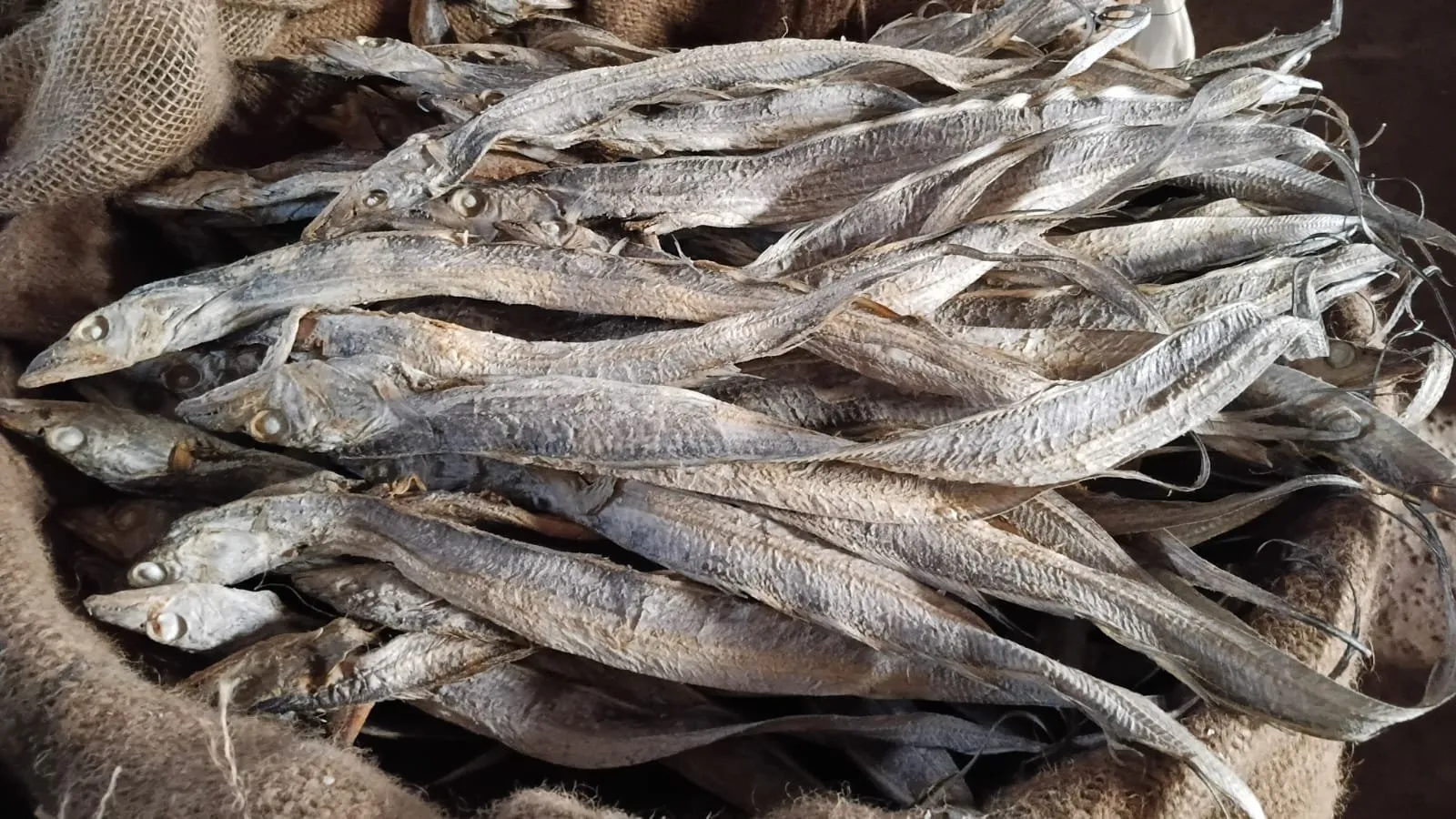
The islands have a documented tradition of preserving fish by sun-drying and salting. Jareas are fish split open through the belly, washed in seawater and left to dry in the air and wind; tollos are strips of tope shark or other sharks dried in the sun. Both techniques are especially rooted in Fuerteventura, Lanzarote and La Graciosa, arid islands where fish was an essential part of the diet and neither refrigeration nor freezing existed. Salt, sun and wind: the three tools that lower a_w. Something similar happens with the islands’ two goat’s-milk cheeses with Protected Designation of Origin, Queso Majorero (Fuerteventura, Majorera goat) and Queso Palmero or Queso de La Palma (La Palma, Palmera goat, raw milk): their maturation depends on controlling moisture and salt.
That relationship is conceptual, not textual: none of the sources consulted describes jareas, tollos or these cheeses using the term “water activity”, and no institutional or academic source publishes an a_w figure for Majorero or Palmero cheese. The closest is a 2021 study by researchers at the Canary Islands Institute for Agricultural Research (ICIA) on Palmero cheese over 90 days of maturation, with measurements at 15, 30, 60 and 90 days: it recorded a drop in moisture from 36.93% to 29.20% alongside an increase in hardness, fracturability and gumminess, but it measured moisture, not water activity. These are related parameters, not interchangeable ones.
In Diego Schattenhofer’s work
The documented use in this kitchen is not traditional but laboratory-based, and the chef himself describes it. In The science behind meat maturation, Diego Schattenhofer explains that adapting maturation techniques to Canarian goat meat requires “constant monitoring of water activity (Aw) to guarantee food safety”, and mentions it again among the process’s safety protocols, as “regular monitoring… to prevent microbial growth”.
That control coexists with two other parameters: Canarian goat maturation times run from 14 to 21 days, shorter than those for beef, with specific adjustments to temperature and humidity. These are Canarian goat maturation techniques designed for an animal that does not behave like cattle. The scientific perspective comes from Dr Fresno, of ICIA, who collaborates with the chef on the matured goat meat study involving the genetics and nutrition of Canarian goat breeds: the same institution behind the Palmero cheese study cited above.
Conclusion
Water activity is a pillar of culinary science, offering a scientific approach to tackling challenges in food safety, preservation and quality. Understanding and managing it properly opens the door to culinary innovation and to improved preservation practices across the food industry.
Related terms
- Acidification — the other major barrier; European regulation combines pH and a_w in a single criterion.
- Xanthan gum — a natural polysaccharide used as a thickener and stabiliser.
- Agar-agar — a natural gelling agent extracted from red algae.
- Aspic — a savoury jelly made from meat or fish stock, clarified and set with collagen-rich bones.
- Albumin — a protein that binds water and builds textures in cooking.
Sources consulted
- Encyclopaedia Britannica, “water activity”
- Real Academia Española, Diccionario de la lengua española, “agua” (no entry for “actividad de agua” or “actividad acuosa”)
- Wikipedia (en), “Thermodynamic activity”
- Water Activity in Foods: Fundamentals and Applications, historical introduction (Wiley Online Library)
- Fundación Aquae, “Efecto de la actividad de agua de los alimentos en su conservación”
- Higiene Ambiental, “Actividad del agua y seguridad alimentaria”
- Higiene Ambiental, “Cómo incide la presencia de agua en la vida útil de los alimentos”
- EUR-Lex, Regulation (EC) No 2073/2005 on microbiological criteria for foodstuffs (consolidated text)
- Merialdi et al. (2016), “Study on Potential Clostridium botulinum Growth and Toxin Production in Parma Ham”, PMC
- Wikipedia (es), “Actividad acuosa”
- AGRIS (FAO), records on water activity in food
- Álvarez, S. and Fresno, M. (2021), Palmero cheese during maturation, Animals (MDPI), DOI 10.3390/ani11010058
- Pellagofio, “Con las jareas, al sol y el viento la mar entera”
- CanariWiki (Government of the Canary Islands), “Tollos”
- Ministry of Agriculture, Fisheries and Food, Queso Palmero PDO factsheet
 — view the full-size photo
Fish dried in the sun: the oldest way of lowering a food's available water, the same principle behind Canarian jareas and tollos. 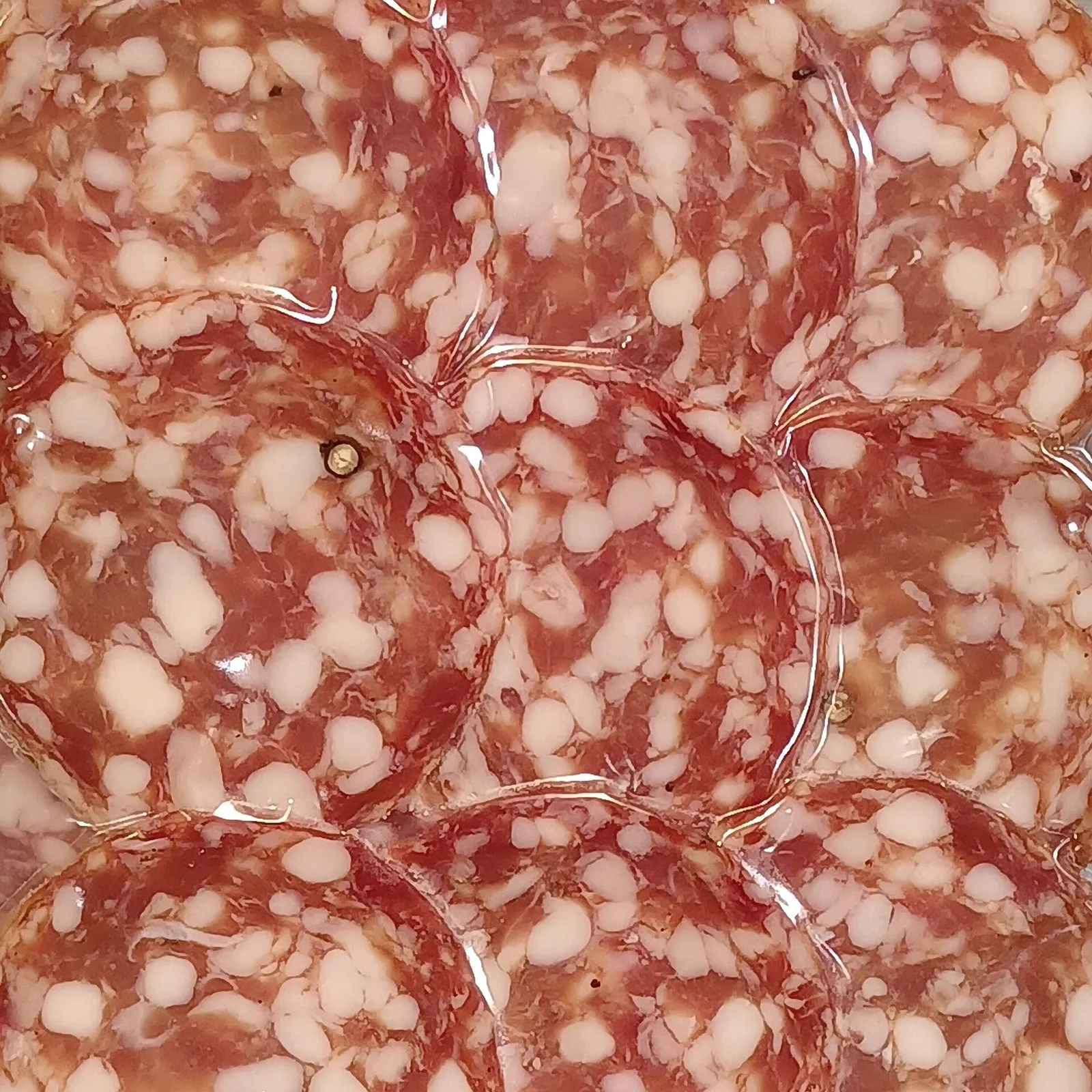 — view the full-size photo
Fermented, matured sausages sit between 0.85 and 0.93 water activity: beyond the reach of most pathogenic bacteria. 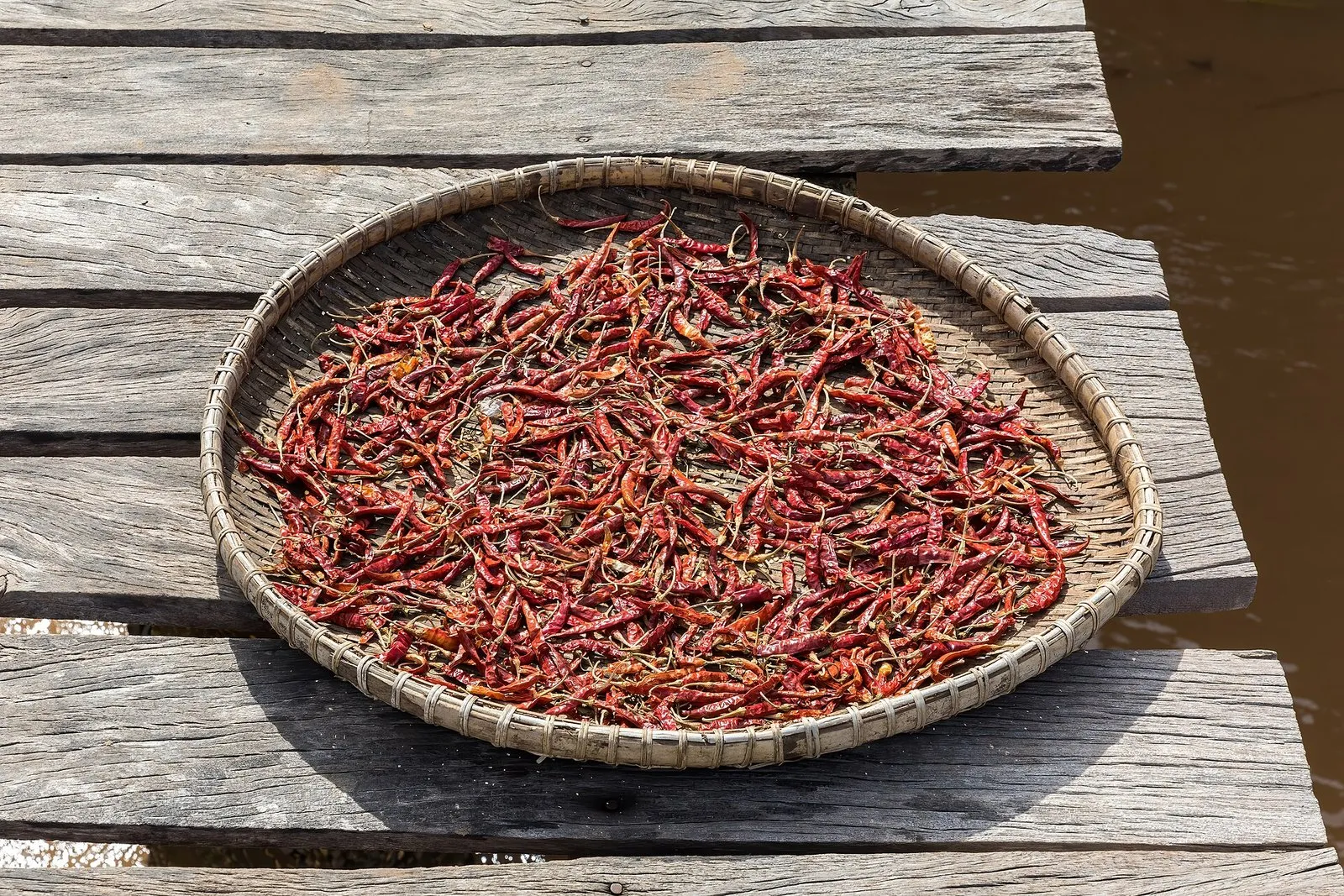 — view the full-size photo
Sun-drying is not only for animal protein: it also concentrates and stabilises a vegetable, such as these chillies.
Photos: 1. Sannidhishetty (opens in a new tab) (CC0 (opens in a new tab)) · 2. Fumikas Sagisavas (opens in a new tab) (CC0 (opens in a new tab)) · 3. Basile Morin (opens in a new tab) (CC BY-SA 4.0 (opens in a new tab))
Frequently asked questions
What is water activity (a_w)?
What is the difference between water activity and water content?
Why is water activity important for food safety?
What water activity stops the growth of bacteria, moulds and yeasts?
Which foods have high water activity and which have low?
How is a food's water activity reduced?
Is water activity used in Diego Schattenhofer's cooking?
Does water activity have any traditional roots in the Canary Islands?
Also in the glossary
Xanthan gum
Xanthan gum is a natural polysaccharide used as a thickening and stabilising agent in food.
Acidification
Acidification is an essential culinary and preservation method that plays a fundamental role in modern and traditional gastronomy.
Agar-agar
Agar-agar is a natural gelling agent extracted from several species of red algae such as Gelidium, Gracilaria and Eucheuma.