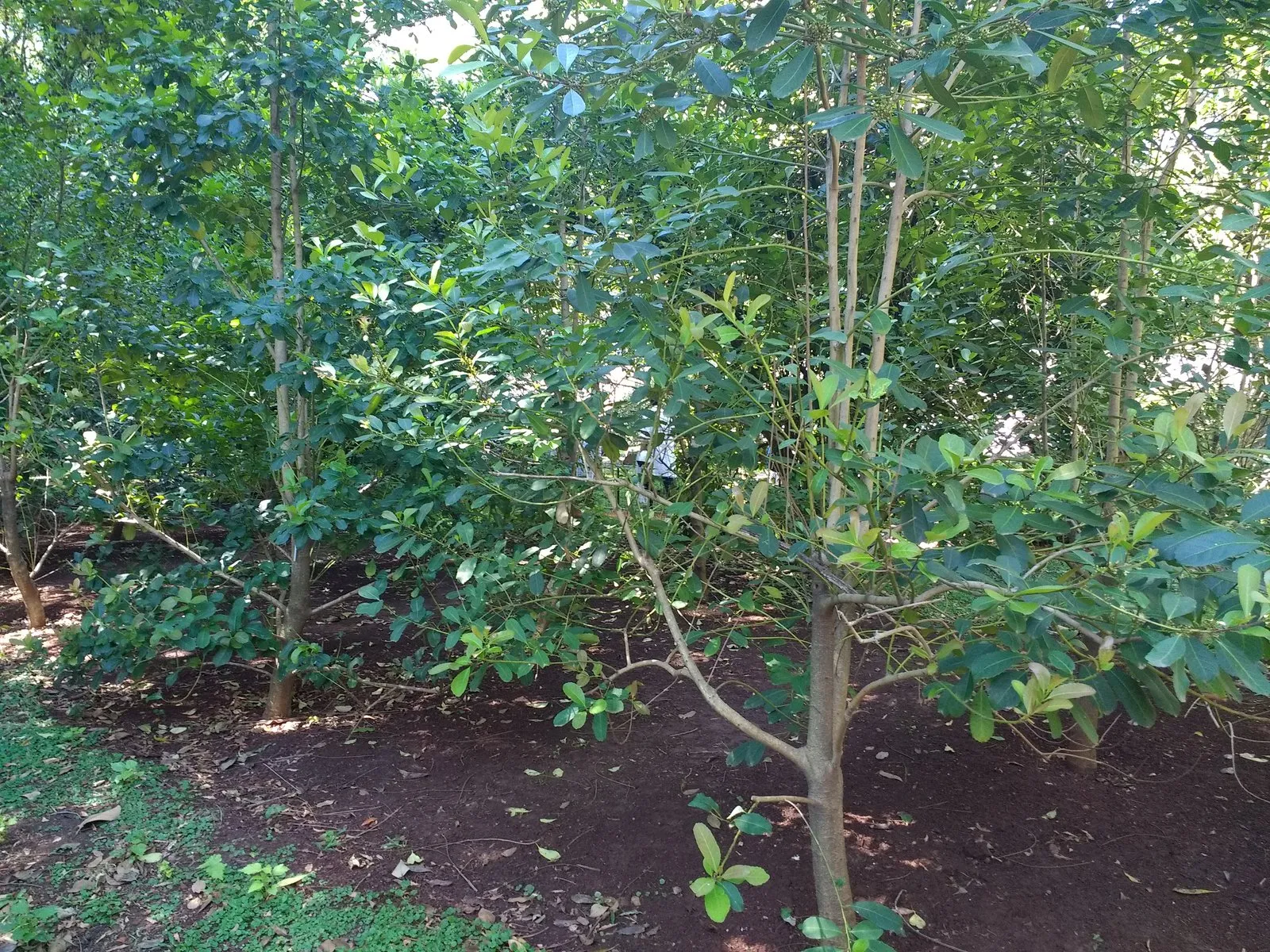
Yerba mate is the dried and lightly toasted leaf of Ilex paraguariensis, the infusion that in Argentina the Food Code defines and the INYM regulates. It is not a tea and it is not a coffee powder. It is a holly, a shrub or a small evergreen tree, whose leaf is dried, toasted gently and chopped.
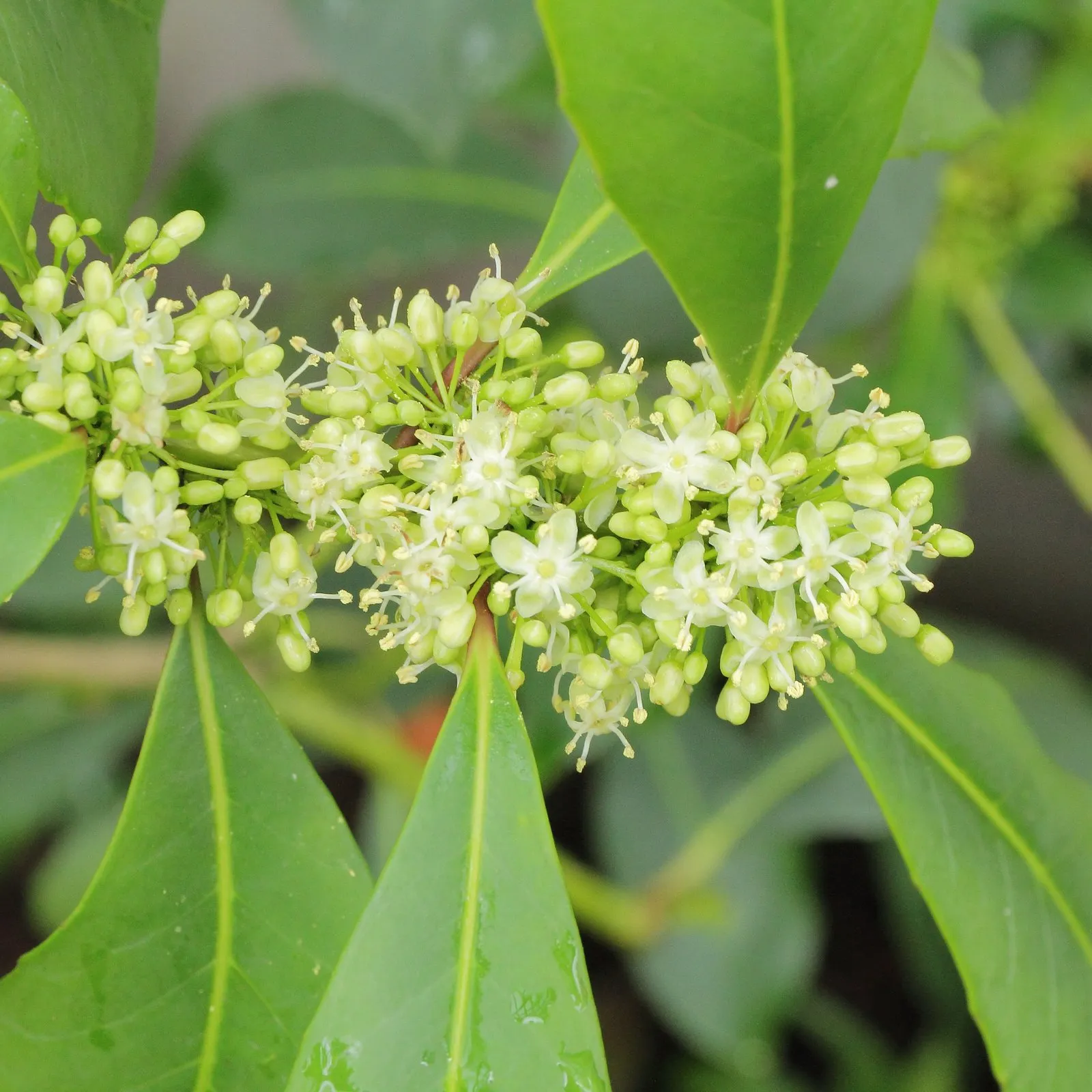
The plate is a specimen of that species in the botanical garden of Buenos Aires. The gallery adds the branch photographed in Gothenburg and the Köhler plate, where the flower and the fruit can be seen. The pantry product is the leaf already dried. The tree explains which plant it comes from.
The species
Ilex paraguariensis Saint Hilaire is the only species that the National Institute of Yerba Mate admits in the definition in force. The INYM says so by citing article 1193 of the Argentine Food Code: under the name yerba mate or yerba is understood the product of the dried, lightly toasted and chopped leaves, of that species and of no other, mixed or not with fragments of young dried branches, petioles and floral peduncles.
That sentence closes a discussion the institute itself had to come out and clarify: the leaf, the powder and the stick are parts of elaborated yerba, not a strange addition. The powder is broken leaf. The stick is chopped young branch, inside a ceiling. Article 1194, at the point the INYM reproduces, calls yerba mate elaborada, or yerba mate elaborada with stick, the one that has no less than 65 % dried leaves, broken or pulverised, and no more than 35 % of coarse or fine stick, chips and fibre of the same.
Those two percentages are of composition, not of a cup. They say what the pack called yerba elaborada with stick may carry. A “stemless” yerba is another category of the same code, with less stick. The name on the pack has to match the category. The institute recalls, in the same note, that it collaborates with the health bodies in the quality control of what is elaborated.
Caffeine, not another molecule
In everyday speech the word mateine circulates, as if mate had a stimulant of its own, distinct from coffee. The National University of the Centre measured it in commercial yerba and said so at a congress of the National University of the Litoral: mateine does not exist as a compound. What there is is caffeine, the same trimethylxanthine of coffee and of tea. On the packs they reviewed it did not say “mateine”. It said, when it said anything, caffeine. The yerbas whose labelling presented them as more stimulating carried more caffeine, and in some case caffeine added to what the leaf already brings.
That does not turn mate into a coffee. The plant changes, the toast changes, the polyphenols change and the way of drinking it changes. The chemical name of the stimulant does not change. Saying mateine on a menu is using the nickname. Saying caffeine is using the molecule.
Brewing in the gourd
Cebar is the gesture, not a synonym of infusing in a teapot. The monograph of the International Agency for Research on Cancer, in the volume on coffee, tea and mate, describes it like this: ground yerba is put into the gourd up to about three quarters, lukewarm water is poured first — from 60 °C to 80 °C — on the hollowed side, the yerba swells in a few minutes and then the bombilla goes in to the bottom. Afterwards small volumes of hotter water are poured, from 90 °C to 95 °C, around the bombilla, and one drinks until air comes in. It is repeated. When the taste falls, the charge is finished.
The bombilla is straw and strainer at once. The water of the first pour is the lukewarm one, the one that settles the leaf. That of the following pours is the hot one. Confusing them — starting already with the water at the edge of the boil — tightens the bitterness and burns the yerba on top. There is no minute on the clock: the cycle is to pour and drink until the charge is spent.
In sensory appreciation mate is described by bitterness, body and the green of the toasted leaf, not by a coffee foam. Anyone tasting it in a cup, in a single infusion, is tasting another preparation: the monograph speaks of the gourd cycle. Both are made with the same plant and they do not taste the same, because the water and the contact time are not the same.
In the kitchen
Outside the gourd, the leaf goes where a green bitterness and a toasted base are wanted: a short syrup, an ice cream, a meat sauce that wants that bitterness instead of a chocolate. The dose is that of an infusion, not of a spice by the spoonful. A spent leaf, one that has already given several charges, has little left to lend. The new yerba is used, the one from the pack, and the name of the category is respected: with stick or without it.
It is not a fermentation. The code defines it as dried and lightly toasted leaf. The resting that some houses give the yerba before milling is a rest of the dry product, and it is not in the sentence of the article that the INYM cites as the definition. What that sentence does fix is the species, the drying and the gentle toast. Aromatics are another family of leaf. Mate resembles them in the format — dried leaf, infusion — and separates from them in the species and in the caffeine.
Related terms
- Sensory appreciation — how bitterness and body are described without calling this plant a tea.
- Aromatics — other dried leaves for infusion, of another species.
- Fermentation — another path of transformation, which is not the drying and the gentle toast of this leaf.
- Umami — another basic taste; mate is not defined by glutamate, it is defined by the species and by the caffeine.
Sources
 — view the full-size photo
Ilex paraguariensis in Gothenburg. The whole leaf, before the drying and the chopping with which the code defines the product. 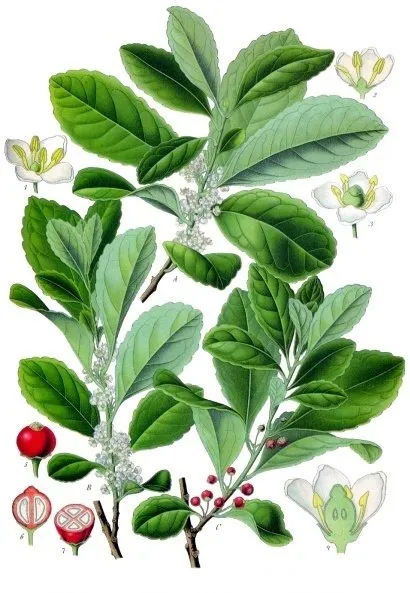 — view the full-size photo
Köhler plate of mate: branch, flower and fruit. It is a pharmacy drawing, not a photograph of a plantation.
Photos: 1. C T Johansson (opens in a new tab) (CC BY-SA 3.0 (opens in a new tab)) · 2. Franz Eugen Köhler, Köhler's Medizinal-Pflanzen (opens in a new tab) (Public domain)
Frequently asked questions
What is yerba mate?
Is mateine distinct from caffeine?
How much leaf and how much stick does elaborated yerba carry?
At what temperature is it brewed in the gourd?
What does cebar mean?
Is mate a tea?
Also in the glossary
Zumaque (sumac)
Sumac is the spice of the dried and ground fruits of Rhus coriaria, a Mediterranean shrub of sour taste, distinct from American poison sumac.
Acidification
Acidification is an essential culinary and preservation method that plays a fundamental role in modern and traditional gastronomy.
Agar-agar
Agar-agar is a natural gelling agent extracted from several species of red algae such as Gelidium, Gracilaria and Eucheuma.