Acidification: The Key to Preservation and Flavour Enrichment in Food
- Term
- Acidification
- Tags
- Techniques · Preservation · Chemistry
- Published
- Updated
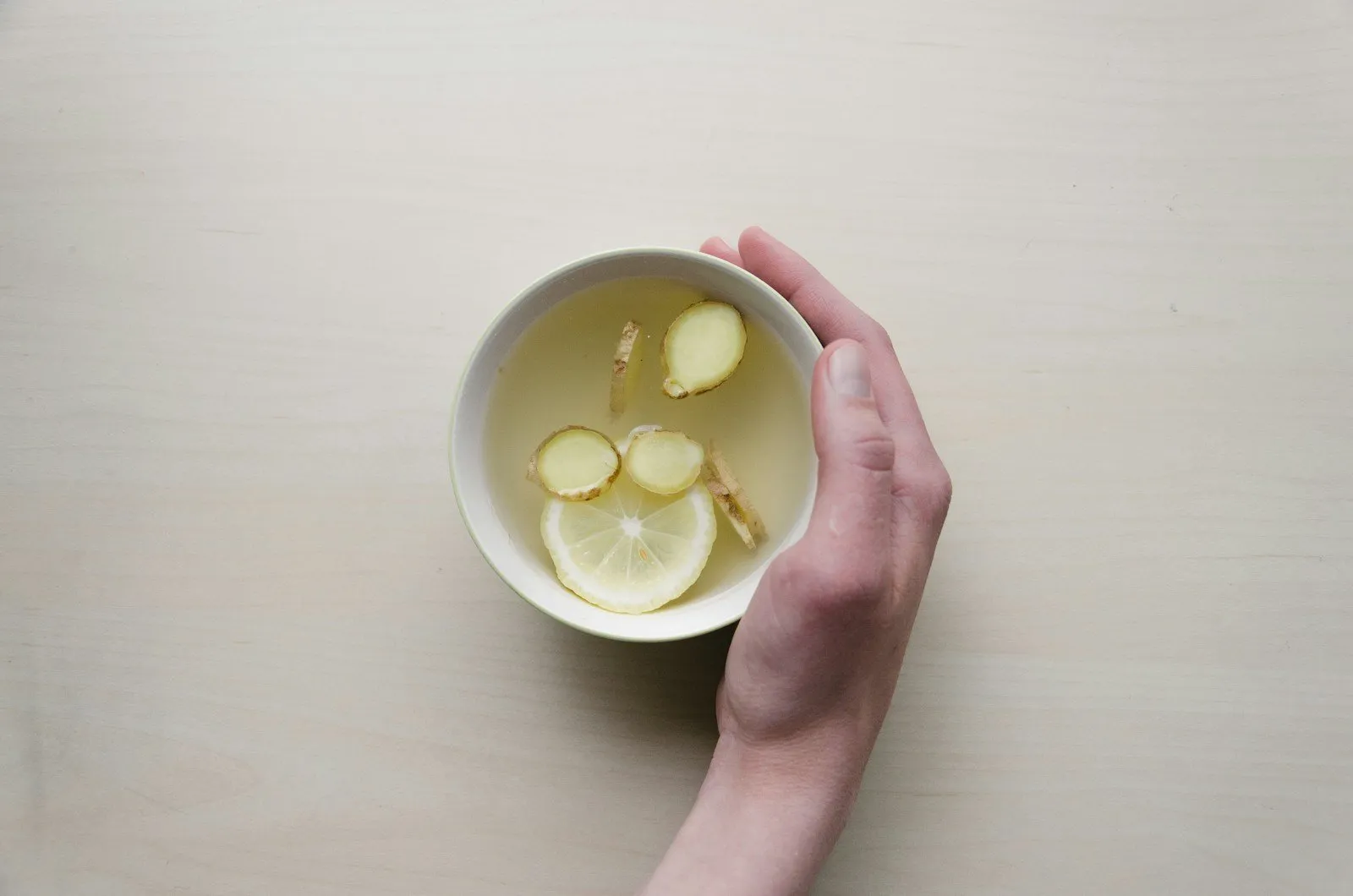
What is acidification?
Acidification is an essential culinary and preservation method that plays a fundamental role in modern and traditional gastronomy. This process involves lowering the pH of food, which not only extends its shelf life by inhibiting the growth of harmful microorganisms, but can also significantly alter its flavour, texture and appearance.
What the dictionary says
Acidify means “to make something acidic”, according to the Diccionario de la lengua española, which records it as a transitive verb and also as a pronominal one. Acidification is, accordingly, the action and effect of acidifying.
The Real Academia has a second, more precise definition, in the Diccionario panhispánico del español jurídico: to acidify is “to make the pH of a given natural resource, such as water or soil, drop through the incorporation of acidic substances”. It is written with the environment in mind, but it describes what happens inside a jar of pickles.
The pH, the figure behind it
pH measures the concentration of hydrogen ions in a solution on a scale from 0 to 14. 7 is the neutral point and a food is considered acidic when its pH is below 7. To acidify is, in numbers, to move that value downwards.
The 4.6 threshold
There is a value that structures all the technical literature on preserves: pH 4.6. Below it, the spores of Clostridium botulinum, the bacterium that causes botulism, cannot germinate or grow. Lowering a product’s pH below 4.6 by adding acid is, literally, the technical definition of “acidifying” used by the US FDA, and the boundary between two regulated categories in the United States (21 CFR, parts 113 and 114):
| Category | Final pH | Water activity |
|---|---|---|
| Low-acid foods | Above 4.6 | Above 0.85 |
| Acidified foods | 4.6 or below, by addition of acid | Above 0.85 |
pH is only half of the equation: the two categories are also defined by a water activity (a_w) above 0.85, the other parameter that decides which microorganisms can grow.
When acid curdles milk
Acidification does not only preserve: it also builds textures. When lactic fermentation lowers milk’s pH to 4.6 — the isoelectric point of caseins — these proteins lose their net electrical charge, stop repelling each other and bind together to form a gel. This is coagulation by acidification, one of the two routes to curdle a cheese; the other is rennet. And because the figure is exactly the same, acid curd is born right on the safety boundary.
In the kitchen: what the acid does
Acidification is carried out by adding acidic substances — vinegar, lemon juice, citric acid — to food. Lowering the pH creates an environment less favourable to bacteria, yeasts and moulds. It is a pillar of preserves and ferments, and of dishes seeking a specific taste balance.
- Preservation. Lowering the pH extends the shelf life of fruit, vegetables and other produce. It is the basis of pickles, preserves and ferments such as kimchi and certain cheeses.
- Flavour. Acid enhances other tastes and aromas, balances the sweetness of a preparation and provides the counterpoint that lifts a flat dish.
- Texture. Depending on the food and the acid, tissues soften or firm up. In meat, marinating in citrus or vinegar denatures the proteins and breaks down the muscle fibres — tenderising it — while slowing bacterial growth as it rests.
- Colour and nutrients. Acid delays the browning of cut fruit and vegetables because it partially inactivates polyphenol oxidase, the enzyme that oxidises them: it preserves colour and helps retain pH-sensitive nutrients, such as vitamin C. It is what squeezed lemon does on a cut apple.
The three acids that do the work
| Acid | E number | Where it comes from | Where it is used |
|---|---|---|---|
| Acetic | E 260 | Vinegar fermentation | Pickles, escabeches, marinades |
| Lactic | E 270 | Lactic fermentation | Cheeses, fermented vegetables and meats |
| Citric | E 330 | Citrus fruit | Drinks, preserves, antioxidant |
In the European Union all three are regulated by Regulation (EC) No 1333/2008 on food additives, which groups them as “acidity regulators”: citric acid and its salts in the E 330-333 block, lactic acid and lactates in E 270 and E 325-327. In perishables such as fish, citric and lactic acid are also used as natural antimicrobials and antioxidants. Citric acid even has a birth date in the laboratory: Carl Wilhelm Scheele is credited with isolating it from lemon juice in 1784, and its industrial production began in Italy around 1860.
Practical applications
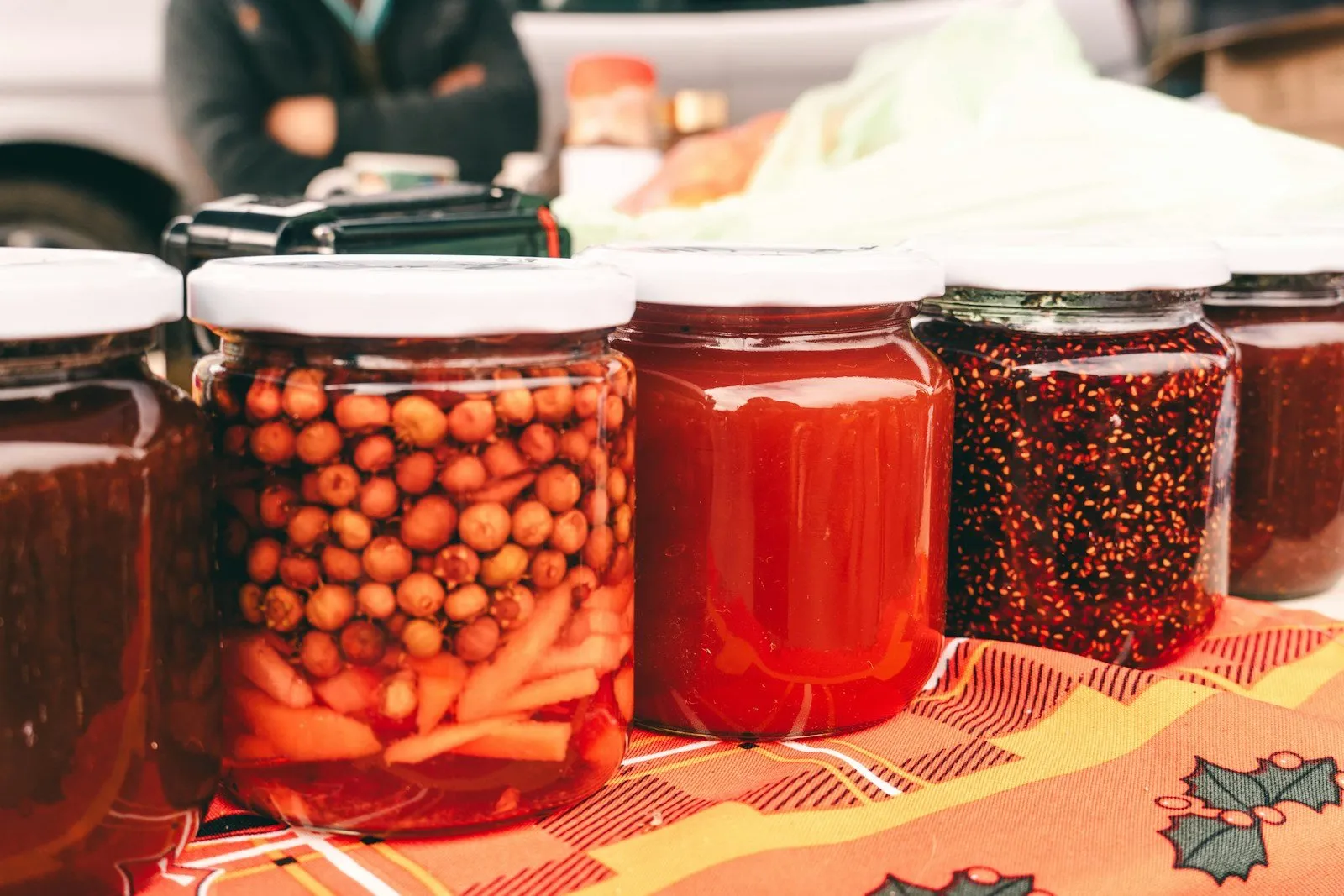
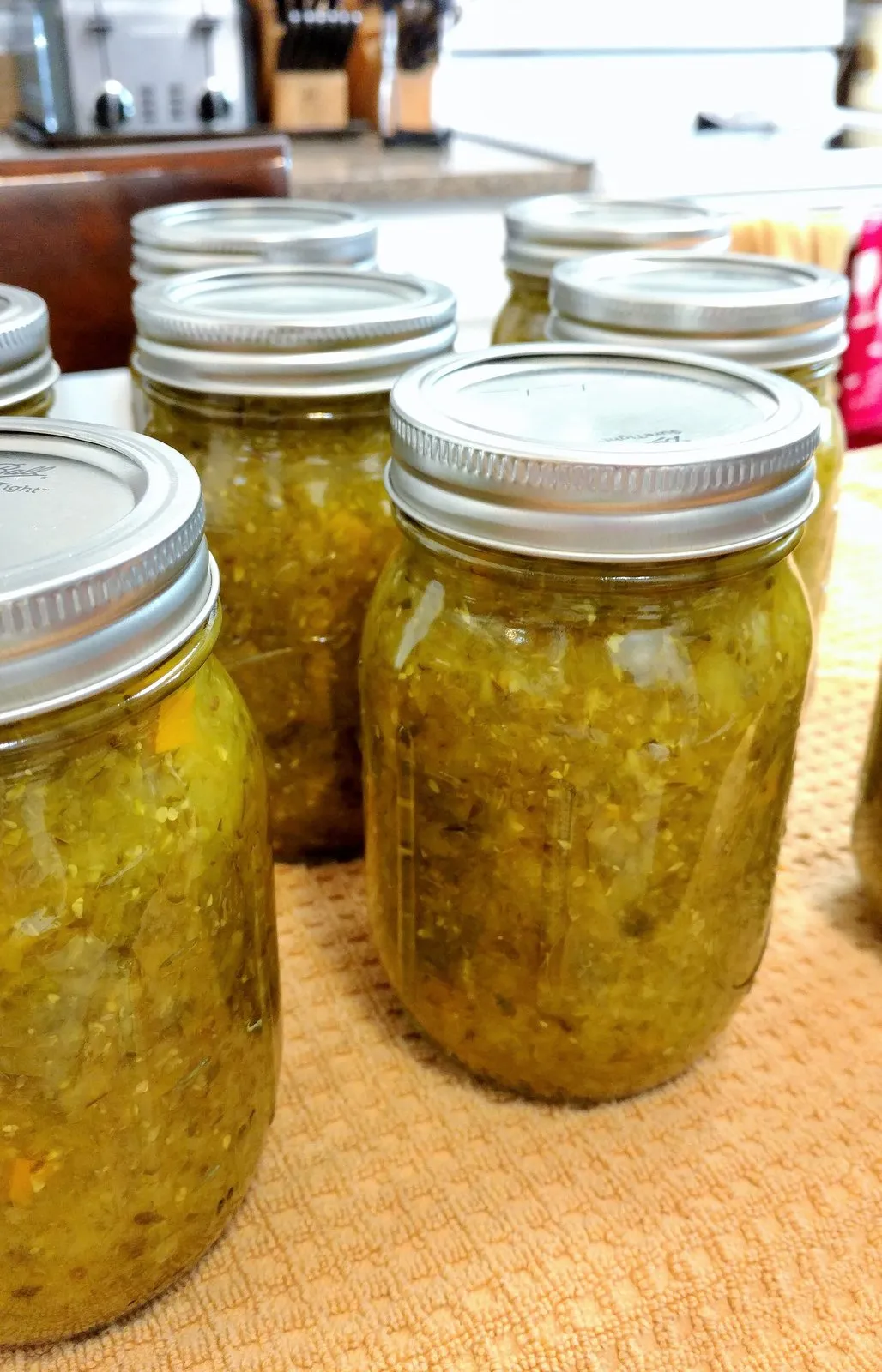
Pickles and preserves. Acidification is the backbone of home and artisan pickling: it preserves and, at the same time, provides the characteristic acidic flavour. The usual acids are acetic acid from vinegar (white, cider, balsamic), citric acid from lemon, lime or orange, and lactic acid from certain ferments; which one is chosen depends on the flavour sought and the food. Spices and aromatic herbs do the rest.
Marinades. Vinegars, citrus juices, yoghurt, buttermilk or beer tenderise meat and improve its texture and flavour before cooking, as well as protecting it while it rests. The time depends on the cut and thickness, with a guideline minimum of thirty minutes.
Fermentation. Here the acidity is not added: it is produced on its own. Lactic acid bacteria convert sugars into lactic acid and lower the pH, which inhibits pathogens and keeps the process under control. Yoghurt, cheese, sauerkraut, gherkins and kimchi come from this, over periods of a few days to several weeks depending on the food and the temperature.
Balancing flavours. In sauces, soups and finished dishes, a few drops of vinegar, citrus juice, tomato or yoghurt add depth. It is best to taste as you go rather than correct at the end.
Acidifying is not sterilising: the anisakis case
It is worth saying plainly: vinegar does not kill anisakis. It lowers the pH and acts on bacteria and fungi, but the parasite’s larvae survive for hours in an acidic medium. The belief that acidity “cooks” or disinfects fish the way heat would is false.
The only guarantee for fish that will be eaten raw, marinated or in vinegar — anchovies are the textbook case — is to freeze it at −20 °C or below for at least five days, in a freezer that holds that temperature continuously, as recommended by the Spanish Agency for Food Safety and Nutrition (AESAN).
From vinegar in Babylon to Pasteur
Historical accounts place the first documented use of vinegar as a preservative in Babylon, around 3000 BC, long before there was an explanation for why it worked. The explanation came in the nineteenth century: Louis Pasteur is credited with identifying, around 1864, that the conversion of wine into vinegar was not spontaneous decay but the work of microorganisms — which he called Mycoderma aceti — and with proposing the improvement known as the Orleans method.
In the Canary Islands: mojo, adobo and carne fiesta
In the Canarian repertoire, acidity is not a garnish: it is structure. Mojo picón is made with peppers, garlic, cumin, oil and wine vinegar, and its acidity balances the heat and lifts the rest of the flavours. The mix of oil and vinegar also works as a natural preservative: that is why a well-made mojo matures and improves over the days instead of spoiling.
Canarian adobo is the other pillar: the base of carne fiesta — festive pork — one of the archipelago’s most popular dishes, with paprika, oregano, cumin, thyme, garlic, salt, olive oil, white wine and white wine vinegar. The Canary Islands Government documents it in its CanariWiki as a fiesta and romería dish, and on islands such as Tenerife it is commonly found on the menu at guachinches and restaurants. A textbook acidic marinade.
At Taste 1973: aged mojo and its soleras
Acidification has a signature expression at the restaurant: Taste 1973’s aged mojo. It is a traditional Canarian mojo — confit garlic, cumin seed, salt, pimienta palmera (La Palma chilli) pulp, vinagre macho (a strong aged vinegar), olive oil and a touch of white wine — kept in an oven at 50-55 °C and “fed” week after week with new mojo, gaining complexity through successive soleras.
The feature MassCultura devoted to it in 2022 uses acidity as the trait that distinguishes one phase from another:
| Solera | How its acidity is described |
|---|---|
| First | Little acidity; very spiced aromas, intense and long |
| Second | Sustained acidity; more spice power, toasted notes and gentle bitterness |
| Third | Long acidity; delicate, fatty, medium texture |
| Fourth | Very fresh; light on spice, very creamy texture |
The technique was born in 2018, drawing on Enrique Olvera’s “mother mole” (Pujol, Mexico City), and the mojo served today was started on 1 January 2022. It accompanies, among other dishes, the butchery cuts of the Canarian goat.
In Spain: escabeche and anchovies in vinegar
Escabeche submerges meat, vegetables or fish in a pickling liquor of vinegar, wine, bay leaf, whole peppercorns and olive oil: the acetic acid lowers the pH to levels that inhibit bacteria and fungi. The name comes, according to the most widespread etymology, from the Hispanic Arabic iskebêg, in turn from the Arabic as-sakbâj and the Persian sikbâg, a meat stew with vinegar; it is documented in Castilian since the sixteenth century. It began as a preservation method and today is used mainly as a preparation method, which is what happens once refrigeration stops being a problem.
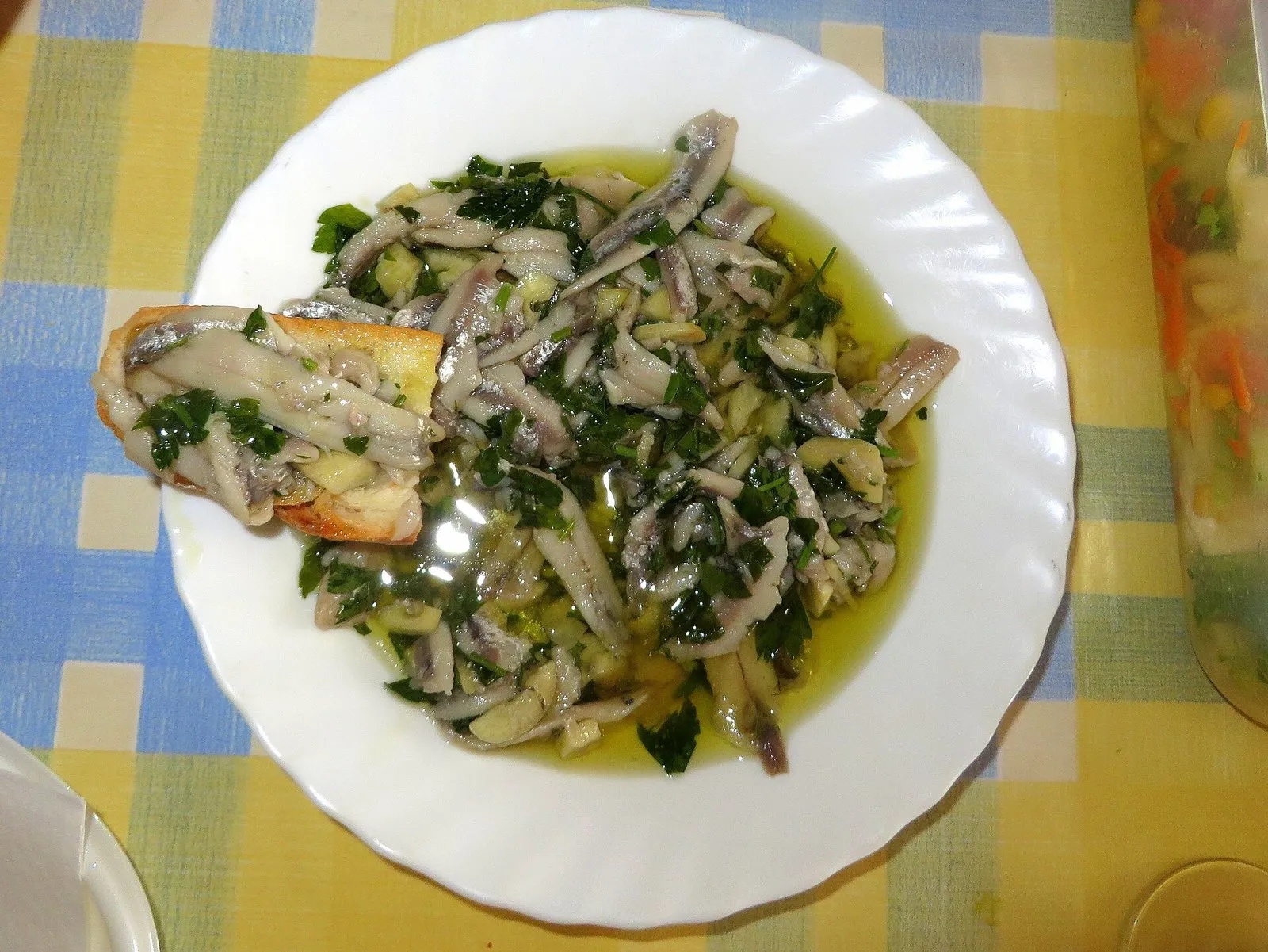
Anchovies in vinegar are the other side of the coin: raw fish macerated in vinegar, with garlic and parsley, which lowers its pH and gives it its characteristic firm texture and acidic edge. It is the tapa where the anisakis question matters most: the vinegar makes the flavour, but the freezer makes it safe.
In Argentina: the chimichurri of the asado
In Argentine cooking, the most recognisable example sits on the table, not in the pantry. Chimichurri — parsley, oregano, garlic, olive oil, ground chilli and vinegar — accompanies the asado with an explicit function: cutting through the meat’s fat with acidity and seasoning it with fresh herbs. It is the logic of Canarian mojo applied to another kind of grill.
The vinegar that carries it has local history: wine vinegar was traditionally produced in Argentine wineries — Mendoza, San Juan, Córdoba, Buenos Aires — from wine that had “turned”. The country’s viticulture begins in the sixteenth century with Spanish colonisation, which encouraged the cultivation of vines for vinegar and agraz too, not only for wine.
Important considerations
When acidifying, it is crucial to measure and adjust the pH precisely, both to guarantee food safety and to achieve the desired result in flavour and texture. The choice of acid — natural or commercial — depends on the food and the effect being sought. And it is worth being clear about the division of labour: the acid governs preservation and character, but it does not replace refrigeration, heat or hygiene. Understood this way, it is one of the most versatile tools in the kitchen for conserving, tenderising, balancing and preserving food with a measurable margin of safety.
Related terms
- Water activity (a_w) — the other great parameter of preservation: the water available to microorganisms.
- Alkalinisation — the opposite movement on the same scale: raising the pH instead of lowering it.
- Antioxidants — the other route to slowing oxidation, with which some acids, such as citric acid, overlap.
- Aguardiente — the other destination for fermented sugars: the alcoholic route, as opposed to vinegar’s acidic route.
- Artisan goat’s cheeses — where coagulation by acidification becomes curd.
Sources consulted
- Real Academia Española, Diccionario de la lengua española: “acidificar”
- Real Academia Española, Diccionario de la lengua española: “acidificación”
- Real Academia Española, Diccionario panhispánico del español jurídico: “acidificar”
- Consumer (Eroski), “El pH de los alimentos y la seguridad alimentaria”
- FDA, Draft Guidance for Industry, Chapter 16: Acidified Foods (PDF)
- Code of Federal Regulations, 21 CFR part 113, Thermally Processed Low-Acid Foods (eCFR)
- Code of Federal Regulations, 21 CFR part 114, Acidified Foods (eCFR)
- Real Academia de Ciencias Veterinarias de España, “Fundamentos tecnológicos de la elaboración de queso”
- Reglamento (CE) nº 1333/2008 sobre aditivos alimentarios (EUR-Lex)
- AESAN (Agencia Española de Seguridad Alimentaria y Nutrición), recommendation on anisakis in fish eaten raw, marinated or in vinegar
- The Food Tech, “Acidificación de alimentos: un enfoque en la seguridad y la calidad”
- Gobierno de Canarias, CanariWiki: “Carne fiesta”
- MassCultura, “El “mojo envejecido”, la asombrosa salsa que ha desarrollado el chef Diego Schattenhofer”
- Mariskito, “El escabeche: de método de conservación a método de elaboración”
- Rioja Vina, “Mojo picón canario: historia, receta y cómo disfrutarlo al máximo”
- ¡Hola!, “Cómo hacer chimichurri casero: consejos de experto”
- Wikipedia: Vinagre · Ácido cítrico · Conservación de los alimentos
Frequently asked questions
What is acidification in cooking?
What does it mean to acidify a food?
To what pH does a food need to be acidified to be safe?
Is acidification the same as fermentation?
Does vinegar kill anisakis in fish?
What examples of acidification are there in Canarian cooking?
Why is lemon or vinegar added to cut fruit?
What acidulant additives are used in the food industry?
Also in the glossary
Agar-agar
Agar-agar is a natural gelling agent extracted from several species of red algae such as Gelidium, Gracilaria and Eucheuma.
Aguardiente
The definition of aguardiente as a broad category of distilled alcoholic beverages covers an impressive diversity of products around the world, each with unique characteristics that reflect the raw materials available, the production techniques and the…
Al dente
"Al dente" is an Italian expression that translates literally as "to the tooth".