Antioxidants: Enhancers of Flavour and Health
- Term
- Antioxidants
- Tags
- Nutrition · Preservation · Compounds
- Published
- Updated
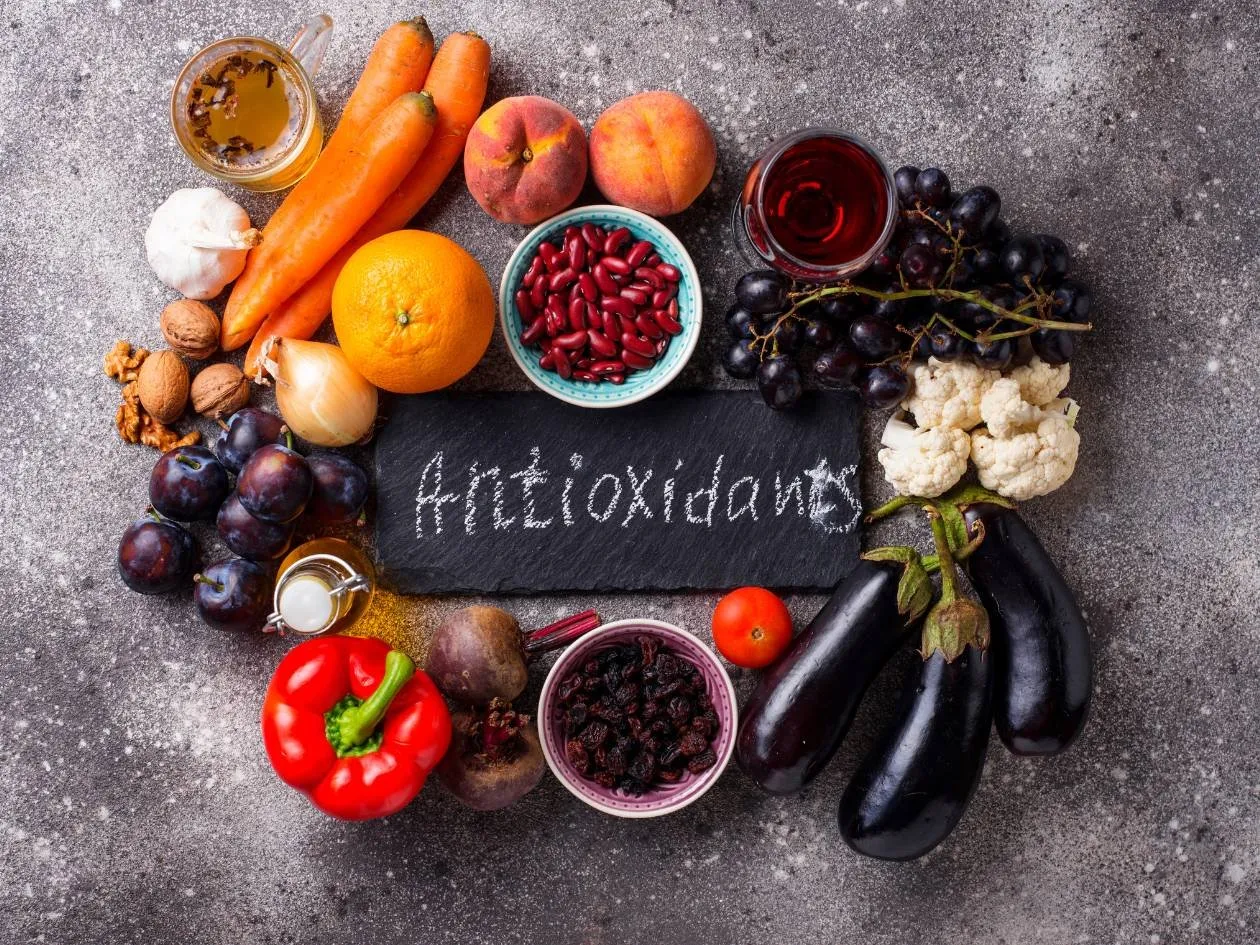
What antioxidants are
Antioxidants are molecules capable of preventing or slowing down the oxidation of other molecules. Oxidation is a chemical process that can produce free radicals, leading to chain reactions that damage the cells of living organisms. Antioxidants halt these chain reactions by removing the intermediate free radicals and by inhibiting other oxidation reactions as they are themselves oxidised. As a result, antioxidants are essential for protecting the body against cell damage and diseases linked to oxidative stress, such as cardiovascular disease, cancers and neurodegenerative diseases.
That last claim deserves closer scrutiny, and gets it below: part of it has regulatory backing and part doesn’t.
In cooking and the food industry, antioxidants play a crucial role in preserving the quality and safety of food. By inhibiting oxidation, they help maintain the colour, flavour and texture of food, as well as extending its shelf life. This is particularly important in fatty or oily foods, where oxidation can lead to rancidity, and in fruit and vegetables, where it can cause browning and loss of nutritional value.
Antioxidants occur naturally in various foods, especially in brightly coloured fruit and vegetables, such as berries, citrus fruits, tomatoes, carrots and leafy green vegetables. They are also present in nuts, seeds, pulses, wholegrains, and in certain meats, fish and poultry. In addition, many antioxidants are artificially added to processed foods to preserve their freshness and appearance.
EU law is drier. Regulation (EC) No 1333/2008 on food additives defines the category “antioxidants” as “substances which prolong the shelf-life of foods by protecting them against deterioration caused by oxidation, such as fat rancidity and colour changes”. Nothing about health: shelf life, rancid fat and colour. They are two different conversations, and here they’re kept separate.
From industrial rancidity to the theory of ageing
Interest in antioxidants was not born in nutrition, but in industry: in the late nineteenth and early twentieth centuries, extensive studies were devoted to preventing the oxidation of unsaturated fats — rancidity —, the corrosion of metals and the vulcanisation of rubber. The turning point came in the early twentieth century, when the identification of vitamins A, C and E as antioxidants revolutionised the field. And the idea that today links antioxidants with ageing has a date and an author: in 1956 the American biochemist Denham Harman put forward the free-radical theory of ageing in the paper “Aging: a theory based on free radical and radiation chemistry” (Journal of Gerontology, vol. 11, no. 3, pp. 298-300). In 1972 Harman himself revised it to focus on the production of reactive oxygen species inside the mitochondria.
The science: enzymatic, non-enzymatic and pigments
The body makes its own antioxidants. The enzymatic ones deactivate reactive species: superoxide dismutase (SOD), catalase, glutathione peroxidase and peroxiredoxins.
The non-enzymatic ones arrive mainly through diet and circulate in serum at very different concentrations:
| Non-enzymatic antioxidant | Typical concentration in human serum |
|---|---|
| Glutathione | 325-650 μM |
| Vitamin C (ascorbic acid) | 50-60 μM |
| Vitamin E (α-tocopherol) | 10-40 μM |
| Carotenoids (lycopene, beta-carotene) | Present; no range given in the source |
| Polyphenols and flavonoids | Present; no range given in the source |
Within polyphenols there’s a group that explains why cooking associates antioxidant with colour: anthocyanins, water-soluble pigments of the flavonoid family, with inherent antioxidant activity, which give red, purple and blue to numerous plants and protect them from ultraviolet radiation and free radicals. They are abundant in dark fruit — raspberry, blackberry, cherry, plum, black or blue grapes — and in vegetables such as red cabbage or purple corn, which can contain 1,642 mg of anthocyanins per 100 g.
What the evidence supports and what it doesn’t
For years the industry measured the “antioxidant strength” of foods, juices and additives with the ORAC method (oxygen radical absorbance capacity), the sector’s standard. In 2012 the USDA withdrew its ORAC values database, calling those figures “biologically irrelevant to human health”, given the lack of physiological evidence that polyphenols act as antioxidants in vivo. Anyone who boasts today about the ORAC value of a superfood is citing an indicator its own author discontinued.
Along the same lines, the consensus in the literature is that dietary supplements marketed as antioxidants haven’t been shown to maintain health or prevent disease in humans.
What does exist is a handful of health claims authorised by the European Union, and they are few:
| Substance | Authorised claim | Condition |
|---|---|---|
| Olive oil polyphenols | "Olive oil polyphenols contribute to the protection of blood lipids from oxidative stress" | A minimum of 5 mg of hydroxytyrosol and its derivatives per 20 g of oil, and stating that the effect is obtained with a daily intake of 20 g |
| Selenium | "Contributes to the protection of cells from oxidative stress" | The food must be at least a "source of" that nutrient |
| Riboflavin (vitamin B2) | Same | Same |
| Manganese | Same | Same |
| Copper | Same | Same |
| Zinc | Same | Same |
| Vitamin C | Same | Same |
| Vitamin E | Same | Same |
The list is short and the wording is fixed: it’s not enough to call a food “antioxidant”. You have to name the nutrient, use the regulation’s exact formula, and the product must be at least a source of it. All these entries come from the annex to Regulation (EU) No 432/2012, consulted in its publication in the OJEU L 136 of 25 May 2012.
In the kitchen: fermentation, preservation and innovation
Antioxidants play a vital role in cooking, not only in preserving food but also in developing complex flavours, an effect especially notable in processes such as fermentation. Their application extends from traditional culinary techniques to innovations in modern cooking, and affects both sensory and nutritional quality.
In fermentation. Fermentation is a biological process in which microorganisms such as bacteria, yeasts and moulds convert sugars into alcohol, acids and gases. Antioxidants step in to protect these microorganisms and oxygen-sensitive compounds, allowing for more controlled and richer flavour development. In winemaking, for example, they help protect sensitive aromatic compounds, resulting in a more complex flavour profile.
In preservation. Oxidation affects not only the nutritional quality of food but also its appearance and flavour. The use of natural antioxidants — vitamin C on cut fruit to prevent browning, or antioxidant-rich extracts in oils and fats to prevent rancidity — is how food science maintains quality and extends shelf life. It’s a path that runs parallel to acidification, overlapping with it at one point: citric acid does both jobs.
In innovation. In modern cooking its use has extended into culinary innovation, where chefs and food scientists experiment to maximise flavours, colours and textures: influencing the colour of sauces and emulsions, keeping fruit and vegetable juices fresh, and protecting the volatile compounds that sustain the aroma of a cooked dish.
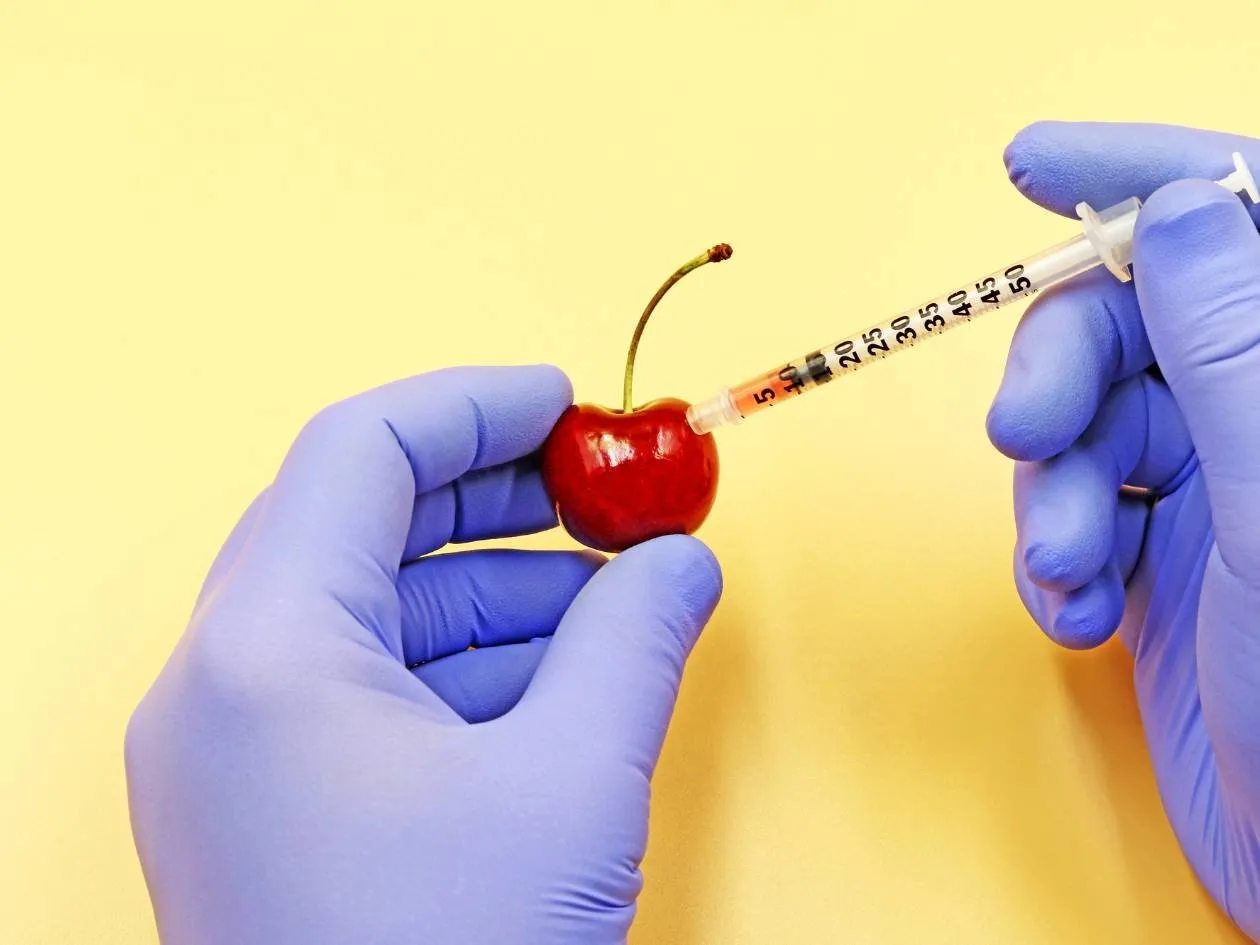
Types of antioxidants used in the food industry
They are classified as natural and synthetic. Dosage varies according to the product, each country’s regulations and the preservation or sensory-improvement objective.
Natural and synthetic, one by one
| Antioxidant | E number | Where it's used | Dosage |
|---|---|---|---|
| Natural | |||
| Vitamin C (ascorbic acid) | E300 | For its antioxidant properties and to slow browning in fruit and vegetables | 50-200 mg/kg of product, depending on the product and applicable regulation |
| Vitamin E (tocopherols) | E306 | Oils and fatty products, to prevent oxidation | 200-400 mg/kg of oil is the commonly recommended dose |
| Plant and spice extracts (rosemary, green tea, turmeric) | — | Rich in phenolic compounds | Highly variable depending on the extract and its concentration: from a few mg/kg to hundreds of mg/kg |
| Citric acid | — | Alongside other antioxidants, to improve their effectiveness; mainly in drinks and canned goods | 500-3,000 mg/kg, depending on the food and the need to adjust pH |
| Synthetic | |||
| Butylated hydroxyanisole (BHA) | E320 | Fats, oils and packaged foods, to extend their shelf life | Legislation usually limits it to 200 mg/kg of fat in the final product |
| Butylated hydroxytoluene (BHT) | E321 | Fats and oily products, like BHA | Usually up to 200 mg/kg of product, depending on local legislation |
| Gallates (propyl gallate) | E310 | High-fat products, salad dressings, meat products | Up to 200 mg/kg of product, following applicable regulations |
| Sodium erythorbate | — | Processed meats, to maintain colour and prevent the formation of carcinogenic nitrosamines | 500-3,000 mg/kg of product |
It’s worth noting the second column: the first two natural rows also carry an E number. The same compound is billed as a vitamin on one label and listed as an additive on another.
The question of BHA
BHA carries the best-known controversy in the group. The International Agency for Research on Cancer (IARC) classifies it in Group 2B, a possible human carcinogen: in trials with rats and hamsters it induced benign and malignant tumours of the forestomach, an organ humans don’t have. For its part, a 2011 EFSA assessment concluded there was no indication that the compound could induce carcinogenic effects in humans. Both things are true at once, and the difference — an animal model with an organ we don’t have versus a consumer risk assessment — is what usually gets lost when summarising it.
Dosage considerations
- Regulations: dosage is regulated by each territory’s agencies — EFSA in the European Union, the FDA in the United States — and varies from country to country.
- Purpose: the exact amount depends on the food, its composition, expected storage and the shelf-life or sensory-quality objective.
- Combinations: blends are often used to take advantage of synergistic effects, which alters the individual doses.
In the Canary Islands: ancient potatoes, Listán Negro and matured goat
The archipelago has no product with a PDO defined by its antioxidant content, but it does have two larders where the pigment is plain to see.
The first is Papas Antiguas de Canarias, a Protected Designation of Origin covering 29 traditional varieties grown across all the islands (Solanum tuberosum subsp. andigena, subsp. tuberosum and Solanum chaucha, triploid). Their skin runs from purple-black to orange by way of pink, and their flesh from cream to deep yellow. In the purple- or black-skinned and -fleshed varieties, that colour is generally due to anthocyanins, the same polyphenol group that colours blackberries or black grapes.
The second is wine. The Tacoronte-Acentejo DO, in eight municipalities of northern Tenerife, was in 1992 the first wine denomination of origin recognised in the Canary Islands; its leading red varieties are Listán Negro and Negramoll, grown between 300 and 750 m in altitude on the northern slope of the Cordillera Dorsal. Red grapes accumulate anthocyanins in the skin, and from there — together with tannins — come red wine’s polyphenols.
In both cases it’s worth being honest about the scope: the link is a general chemical bridge, not a study that quantifies the antioxidant content of Canarian varieties or the profile of Listán Negro. We haven’t found one.
At Taste 1973: the maturation of Canarian goat
Diego Schattenhofer’s research into matured Canarian goat addresses this term head-on. Two articles on this website state it: Nutritional benefits of matured goat meat argues that “matured goat meat contains natural antioxidant compounds that help fight oxidative stress and inflammation in the body” and that “these antioxidants are boosted during the maturation process”. Techniques for maturing Canarian goat meat adds that “the maturation process can increase the concentration of antioxidants in the meat”.
In other words: according to that same research, controlled maturation doesn’t just transform the texture and aroma of the meat, it also shifts its antioxidant profile. It’s the point where the term stops being laboratory theory and becomes kitchen work.
In Spain: olive oil polyphenols
The Spanish layer has just one example, but it’s the best documented on this whole page: extra virgin olive oil. It’s the only food on the list of authorised claims seen above — the rest are isolated nutrients: selenium, riboflavin, manganese, copper, zinc, vitamin C and vitamin E —, and it’s the only one that comes with an exact figure behind it: 5 mg of hydroxytyrosol and its derivatives per 20 g of oil, with a daily intake of that same 20 g.
The precision matters: it doesn’t say “olive oil is an antioxidant”, it says which compound, in what minimum amount and with what daily intake. It’s the Spanish case where the claim withstands regulatory scrutiny.
In Argentina: yerba mate and high-altitude Malbec
On the other side of Diego’s biography, two national products enter this conversation. Yerba mate (Ilex paraguariensis) is described in the literature — a 2005 study from the University of Illinois — as “rich in phenolic constituents”. Argentina is the world’s largest producer, with some 700,000 tonnes a year, between 56 % and 62 % of world production. The country’s most everyday infusion is also its most polyphenolic.
Malbec arrived in 1853, when the French agronomist Michel Pouget introduced the first cuttings. Today there are some 44,000 ha of Malbec in the country, 87 % — 35,000 ha — in Mendoza, with high-altitude vineyards between 800 and 1,500 m, and some in Salta above 2,000 m. The Catena Institute of Wine and the University of California, Davis have compared the phenolic composition of Californian and Mendozan Malbecs; the study exists, but the source consulted doesn’t reproduce its figures, so no result is attributed to it here.
Related terms
- Aromatics — turmeric, ginger, rosemary, basil and garlic, the aromatics that are also antioxidants.
- Allicin — the organosulfur compound in garlic, described as an antioxidant that protects cells from oxidative damage.
- Omega-3 fatty acids — the fats most prone to rancidity: the problem antioxidants exist to solve.
- Acidification — the other route to preservation, overlapping with this one in citric acid.
- Alfalfa — one of the pantry plants whose own entry covers its antioxidant properties.
Sources consulted
- Regulation (EC) No 1333/2008 of the European Parliament and of the Council, on food additives (EUR-Lex)
- Regulation (EU) No 432/2012, list of authorised health claims (EUR-Lex)
- Regulation (EU) No 432/2012, text published in the OJEU L 136 of 25-05-2012 (PDF) — annex of authorised claims, consulted for this page
- Government of the Canary Islands, Canary Institute for Agri-Food Quality: PDO Papas Antiguas de Canarias
- Nutritional benefits of matured goat meat · Techniques for maturing Canarian goat meat
- Wikipedia: Antioxidante · Antocianina · Tacoronte-Acentejo · Yerba mate · Malbec
- Wikipedia (en): Antioxidant · Butylated hydroxyanisole · Free-radical theory of aging
Frequently asked questions
What are antioxidants?
Which foods have the most antioxidants?
Is a natural antioxidant the same as an antioxidant added as an additive?
Are synthetic antioxidants like BHA safe?
Is there any point in taking antioxidant supplements?
Can vitamin C be called an antioxidant on a food label?
What is the connection between antioxidants and ageing?
Does maturation increase the antioxidant content of meat?
Also in the glossary
Aperitivo
The aperitivo, a tradition deeply rooted in many cultures, acts as an introduction to the culinary experience, preparing the palate and the digestive system for the main meal.
Aromatics
In a culinary context, the aromatic dimension refers to the sensory qualities of food that awaken the sense of smell and add depth and complexity to flavour.
Aspic
Aspic is a savoury gelatine made with meat or fish stock, clarified and set through the prolonged cooking of collagen-rich bones.