Aperitivo: A Culinary Gathering that Stimulates the Appetite
- Term
- Aperitivo
- Tags
- Service · Canary Islands
- Published
- Updated
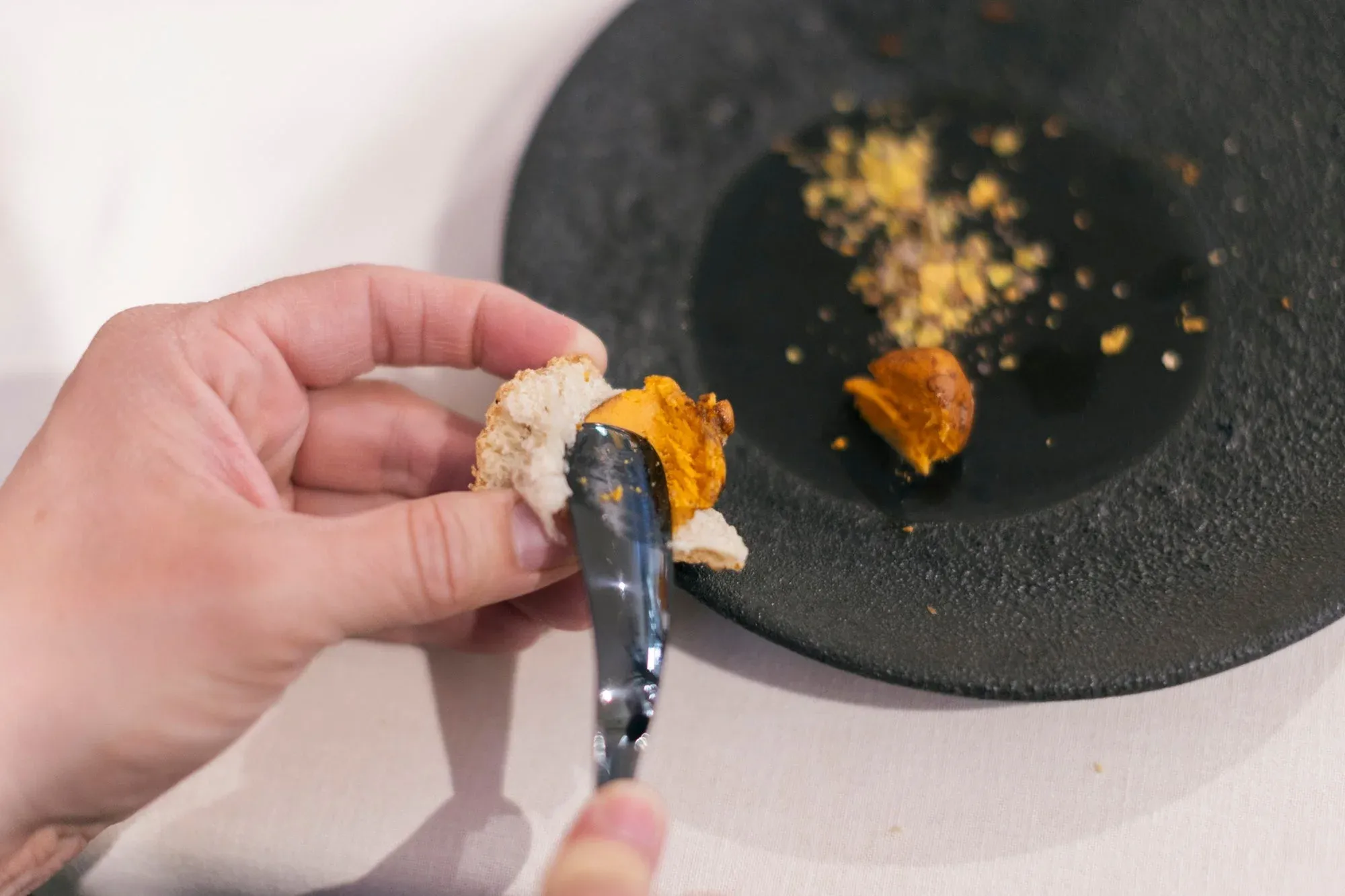
The aperitivo, a tradition deeply rooted in many cultures, acts as an introduction to the culinary experience, preparing the palate and the digestive system for the main meal. The term, originating from the Latin aperire, meaning “to open”, reflects its purpose of “opening the appetite” through small portions of food or drink. Aperitivos can vary widely in type, from light alcoholic drinks to select savoury snacks or small portions of food.
Origin and history of the aperitivo
This culinary ritual, whose purpose is to stimulate the appetite and prepare the digestive system for the intake of food, goes back to ancient civilisations and has evolved across cultures and centuries.
What the dictionary says
Before the custom comes the word. The Diccionario de la lengua española records “aperitivo, va” as a word from the late Latin aperitivus — in turn from aperire, “to open” — and separates three uses that should not be mixed up:
- Adjective: “that which serves to open the appetite”.
- Noun, the drink: “a drink usually taken before meals, and especially before the midday meal, sometimes accompanied by a small portion of food”.
- Noun, the bite: “light food taken to open the appetite before a main meal, or in place of it”.
That is why “what is an aperitivo” has two legitimate answers: at an Italian bar it is the glass; on a Canarian table, the dish that accompanies it. The literal sense is the same: “that which opens”.
Ancient roots
The practice of consuming small portions of food or drink before the main meal is usually traced back to ancient Rome and Greece, where it was common to enjoy wine, herbs and small bites to awaken the appetite. This is a claim repeated across popular food writing, but we have not located a primary source that pins it down with dates: it should be read as cultural heritage, not as a documented fact.
Evolution in Europe
The first thing that has a date, a place and a proper name is vermouth. Antonio Benedetto Carpano formulated it in 1786, in Turin, blending Piedmont moscato wine with an infusion of more than thirty herbs and spices — wormwood among them — at Luigi Marendazzo’s liquor shop, opposite the Royal Palace. The name gives away the ingredient: vermouth comes from the German Wermut, “wormwood” (Artemisia absinthium). Its usual strength, 15–22% vol., places it exactly where an aperitivo should sit: above a still wine and below a spirit.
The aperitivo in modern times
The nineteenth century cemented the aperitivo as a social ritual, and northern Italy was its laboratory. Gaspare Campari developed his bitter in 1860, in Novara, macerating more than sixty spices, herbs, roots and barks; in 1915 the premises in Milan’s Galleria Vittorio Emanuele II were transformed into the Camparino bar, by then under his son Davide. The brothers Luigi and Silvio Barbieri created Aperol in 1919, in Padua, and presented it that same year at the city’s International Fair; the Aperol Spritz as known today took shape in the fifties.
The aperitivo around the world
As nations interacted through trade and tourism, the custom spread globally, adapting to local traditions and tastes. In Spain it took the form of the tapa, a tradition found right across the country, with its own island variant — the enyesque — covered further below.
Cultural influence and variations
Every culture has its own interpretation of the aperitivo, reflecting culinary diversity and local gastronomic preferences. In Italy it is a socialising ritual around drinks and bites before dinner, giving way to the antipasto, the cold dish that opens the meal: its name is explained, according to the sources consulted, by the sum of the Latin prefix ante- (“before”) and pasto (“meal”). In Spain, aperitivos take the form of tapas, portions ranging from a few olives to more elaborate servings.
Culinary and nutritional importance
From a culinary standpoint, the aperitivo sets the tone for the culinary experience and offers a taste of the chef’s flavours and creativity. Nutritionally it can stimulate digestion and prepare the body for nutrient absorption, though its impact varies according to the ingredients and the amount consumed.
Why the aperitivo is bitter
Bitterness is not a stylistic whim. Bitter substances activate the bitter-taste receptors of the TAS2R family — one alone, TAS2R14, identifies more than a hundred distinct bitter compounds — and these receptors are not confined to the tongue: they are also found in the digestive tract, where they take part in regulating digestion and metabolism. That is the physiological basis for what the kitchen applies by intuition: in Hispanic and Italian culture, dry or semi-dry drinks are preferred for the aperitivo, because sweetness tends to suppress the appetite.
Alcohol, in moderation
Spain’s Ministry of Health holds that no level of alcohol consumption is safe. Its reference document defines the Standard Drink Unit (UBE) as 10 g of pure alcohol — roughly 100 ml of 13° wine, 300 ml of 4° beer or 30 ml of 40° spirit — and sets the low-risk average consumption limit at 20 g a day (2 UBE) for men and 10 g a day (1 UBE) for women, on the assumption that any consumption carries some risk. Above 40 g a day (4 UBE) for men and 20–25 g a day (2–2.5 UBE) for women the document already speaks of risky consumption. None of these figures is a recommendation to drink. A well-made aperitivo works just as well without alcohol: bitterness, salt and acidity do the job.
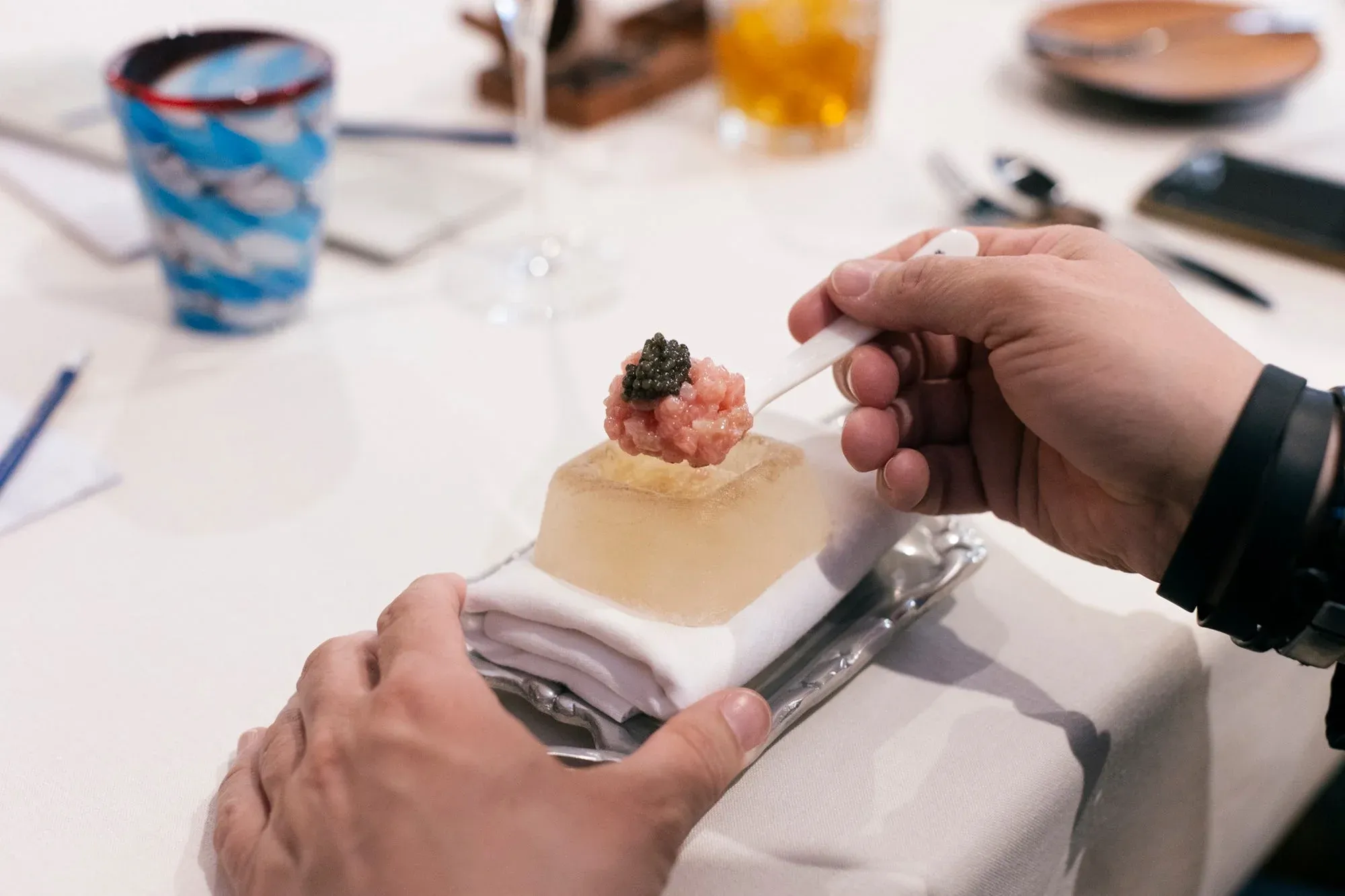
Types and examples of aperitivos
The drinks
| Drink | Documented origin | What it is |
|---|---|---|
| Vermouth | Turin, 1786 · Antonio Benedetto Carpano | Wine aromatised with more than thirty herbs and spices, wormwood among them. 15–22% vol. |
| Campari | Novara, 1860 · Gaspare Campari | Bitter made from more than sixty spices, herbs, roots and barks; in 1915 the Camparino bar opens in Milan, by then under his son Davide. |
| Aperol | Padua, 1919 · Luigi and Silvio Barbieri | Presented that same year at Padua’s International Fair; the spritz takes shape in the fifties. |
| Sherry, port, Madeira, dry white wine, beer, cider | Everyday use in Hispanic and Italian culture | Dry or semi-dry ones are preferred: sweetness tends to suppress the appetite. |
The foods
Canapés, tapas, antipasti, small salads, seafood and cured meats. The rule is not the format but the scale: two bites, eaten standing and without cutlery if need be.
Aperitivo and digestivo are not the same thing
They share a family — bitter, aromatised drinks, macerated with herbs — which is why they are confused, but they occupy opposite moments: the aperitivo is taken before the meal, to open the appetite; the digestivo, afterwards, to accompany digestion.
Practical tips
- Variety and moderation: choose aperitivos that offer a variety of flavours and textures, but always in moderation so as not to blunt the appetite for the main meal.
- Recipe innovation: experiment with local, seasonal ingredients to create aperitivos that surprise and delight your guests.
- Presentation and creativity: presentation is key with aperitivos; small creative touches can turn even the simplest snacks into memorable experiences.
The aperitivo in the Canary Islands: the enyesque
In the Canary Islands the aperitivo has a name of its own: enyesque. The Academia Canaria de la Lengua defines it as the “small portion of food served to accompany a drink” and explains its origin: it comes from yesca — from the Latin esca, “food” — a word for which the Academy’s dictionary records the sense “something that excites the urge to drink”. From there comes the Canarian verb enyescar, “to eat yesca”, and from that the noun enyesque.
The word is not used evenly across the archipelago: in the eastern islands — Lanzarote, Fuerteventura and Gran Canaria — enyescar and enyesque are used, to the point that Gran Canaria has “enyesque routes”; in the western islands, and particularly in Tenerife, armadero and tapa are preferred. Conduto and entullo also survive for the accompaniments to family meals. The enyesque predates the arrival of the word “tapa” with tourism and mainland influence: the tapa is a tradition found right across Spain, but in the Canary Islands it takes on a markedly Atlantic character.
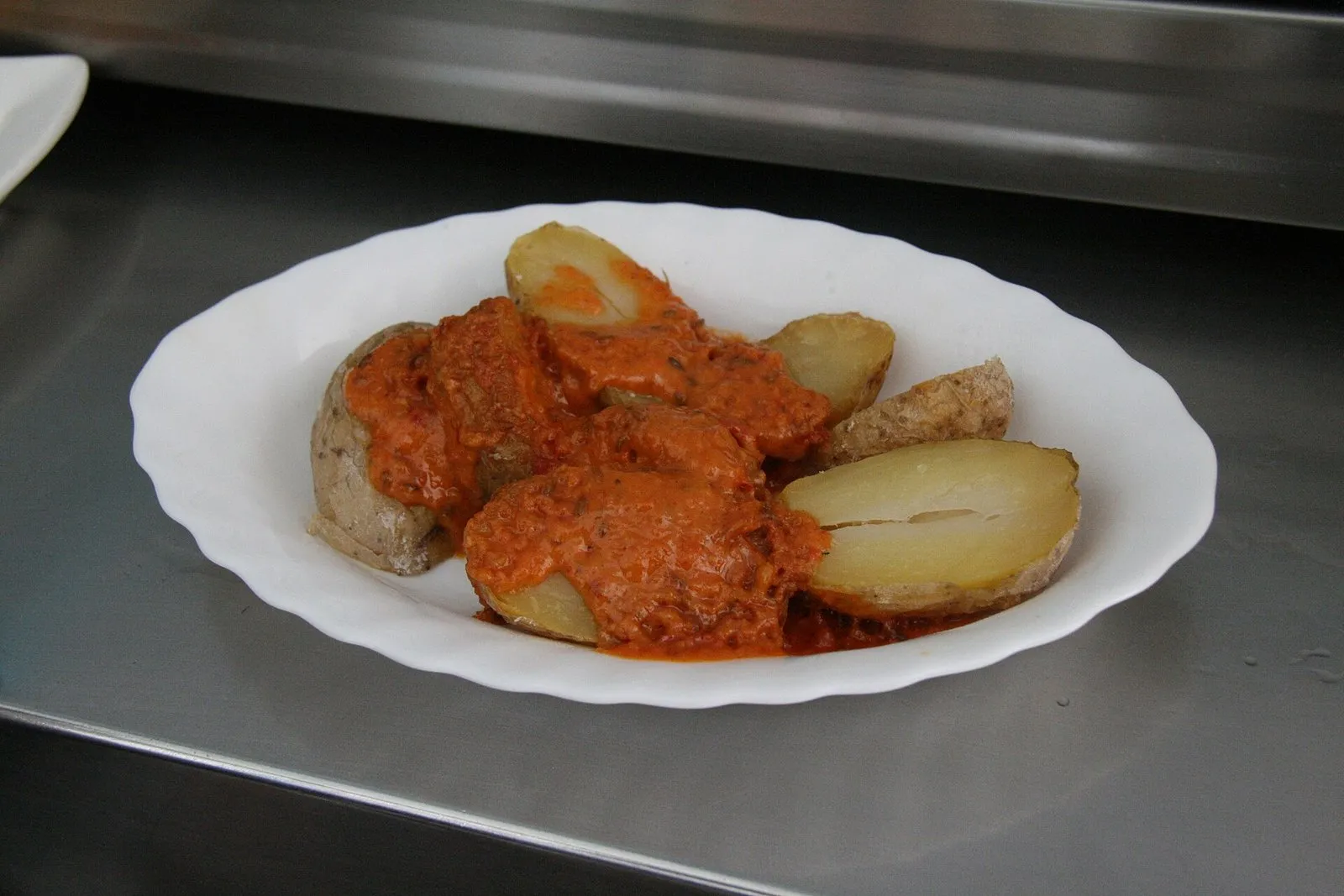
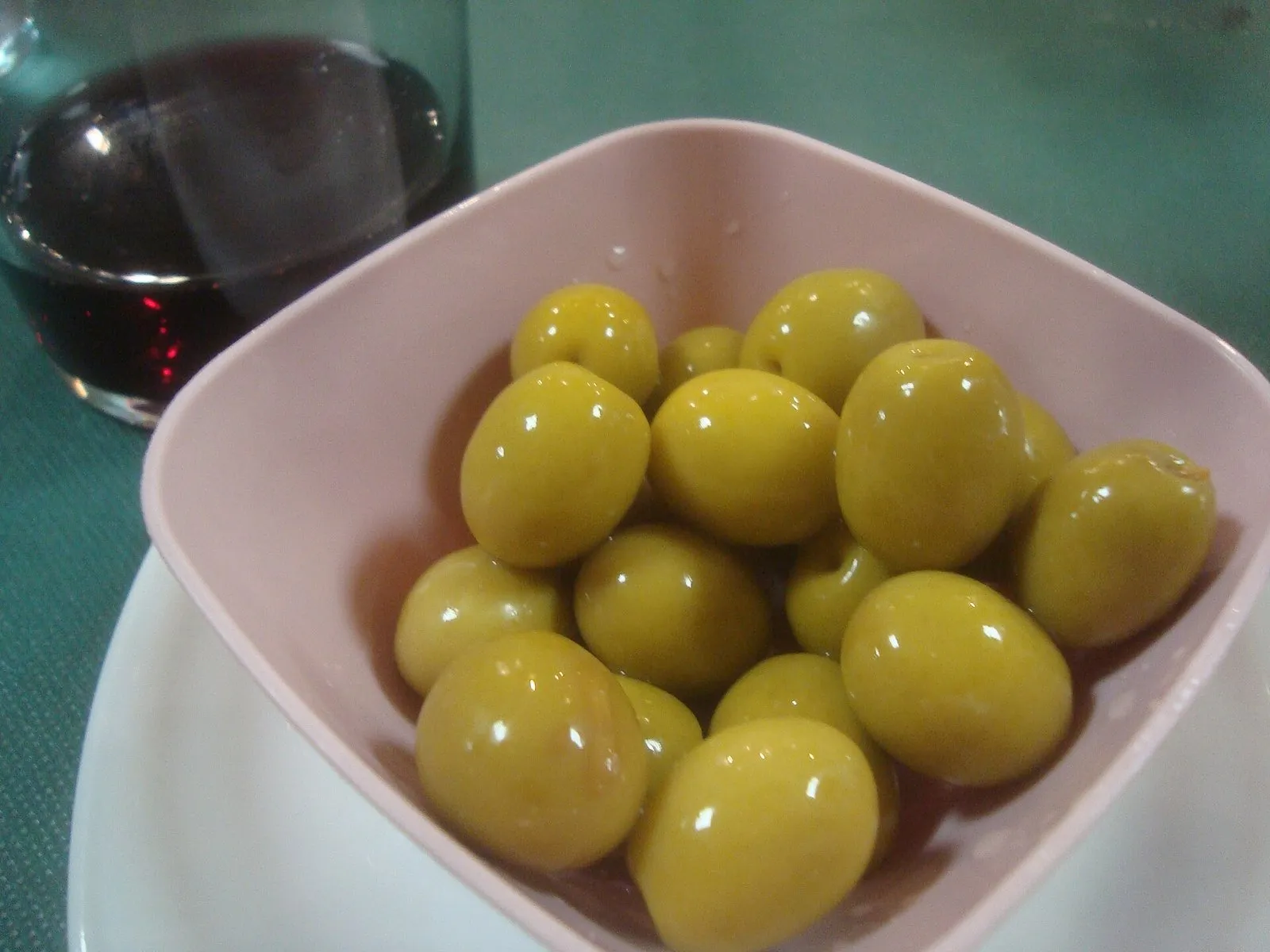
What fills the table is island pantry fare: cheese, salted fish, dressed olives, carajacas — beef liver stewed in mojo —, papas antiguas (heritage Canarian potato varieties) with mojo, vieja (parrotfish) or cherne (wreckfish), and Gomeran almogrote. Outside the archipelago, the best-known enyesque is papas arrugadas: small, thin-skinned potatoes boiled unpeeled in plenty of coarse salt and served with mojo picón made of oil, vinegar, garlic, cumin and paprika.
The cheeses of the enyesque
The Canary Islands have three cheeses with Protected Designation of Origin, and all three are served as part of the island aperitivo, either on their own or on toast with mojo.
| Protected Designation of Origin | Island |
|---|---|
| Queso Majorero | Fuerteventura |
| Queso Palmero / Queso de La Palma | La Palma |
| Queso de Flor de Guía / Media Flor de Guía / Queso de Guía | Gran Canaria |
To these is added Gomeran almogrote, the spreadable paste from La Gomera made of cured goat’s cheese — sometimes with sheep’s milk —, chilli pepper or hot paprika, garlic and extra virgin olive oil. In 2021 the Canary Islands Government’s Committee on Agriculture, Livestock and Fisheries unanimously approved starting the process for a Protected Geographical Indication for almogrote, alongside a PDO for Gomeran cheese; according to the latest available check, the application still appears to be in progress, with no final approval. There is a dedicated piece on the artisan goat’s-milk cheeses of the islands.
A historical aside: Canarian wine
This deserves telling precisely, because it is the history of the islands’ wine and not proof that the aperitivo was born here. Malvasía canaria — a grape that arrived from Crete, with almond notes and a touch of acidity — was exported from the sixteenth century to England, Flanders and Hamburg, and in 1670 65.62% of the wine entering the port of London came from Tenerife and La Palma, against 21.25% from Málaga and 9.63% from Cádiz and Jerez. Shakespeare put it on stage: in Henry IV, Part Two (Act II, Scene IV), Mistress Quickly reproaches Doll Tearsheet for having drunk “too much canaries, and that’s a marvellous searching wine, and it perfumes the blood”.
The aperitivo in Diego Schattenhofer’s work
In the research into matured Canarian goat, the aperitivo appears as the destination of a whole-animal approach that starts by throwing nothing away: among the derived products documented in La Magia de la Carne de Cabra Madurada are the “skin chips”, described there as “crisp snacks made from dehydrated, seasoned skin”. The logic of the enyesque applied to a part of the animal the kitchen once discarded.
Aperitivo: meaning and nuances of the term
In a culinary context, the aperitivo meaning refers to a variety of small dishes or drinks served before a main meal in order to stimulate the appetite and prepare the palate for the flavours to come. This tradition, passed down through generations, not only serves a practical function but has also become a social act that brings people together in a prelude to the culinary experience about to unfold.
Looking into what aperitivo means, one finds that its etymological origin takes us back to Latin, to aperire, which translates as “to open”. From this root comes the essence of what the aperitivo seeks: to “open” or prepare the digestive system for the meal about to arrive. Aperitivos also serve as a window into the style and creativity of the chef or the culinary culture of a place, offering clues about the flavours and techniques that characterise local or personal cuisine.
Exploring the meaning of aperitivos, meanwhile, reveals the diversity of forms this custom can take. From a cultural standpoint, aperitivos reflect global and local gastronomic traditions, ranging from Spanish tapas and the Canarian enyesque to Italian antipasti, each with its own characteristic ingredients and ways of presentation that celebrate the food of each region.
Finally, in answering the question what are aperitivos, it is worth stressing that they are much more than simple starters: they are an act of welcome and a statement of intent that marks the beginning of a gastronomic occasion. Aperitivos are the diner’s first impression of what is to come and, as such, play a fundamental role in building the overall culinary experience, both in taste and in feeling.
Related terms
- Aguardiente — the category of distilled spirits from which come the liqueurs the aperitivo is sometimes confused with.
- Sensory appreciation — how the senses interact with food; the aperitivo is its first rehearsal.
- Amylase — the enzyme that opens the digestion of carbohydrates, already present in saliva.
- Aromatics — the qualities that awaken the sense of smell, the ground on which vermouth’s herbs work.
- Aspic — the clarified savoury jelly, a classic technique for the cold bite.
Sources consulted
- Real Academia Española, Diccionario de la lengua española, “aperitivo, va”
- Casa Vermouth, “History of vermouth”
- Vinetur, “El alma del vermut: historia, mitología y ciencia detrás del ajenjo”
- Genito, “Vermut: grados de alcohol”
- Difford’s Guide, “Campari heritage”
- Aperol (Campari Group), “The story of Aperol”
- “Extraoral bitter taste receptors (TAS2R)”, scientific review on PubMed Central
- Ministerio de Sanidad, “Límites de consumo de bajo riesgo de alcohol” (2020 update)
- Academia Canaria de la Lengua, entry “enyesque”
- Canarias Gourmet, “Día Mundial de la Tapa”
- Ministerio de Agricultura, Pesca y Alimentación, DOP file for Queso Majorero
- Ministerio de Agricultura, Pesca y Alimentación, DOP file for Queso Palmero
- Descubrir, “Revolconas, bravas, arrugadas: mil formas de tomar patatas”
- Agencia SINC, “Las islas Canarias, principal exportador de vinos de España en el siglo XVII”
- Atlántico Hoy, “Enamoró a Shakespeare: este es el producto canario que incluso aparece en sus obras”
- Azure&Azure, “Malvasía, el vino canario que sedujo a William Shakespeare”
- Wikipedia en español, “Aperitivo”
- Grokipedia, “Almogrote” (aggregator of Canarian gastronomic sources; the status of the PGI file is not confirmed in an official source)
- Estudiar Cocina, “Qué es un aperitivo: tipos y ejemplos”
Frequently asked questions
What does the word aperitivo mean?
What are aperitivos?
How does an aperitivo differ from a digestivo?
Where does vermouth, the aperitivo drink par excellence, come from?
Why are aperitivo drinks usually bitter?
Is it safe to drink alcohol at the aperitivo every day?
What is the Canarian enyesque?
What is served as an aperitivo or enyesque in the Canary Islands?
Also in the glossary
Aromatics
In a culinary context, the aromatic dimension refers to the sensory qualities of food that awaken the sense of smell and add depth and complexity to flavour.
Aspic
Aspic is a savoury gelatine made with meat or fish stock, clarified and set through the prolonged cooking of collagen-rich bones.
Non-essential amino acids
Non-essential amino acids, those our body can synthesise by itself, play crucial roles both in our health and in the culinary world.