Baifo: what the kid goat is in Canarian cooking
- Term
- Baifo
- Tags
- Canary Islands · Meat · Recipes
- Published
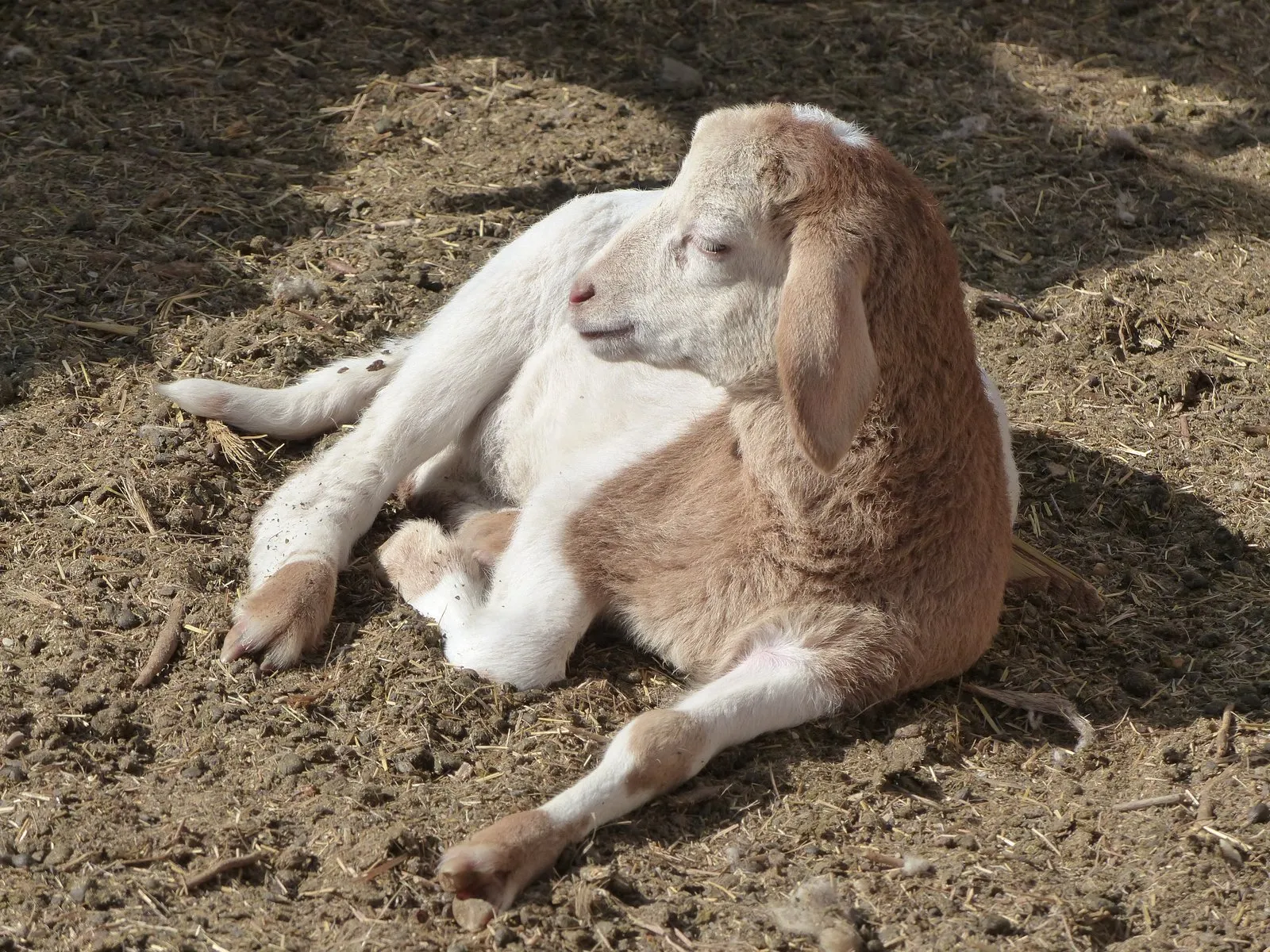
Baifo is the Canarianism the islands use for the young of the goat, the animal that general Spanish calls cabrito. It is not a breed from the catalogue, nor a cheese, nor a cut with a peninsular butchery name. It is the young animal, named with the word the archipelago kept.
The lead image and the second photo were taken in Tozeur, Tunisia. The third, on Margarita Island, Venezuela. All three show a kid. None vouches for an animal born in the Canary Islands or registered in a herd book. They serve to show the young animal the dictionary speaks of, with the caption put in its place.
What the word names
The Canarian Academy of the Language gives three senses that are best not merged. The first, general, is “young of the goat”. The second is from Fuerteventura: the young animal from the moment it stops suckling until its horns begin to show. The third is from La Gomera: the young animal until it stops suckling. The same dictionary records the phrase “írsele a alguien el baifo”, which no longer speaks of the animal: it means to put your foot in it or to forget what you were about to say. That phrase explains why the word is so deeply set in everyday speech, and there is no need to pull it out of there to understand the stew.
The Diccionario de la lengua española marks it as a pre-Hispanic word, masculine and feminine (baifo, baifa), proper to the Canary Islands, and equates it with cabrito. The two authorities do not tread on each other. The general academy says where the word comes from and what it equals in shared Spanish. The Canarian academy refines the age range on two islands, which is exactly what a menu or a conversation on the island may mean when it specifies “no longer suckling” or “its horns not yet showing”.
Translating baifo as kid or as chevreau gets the animal right and loses the island nuance. On a menu away from the islands, the Canarian word can stay the first time, with the gloss beside it. The diner has no reason to know it beforehand; they can still hear it.
The young animal, not the breed
The official breed catalogue does not list a “baifo”. It lists Majorera, Palmera and Tinerfeña. A baifo is the young of one of those goats, or of an island goat named without papers. The difference matters when buying. If the destination is a cheese with a designation, the milk the Majorero specification requires is that of the Majorera breed, and the young of that goat will be a Majorero baifo only if the mother is one. If the destination is the meat of the young animal, the useful facts are the age and the island, not a fourth breed name.
The Canarian goat explains why the collective name is not a breed today. The Majorera goat details the one from Fuerteventura, which is where speech calls a kid of a few months a baifito. The Majorero cheese closes the circle of the milk: the same farm that milks is often the one with young animals the kitchen can buy.
In Gran Canaria that circle has been said out loud. The Cabildo and the artisan cheese producers’ association, Asoquegran, promoted a campaign to get people eating baifo and goat meat, precisely because the dairies that make cheese from the milk of their own herd need another outlet besides the milk. The Tenderete del Baifo, at the Granja Agrícola in Arucas, was the public close of one of those campaigns. You do not need the attendance figures to grasp the argument: the young animal is not an awkward by-product if the kitchen asks for it.
In the kitchen
The Mediterranean diet inventory, in its Fuerteventura entry, describes two paths. Baifo is roasted in the oven and also fried. For the roast, in that description, salt and white wine are enough, because the meat of a kid grazing on the island holds its own. When the animal is two or three months old and is called a baifito, the tenderness allows the marinade: thyme, bay, sea salt, garlic, olive oil, wine vinegar, oregano and chilli. That same marinade serves for the roast kid cut into pieces. The most frequent accompaniment that entry names is potatoes (papas).
La Provincia, reporting on the January 2023 Tenderete, quotes the view of a cook from the training centres: the most common preparation is still baifo fried or in a sauce, and with that meat “you can do anything”. At that gathering the students had marinated it, vacuum-sealed and cooked at low temperature overnight, to shred it afterwards with no bone in sight. It is a school example, not a rule of the Canarian household. It shows that frying and sauce are the base, and that the marinade is the bridge between the Fuerteventura recipe and what a training kitchen does today.
It is best not to copy kilos, cups or minutes from a blog. Those numbers change with the size of the young animal and with the pan, and there is no specification that fixes them. What is fixed is the order the sources repeat: marinade of garlic, herbs, salt, oil and vinegar; resting; frying or roasting; potatoes alongside.
The commonest misreading is treating baifo as if it were the adult. The meat of the young animal is tender and small. The meat of a goat of several years, the kind matured in a chamber, is another piece, another weight and another time. Mixing them in the same sentence produces impossible menus: a shoulder from a young animal is not described with the chamber days of an adult, and an adult is not fried like a two-month baifito.
In the Canary Islands
The word is rooted across the whole archipelago, with two dictionary qualifications. Fuerteventura is the island where the Academy extends the name until the horns show, and where the written recipe book calls an animal of two or three months a baifito. La Gomera is the island where the dictionary cuts the sense at weaning. Tenerife, Gran Canaria and La Palma come in through the breeds (Tinerfeña, the presence of the word in speech in Gran Canaria, Palmera) and through published cooking, not because the dictionary reserves a fourth sense for them.
The Majorero Christmas, in the same inventory entry, puts roast baifo on the table on 25 December, not a turkey. It is a family custom, told as an island habit, not as consumption statistics. It explains why demand for the young animal rises in December and why the dairies look to that date as an outlet for the meat.
In the work of Diego Schattenhofer
The post that tours the chef’s cooking lists, in the Taste 1973 tasting menu designed for “eating the island”, a shoulder of baifo, between the old potato and the mojos. In the same text, the local meats named are the black pig and the baifo. The source is that tour of the chef’s Canarian cooking.
The Canary Islands Government book signed by Marichu Fresno and the chef includes, among the haute cuisine preparations with matured goat meat, a baifo soup of delicate textures. The account is on the book’s page. The soup and the shoulder are not the same dish. One is a recipe from the research book; the other, an item from a published menu. Both show that the young animal has a place in that cooking, distinct from that of the matured adult goat which fills the rest of the volume.
How to order it and how not to
On a menu, “baifo” should come with the preparation: fried, marinated, roasted, shoulder, soup. The word alone tells the relative age of the animal, not the doneness or the sauce. “Cabrito” on the same menu, in the Canary Islands, is the same young animal said in general Spanish; if the two names appear on different dishes, the difference lies in the recipe, not the species.
The adult is a different purchase. The goat of several years worked in the chamber, with the weight and days published by Diego Schattenhofer’s research with the ICIA, does not fit the Academy’s definition. That research has its own page under the Canarian goat. The contrast marks the limit: baifo is fried or roasted young; long maturation belongs to the grown animal.
Nor is it a cheese. That the dairies of Gran Canaria promote the meat does not turn baifo into a dairy product. The historic rennet from the stomach of a young animal, when an old specification names it, belongs to cheese technology and is explained in the Majorero entry, not as a synonym for this dish.
The word is the young animal; the fry, with or without a garlic and vinegar marinade, is the preparation the Fuerteventura sources and the Gran Canaria report put first. The Christmas roast is the other pole, that of the Majorero family table. Between the two there is room for the shoulder of a haute cuisine menu and for the soup of the book, which are no longer the household fry-up. Asking for the breed (Majorera, Palmera or Tinerfeña) and the age is the question that turns the name into an understandable product.
The Canarian Academy fixes the animal and, on two islands, the age span: on one the name continues after weaning, until the horns begin to show; on the other it stops when suckling ends. The general dictionary does not enter that span. It equates the word with cabrito and marks it as Canarian, masculine and feminine. Those two authorities are enough to read a menu. The young animal is not a new breed, and the preparation (fried, in a sauce or roasted) is the one written by the Fuerteventura inventory and the Tenderete report, not a third meaning of the word.
Related terms
- Canarian goat — the three breeds the young animal comes from, and why “Canarian goat” is not a fourth.
- Majorera goat — the breed of Fuerteventura, the island where the baifito has its own name.
- Majorero cheese — the milk of that goat, and the farming reason why the young animal is also eaten.
- Shoulder of baifo in the chef’s cooking — the Taste 1973 menu where the shoulder is written down.
- Baifo soup in the goat book — the recipe of textures within the recipe book of the research.
Sources
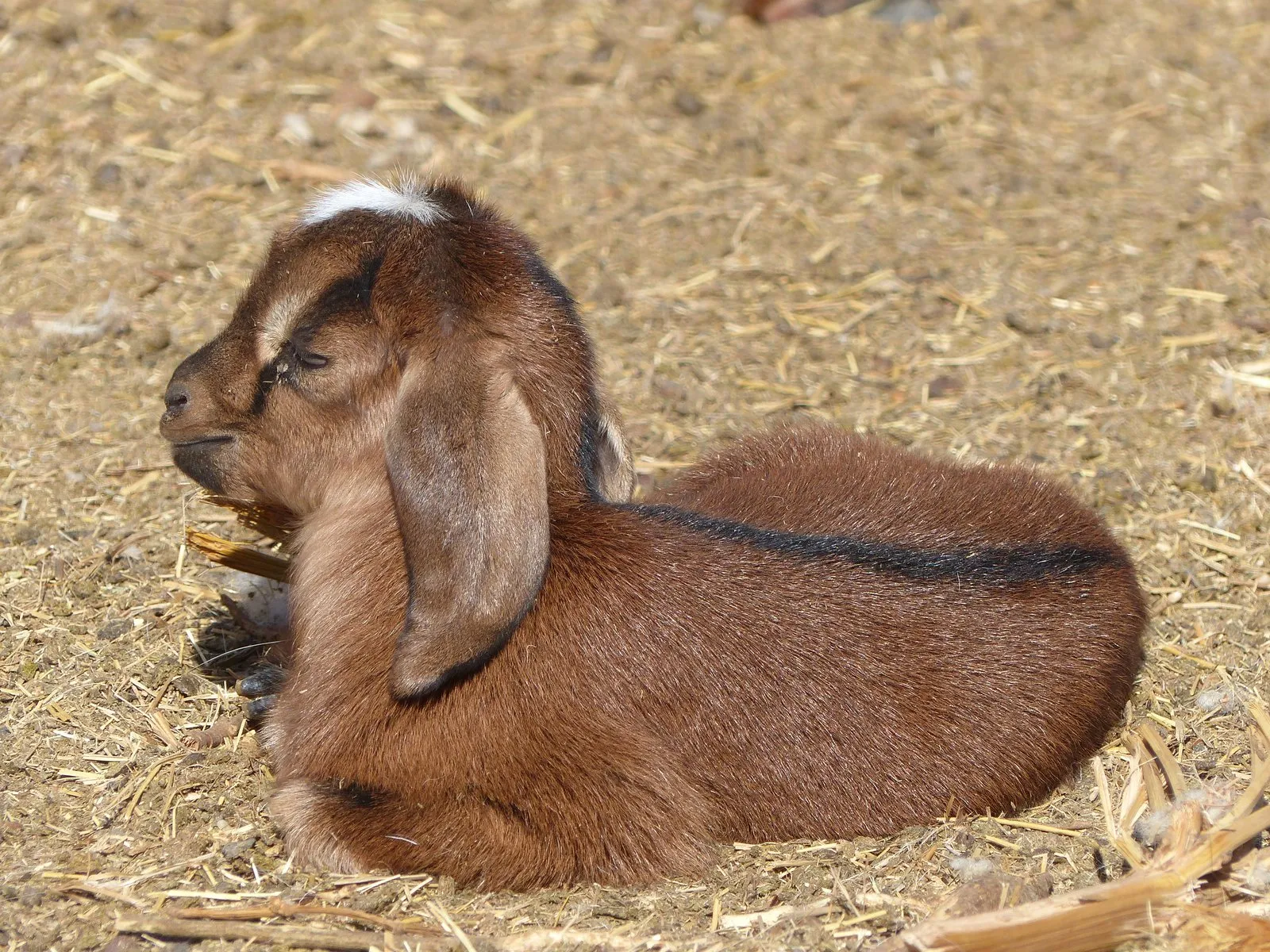 — view the full-size photo
Another shot of the same kid in Tozeur, Tunisia. It shows the young animal that the Canarian word names; it is not a baifo from the islands. 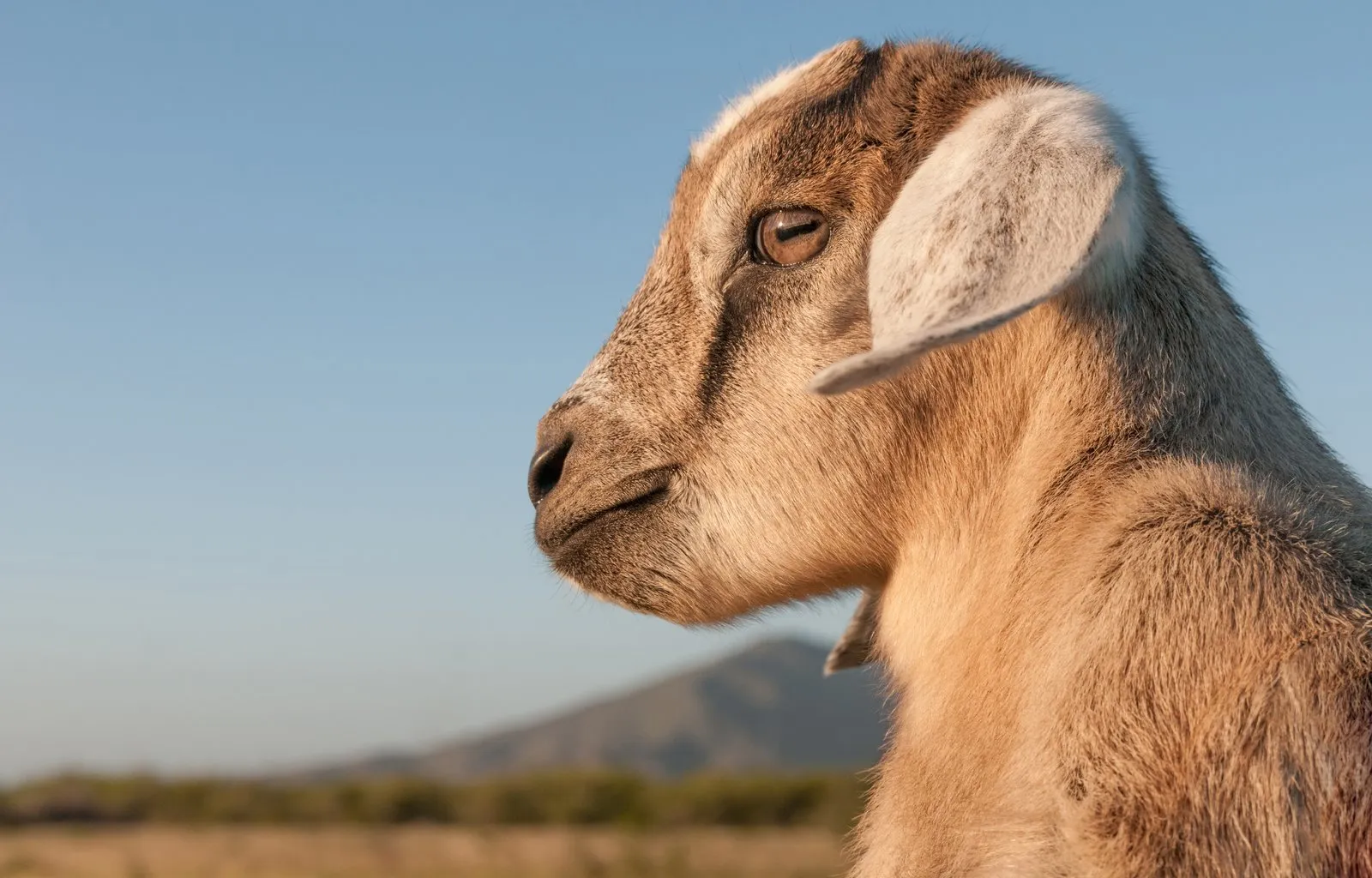 — view the full-size photo
Young animal on Margarita Island, Venezuela. It shows the size of a small kid, not a Canarian herd.
Photos: 1. Tsaag Valren (opens in a new tab) (CC BY-SA 4.0 (opens in a new tab)) · 2. Béria Lima de Rodríguez (opens in a new tab) (CC BY-SA 3.0 (opens in a new tab))
Frequently asked questions
What is a baifo?
Are baifo and cabrito the same thing?
What is a baifito?
How is baifo cooked?
Is baifo a breed?
Why is there so much talk of baifo in Gran Canaria?
Also in the glossary
Canarian goat
"Canarian goat" is not, today, the name of a breed in Spain's Official Catalogue of Livestock Breeds: the catalogue lists Majorera, Palmera and Tinerfeña.
Designation of origin, protected (PDO)
A protected designation of origin is a European name that identifies a food born of a specific place, with all its stages carried out there.
Esferificación (spherification)
Spherification encloses a liquid in a thin skin of alginate gelled with calcium, so that the sphere bursts in the mouth.