Sensory Appreciation: Exploring the Dimensions of Taste and Smell in Gastronomy
- Term
- Sensory appreciation
- Tags
- Tasting · Food science
- Published
- Updated

What sensory appreciation is
Sensory appreciation in gastronomy is a fascinating field that delves into how our senses interact with food, turning every bite into a unique experience. This field covers the analysis of the organoleptic characteristics of food, that is, those we perceive directly through our senses: flavour, aroma, texture and appearance.
When that judgement stops being an opinion and is put through a method, it changes name: it’s called sensory analysis or sensory evaluation, a standardised analysis of food carried out with the senses, designed precisely to reduce the subjectivity of tasting. In its scientific formulation it’s defined as the discipline that applies the principles of experimental design and statistical analysis to the use of the human senses to evaluate consumer products. All five take part: sight, smell, taste, touch and hearing.
It is, in that sense, an intersection between art and science: by better understanding how our senses interpret the different aspects of food, memorable dishes can be created that are also nutritionally complete.
The role of science in sensory appreciation
Science plays a crucial role in understanding and improving our culinary experience. Sensory research focuses on identifying and understanding how the different components of food affect our perception. From the complexity of aromas and flavours to the texture felt when biting into a dish, every element is analysed to create memorable dining experiences.
Rose Marie Pangborn (1932-1990), a professor at the University of California-Davis from 1955, is considered the pioneer of modern sensory science: she published more than 180 papers and her book Principles of Sensory Evaluation of Food trained a whole generation of specialists. In 1978 she co-founded the Association for Chemoreception Sciences (ACHEMS), the scientific society devoted to the chemical senses, taste and smell.
Sensory analysis also has its own standards. The ISO 67.240 family groups the international standards for sensory analysis: from testing protocols to the design of the glass used for tasting.
| Standard | What it sets |
|---|---|
| ISO 5495 | Paired comparison test |
| ISO 16820 | Sequential analysis |
| ISO 13302 | Flavour modification caused by packaging |
| ISO 3591 (1972) | Standardised tasting glass, the INAO glass: 210-225 ml, a 46 mm mouth and a 100 mm bowl |
| ISO 67.240 family | Set of standards devoted to sensory analysis |
That a glass has had an international standard since 1972 says quite a lot about the trade: if the vessel changes, what reaches the nose changes, and two tastings stop being comparable.
The three types of panel
There isn’t a single kind of sensory analysis: there are three, and each one answers a different question.
| Type of analysis | What question it answers | Assessors | Training |
|---|---|---|---|
| Descriptive | What is this product like? What words describe it? | Around 10 people | 6 to 8 sessions, until 10 to 15 adjectives are fixed |
| Discriminative | Is there a difference between two products, or before and after a process change? | Around 30 | Yes |
| Consumer (hedonic) | Which is preferred? | Between 50 and 100 | No: untrained people |
The most common mistake is confusing them: a trained panel of ten people can state with precision that one cheese has more acidity than another, but not which one the market will prefer. The usual applications are quality control, comparing a new product against the existing one and, notably, wine tasting.
Aromas and flavours: the language of cooking
Aromas and flavours are, perhaps, the most prominent aspects of sensory appreciation. Volatile and non-volatile compounds work together to produce the flavour profile of food. Science helps unravel these complex profiles, allowing chefs to manipulate ingredients to achieve specific results, from enhancing natural flavours to creating innovative combinations.
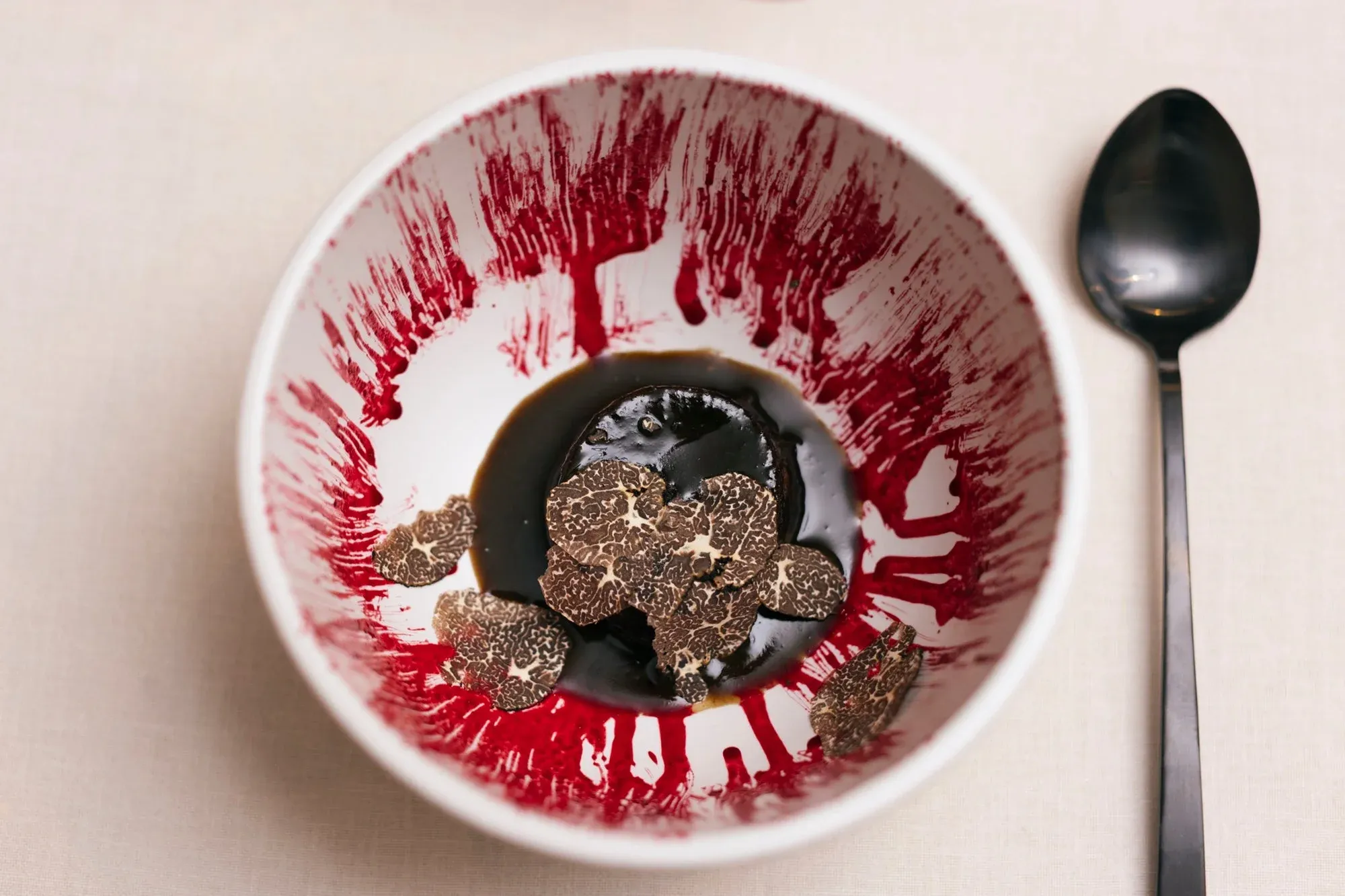
The five basic tastes
Science recognises five basic tastes — sweet, sour, salty, bitter and umami — and detects them through two different physiological pathways.
| Taste | How it's detected |
|---|---|
| Sweet | G protein-coupled receptors (GPCR) |
| Bitter | G protein-coupled receptors (GPCR) |
| Umami | G protein-coupled receptors (GPCR) |
| Salty | Ion channels that react directly to alkali metals |
| Sour | Ion channels that react directly to hydrogen ions |
Bitter is the most closely watched of the five: humans have around 25 distinct genes for bitter-taste receptors, the TAS2R family, able to recognise a wide variety of bitter compounds. The list isn’t closed: in 2015 several researchers proposed fat as a possible sixth basic taste.
Acidity also has a correlate that can be measured before tasting anything: it’s the territory of acidification and pH.
Umami, the fifth taste that had to be named
With umami, perception ran ahead of chemistry: first something that didn’t fit the four classic categories was noticed, and only afterwards was the molecule identified.
| Year | Who | What was discovered |
|---|---|---|
| 1908 | Kikunae Ikeda (Tokyo Imperial University) | Isolates the glutamate responsible for the palatability of kombu seaweed dashi stock and names that fifth taste "umami" |
| 1909 | Ikeda and Saburōsuke Suzuki | Found Ajinomoto and launch monosodium glutamate (MSG) as the first commercial umami seasoning |
| 1913 | Shintarō Kodama | Discovers IMP (inosinate) in dried bonito shavings, katsuobushi |
| 1957 | Akira Kuninaka | Identifies GMP (guanylate) in shiitake and describes the synergistic effect between ribonucleotides and glutamate |
| 2000 | University of Miami team | Identifies the umami receptor on the tongue: the TAS1R1 + TAS1R3 heterodimer |
The synergy described by Kuninaka in 1957 explains a gesture that predates any laboratory: dashi combines kombu, rich in glutamate, with katsuobushi, rich in inosinate, and tastes like more than the sum of its parts.
Orthonasal and retronasal smell
Much of what we call “flavour” doesn’t happen on the tongue. Paul Rozin established in 1982 the distinction between orthonasal smell, the one used when breathing in through the nose, and retronasal smell, that of the volatile compounds pushed towards the nasopharynx when chewing and breathing out. They’re two routes to the same receptor, and they can give opposite results.
The textbook case is Limburger cheese: smelled directly it’s repulsive, and yet in the mouth it’s pleasant. The same molecule, two verdicts. Hence a food with a difficult smell can still work on a menu, and a cold can leave food tasteless even though the tongue is still intact. The volatile side of this story has its own entry in aromatics.
Texture: the finishing touch in the dining experience
Texture also plays a fundamental role in our perception of food. From the smoothness of a mousse to the crunch of freshly baked bread, texture can completely alter our experience of a dish. Food science investigates how cooking processes and ingredients interact to create these textures, giving chefs the tools they need to experiment and surprise.
Texture comes in through touch — of the hand and, above all, of the mouth — and, to a lesser extent, through hearing: crunch is the route of the fifth sense that also takes part. It’s where technique becomes perceptible: the water available in a food, its water activity, and the behaviour of proteins such as albumin, decide whether something turns out juicy, rubbery or dry.
Visual appreciation: the first bite is with the eyes
The appearance of food is our first contact with it and can significantly influence our perception of flavour. The science behind appearance includes understanding how colours, presentation and visual composition affect our desire to eat and enjoy food. A carefully composed presentation can enhance the culinary experience, making every dish not only delicious but also visually appealing.
“The first bite is with the eyes” isn’t just a cook’s turn of phrase: it’s been measured. In 2001, Frédéric Brochet, at the University of Bordeaux, gave 54 university students two glasses of the same white wine, one of them tinted red with an odourless dye. The tasters described the “red” glass with the vocabulary proper to a red wine and failed to recognise that both had come from the same bottle.
The same researcher went further with the label. He served a mid-range Bordeaux wine in two different bottles: presented as a grand cru, the tasters described it as “woody, complex and round”; presented as a cheap wine, as “short, light and flawed”. The liquid was identical.
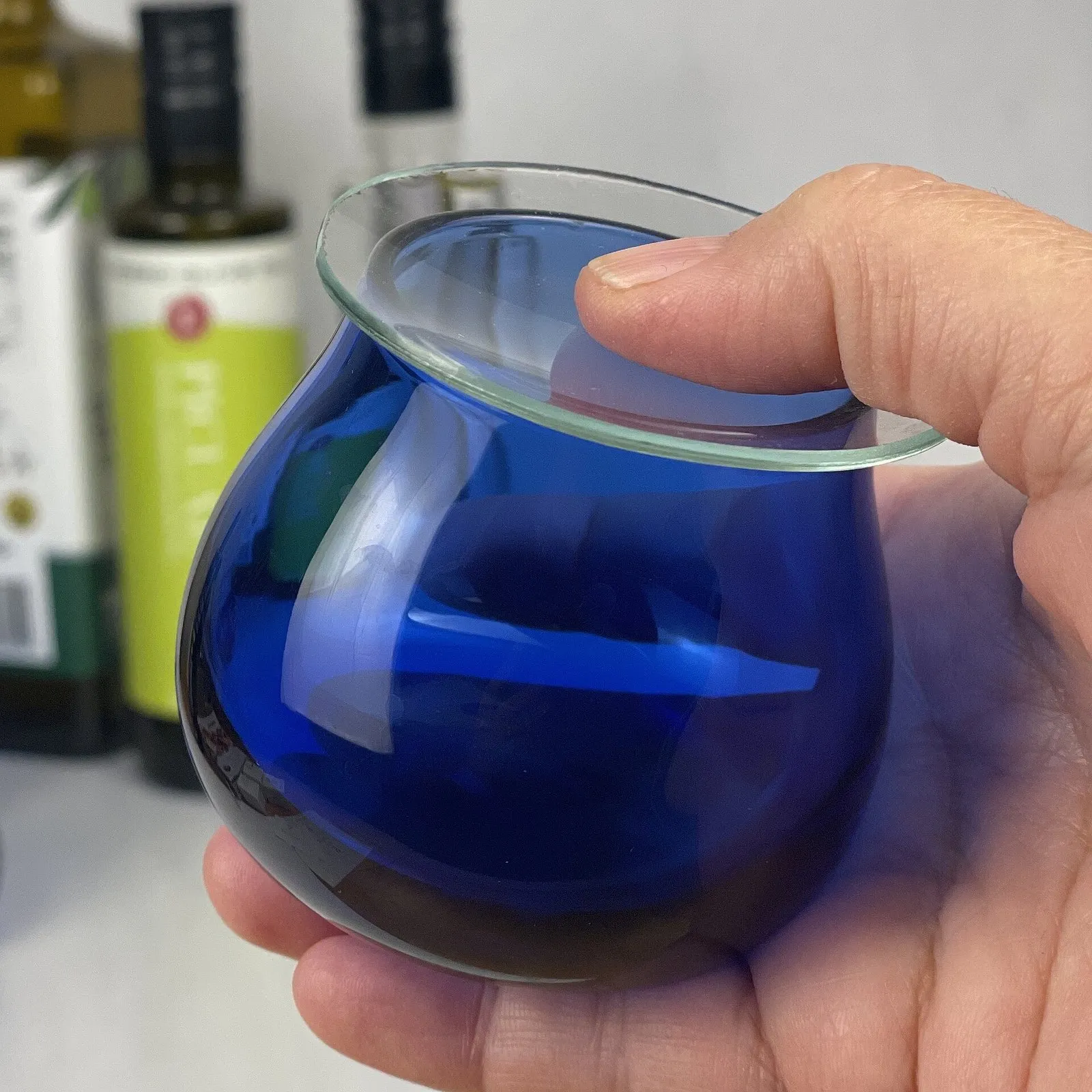
Hence the trade’s countermeasure: when what’s being judged is aroma and flavour, colour is removed. Professional extra virgin olive oil panels taste from a lidded cobalt blue glass.
In the Canary Islands: when tasting is written into the regulations
In the Canary Islands, sensory appreciation isn’t just a matter for the dining room: in two cases it’s binding law. The specifications of two Protected Designation of Origin cheeses describe a regulated organoleptic profile — rind, paste, flavour, acidity, saltiness — and it’s that description that decides whether a cheese can be called “Majorero” or “Palmero”.
| Cheese | Island | PDO since | Organoleptic profile in the specification |
|---|---|---|---|
| Majorero cheese | Fuerteventura | 16 February 1996 | Rind bearing the imprint of the palm leaf used to mould it; compact paste, from creamy to semi-hard in texture; mild flavour when fresh, strong and slightly spicy when cured |
| Palmero cheese | La Palma | 11 September 2001 (order of 31-08-2001, BOE of 11-11-2001) | Firm and elastic paste; white rind that turns brownish when smoked; "clean flavour, characteristic of goat's milk", with slight acidity and medium saltiness |
Those specifications are worth reading for what they are: descriptive-panel vocabulary turned into regulation. “Slight acidity”, “medium saltiness” or “slightly spicy” are the adjectives a trained panel fixes over its six or eight sessions, only here they’ve gone through the Boletín Oficial del Estado.
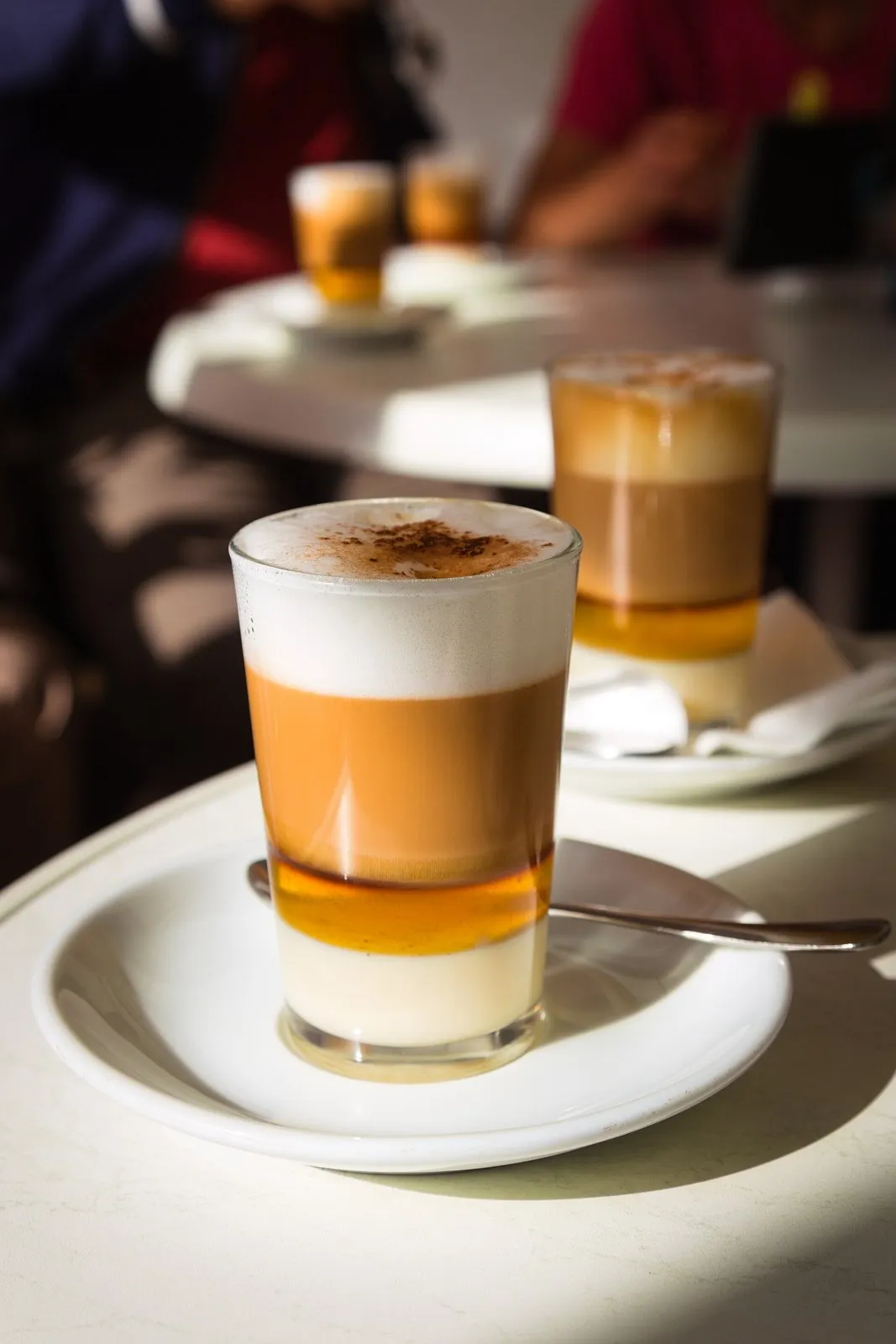
The third Canarian route is more everyday and comes in through the eyes. The Tenerife barraquito is served in layers — condensed milk, Licor 43, coffee, steamed milk, cinnamon and lemon — in a glass similar to a wine glass. The visual stratification is part of its identity: it has already been read before it is tasted.
At Taste 1973: the edible perfumes
There’s a project of the house that is, literally, sensory appreciation applied. At Madrid Fusión 2024, Diego Schattenhofer presented two edible perfumes, “Pinar del Teide” and “Medianía”, developed with Alfonso Álvarez, an aroma expert at Scentmate by dsm-firmenich, and with María Fresno, a doctor of veterinary science at the Canary Islands Institute of Agricultural Research (ICIA). The initiative won praise from chef Ferran Adrià, as reported by El Día de Tenerife. The full story is in Tenerife Eats with the Nose and in What does Tenerife smell like?.
“Medianía” also has a figure behind it. Schattenhofer’s research with María Fresno found that goat meat can develop up to 130 distinct aromatic compounds depending on its degree of maturation. It’s a figure from that research with ICIA, not a consensus figure from the scientific literature, and it’s worth citing it that way; but it supports the underlying idea: maturation doesn’t just add an aroma, it multiplies the map.
And it isn’t only kitchen work: in July 2023 the dining room of Taste 1973 hosted the first sensory analysis workshop on goat meat of ICIA’s CAIA project, run by the Centro Tecnológico de la Carne. A full-blown panel — samples, tasting sheets and pen — set up on the restaurant’s own tablecloths.
The science behind meat maturation explains that the aim of maturation methods is precisely to improve the sensory appreciation of meat: the vocabulary of the panel and that of the production room end up being one and the same.
Related terms
- Aromatics — the volatile compounds perceived by smell, the raw material of the retronasal half of flavour.
- Acidification — the process behind sour, the basic taste with a measurable correlate.
- Water activity — the parameter behind whether something is perceived as juicy or dry.
- Albumin — the proteins that decide much of a food’s texture in the mouth.
- Aperitif — the moment when sensory appreciation opens the meal and prepares the palate.
- Aguardiente — how a spirit is tasted and why its strength shapes what the nose perceives.
Sources consulted
- Wikipedia (es): Análisis sensorial
- Wikipedia (en): Sensory analysis
- Wikipedia (en): Wine tasting
- Wikipedia (en): Umami
- Wikipedia (en): Taste
- Wikipedia (en): Retronasal smell
- Wikipedia (en): Rose Marie Pangborn
- Wikipedia (es): Queso majorero
- Wikipedia (es): Queso palmero
- Wikimedia Commons: “Barraquito tinerfeño.jpg” (file page)
- Wikimedia Commons: “Professional Cobalt Blue Olive Oil Tasting Glass.jpg” (file page)
- El Día de Tenerife: “¿A qué huele Tenerife?”
- Posts from the house: Tenerife Eats with the Nose · What does Tenerife smell like? · First sensory analysis workshop on goat meat (ICIA, 2023) · The science behind meat maturation


Frequently asked questions
What is sensory appreciation?
Which senses take part in sensory appreciation?
What's the difference between sensory appreciation and sensory analysis?
What are the five basic tastes?
Why does sight influence how we perceive flavour so strongly?
What's the difference between orthonasal and retronasal smell?
How many assessors does a sensory panel need?
Is there any Canarian product whose quality is measured with official sensory appreciation?
What are Diego Schattenhofer's "edible perfumes"?
Also in the glossary
Water activity (a_w)
Water activity (a_w) is a crucial concept in food science that refers to the amount of free water available to take part in chemical reactions and microbial growth in food.
Xanthan gum
Xanthan gum is a natural polysaccharide used as a thickening and stabilising agent in food.
Acidification
Acidification is an essential culinary and preservation method that plays a fundamental role in modern and traditional gastronomy.