Albumin: Diversity and Applications in Contemporary Gastronomy
- Term
- Albumin
- Tags
- Proteins · Egg · Food science
- Published
- Updated
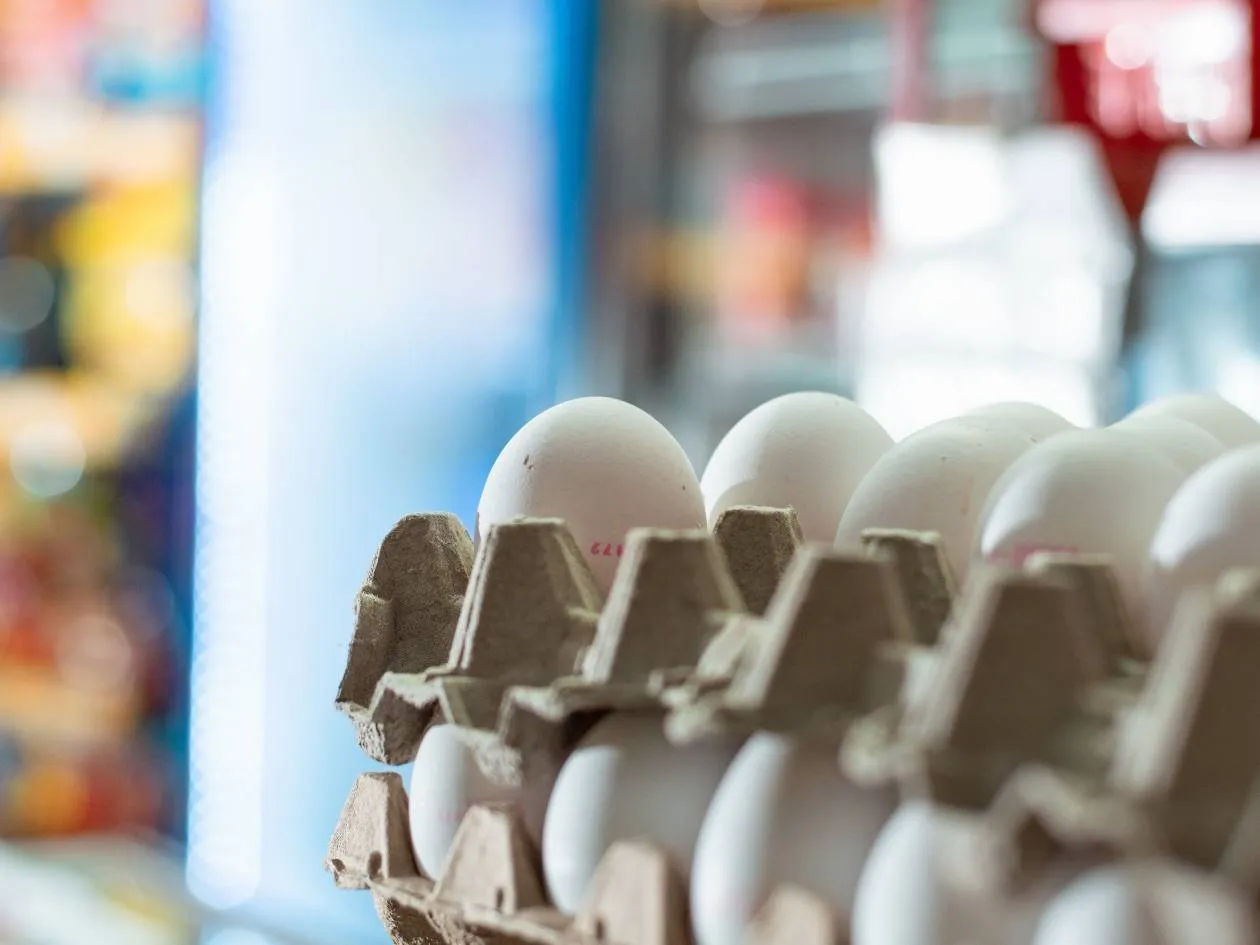
Explore albumin’s essential role in the kitchen, from improving texture to creating unique sensory experiences. An essential resource for chefs, culinary students and enthusiasts of innovative cooking.
What albumin is and where the name comes from
Albumin is a water-soluble protein, known for its ability to coagulate when heated. It’s found in abundance in egg white, though it’s also present in milk and other animal and plant tissues. This ingredient plays a crucial role in the kitchen thanks to its ability to create emulsions and foams, improve texture and stabilise mixtures.
That’s essentially the same definition given by the Diccionario de la lengua española: a water-soluble protein that coagulates on heating, present in blood, in milk and, as a main component, in egg white, as well as in other animal and plant tissues.
The name comes from the Latin albumen, albuminis, “egg white”, and this from albus, “white”: the word describes a colour before a function. Further back is the Indo-European root *albho-, “white”, which in Germanic gave the forms albiz and albaz — referring to apparitions — from which “elf” comes, as in Norse mythology. The scientific term, by contrast, is modern: it entered Spanish through the French albumine and has been documented since 1792.
Types of albumin and their use in cooking
Albumin is a family of water-soluble globular proteins, found in nature in various forms. Its ability to coagulate under heat and form emulsions makes it invaluable in a wide range of culinary applications. These are the most common types and their relevance in the kitchen:
- Egg albumin: extracted from the white, it’s the best known and most widely used in cooking. Its high capacity to form foams and stabilise emulsions makes it a favourite for pastry-making, mousses and meringues.
- Serum albumin: found in blood, this form is used in specialised applications outside conventional cooking, mainly in the medical and scientific fields.
- Plant albumin: extracted from plant sources such as legumes, it’s used in products designed for vegans and people with egg allergies. Although its behaviour may differ slightly from egg albumin, it’s a viable alternative in certain culinary preparations.
For culinary purposes, egg albumin is the most widely used thanks to its availability, versatility and effectiveness across various culinary techniques. This ingredient lets chefs create textures ranging from light and airy to firm and stable, without altering the fundamental flavour of dishes.
It’s worth not confusing the first two: they share a name and little else. Human serum albumin is the most abundant protein in blood plasma — between 55 % and 65 % of total protein — is synthesised exclusively in the liver, in hepatocytes, and its normal concentration in an adult ranges from 3.5 to 5.0 g/dL. It maintains the blood’s oncotic pressure, holding around 18 mL of water per gram within the vascular space, and acts as a carrier: transporting fatty acids, bilirubin, calcium, thyroid hormones and drugs, besides having antioxidant properties.
| Ovalbumin (egg) | Serum albumin (human) | |
|---|---|---|
| Molecular mass | 45 kDa | 66.5 kDa |
| Amino acids | 385 | 585 |
| Origin | Egg white | Liver hepatocytes |
| Role | ≈55 % of egg-white protein | 55-65 % of plasma protein |
| Half-life | — | ≈3 weeks in circulation |
The three-dimensional structure of chicken ovalbumin is no mystery: it was solved by crystallography at a resolution of 1.95 Å and is deposited in the Protein Data Bank under the code 1OVA.
The science of egg white: water, proteins and heat
Egg white is, for the most part, water: between 85 % and 90 %. The rest is mainly protein, with traces of minerals, fats, vitamins and glucose. And that protein isn’t a single one.
| Egg-white protein | Proportion |
|---|---|
| Ovalbumin | ≈55 % |
| Conalbumin (ovotransferrin) | 14 % |
| Ovomucoid | 11 % |
| Lysozyme | 3.5 % |
| Ovomucin | 1.5 % |
| Avidin | 0.05 % |
That breakdown explains why the question “at what temperature does egg white coagulate?” has no single answer. Each protein denatures within its own range, so the white sets in stages rather than all at once: powdered albumin data sheets put its coagulating capacity from 57 °C, while pure ovalbumin is cited as coagulating at around 75 °C. It isn’t a contradiction, just two measurements of different things.
In the kitchen: dosing, foams and clarifying
Valued in both traditional and modern cooking, egg albumin is essential in making meringues, mousses and sauces, as well as in clarifying stocks. Its ability to form stable foams and improve the consistency of liquids makes it a versatile ingredient in hot and cold preparations, and it opens up new dimensions in the presentation and texture of dishes.
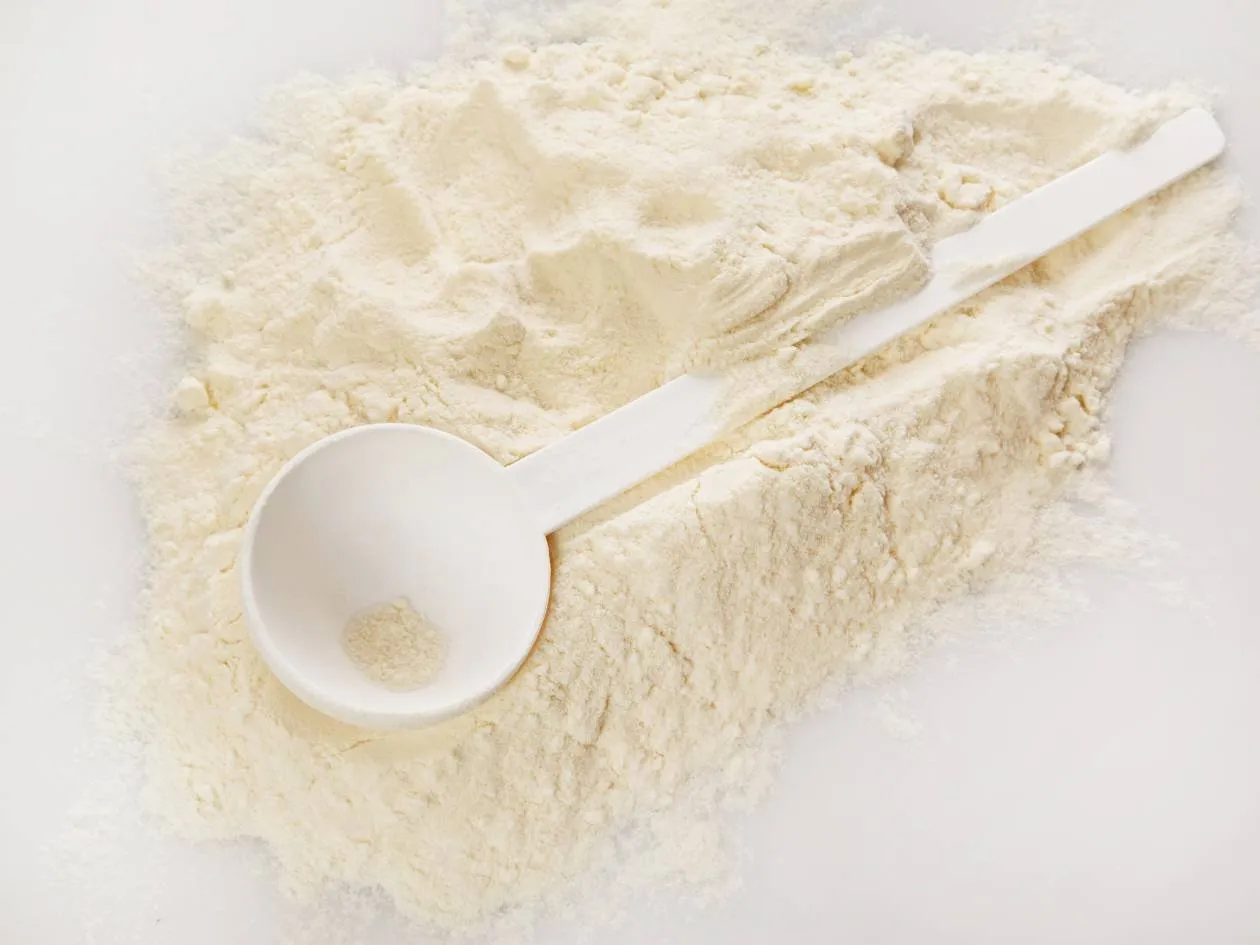
The professional format is powdered egg albumin: dehydrated, pasteurised egg white with an anti-caking agent, with no smell or flavour of its own. It’s reconstituted with water and behaves like fresh egg white, with the advantage of exact dosing.
| Use | Reference dose | Source |
|---|---|---|
| Equivalence with fresh egg white | 10 g of powder + 30 ml of water ≈ 1 egg white | La Casa de los Sabores |
| Foams and meringues (original sheet) | ≈30 g per litre of liquid | Kitchen practice |
| Aerated preparations with commercial albumin | 81-100 g per kilo of liquid | Sosa (Albuwhip) |
| Emulsions and sauces | From 0.5 % of total weight, upwards | Kitchen practice |
The figures aren’t contradictory: the range depends on the body wanted for the foam and on how the powder is formulated. Albuwhip’s data sheet (Sosa), as an example of commercial albumin, states a retention of up to 60 % air, an efficiency 25 % greater than that of fresh egg white, and a stability five times higher, with coagulating capacity from 57 °C.
Tips for use
- Product quality: use albumin from reliable sources, to ensure purity and functionality.
- Preparation: to avoid lumps, dissolve the albumin in a little cold water before adding it to the preparation.
- Experimentation: adjust the amounts until you find the texture you’re after; start low and build up.
Practical applications
- In pastry: improves the texture of sponges and cakes, with a lighter, airier crumb.
- In foams and mousses: dry meringues, macarons, mousses, soufflés, aerated sponges and siphon-whipped foams.
- In clarifying stocks: acts as a natural clarifying agent, trapping suspended particles to produce clear, clean stocks.
The siphon-foam technique, popularised by Ferran Adrià at El Bulli (Roses) in the nineties, uses albumin as one of its usual stabilisers, alongside soya lecithin, gelatine and whey protein.
Clarifying a stock: the egg-white raft
The classic consommé method is a lesson in applied coagulation. Beat egg white — one egg white per litre of stock — and add it to the stock once it’s boiling; lower the heat to a minimum and keep it at a very gentle simmer for half an hour without stirring. The egg white coagulates, forming a “raft” that drags along the suspended impurities. It’s then left to cool and rest for about two hours before straining.
In Spain: egg white in the winery
Albumin’s Spanish roots aren’t in pastry, but in winemaking. Fining wine with egg white is a centuries-old practice, and a Hoja Divulgadora from the Ministry of Agriculture, dated 1955, signed by agricultural engineer Enrique Feduchy Mariño, describes it with textbook precision: “Egg white is almost entirely pure albumin, [and] on average contains about four grams [of albumin] per white. Tannin and alcohol are the agents by which it coagulates in wine.”
That bulletin also set the doses: 2-3 fresh egg whites per hectolitre of wine, or 8-12 grams of dried albumin per hectolitre, dissolved beforehand in warm water at 30-40 °C. The practice is still alive: in Bordeaux and in wineries of the D.O.Ca. Rioja, crianza reds (oak-aged reds) are fined with egg white, at doses of two to four whites per 225-litre barrel, taking advantage of the fact that albumin, positively charged at wine’s pH (3.0-3.8), binds selectively to the harshest, highest-molecular-weight tannins.
That use now has a legal consequence. Residues of egg protein in fined wine must be declared on the label if detected above international analytical limits. The International Organisation of Vine and Wine set the first ones with Resolution OIV/OENO 427-2010 — a detection limit of at least 0.5 mg/L and a quantification limit of at least 1 mg/L — and refined them with Resolution OIV/SECSAN 709-2022, which demands more of ELISA methods and lowers the detection limit to 0.25 mg/L and the quantification limit to 0.5 mg/L.
In Argentina: the meringue of the Rogel cake
In Argentine pastry-making, albumin has a recognisable ambassador: the torta Rogel, thin layers of puff pastry with dulce de leche and a topping of Italian meringue, that is, egg white whipped with hot syrup. Its creation is credited to María del Rosario “Charo” Balbiani, who in the sixties, in Buenos Aires, adapted a Dutch millefeuille recipe by replacing the fruit jam with dulce de leche. The product has been linked to the Balbiani family for more than forty years; in the early nineties, after the original maker’s death, another branch of the family bought the machinery and the brand and opened a second chapter.
Food safety: declared allergen and raw egg white
Egg and its derivatives — albumin included — are one of the 14 allergens that must be declared by law in the European Union, listed in Annex II of Regulation (EU) No 1169/2011 on the provision of food information to consumers. On the à la carte menu, on the technical sheet and on the label, a foam made with albumin declares egg.
There’s also a nutritional detail worth knowing before serving raw egg white. Egg white contains avidin, an antimicrobial protein that binds tightly to biotin (vitamin B7) and prevents its intestinal absorption. Prolonged consumption of raw egg white — weeks or years — is one of the three situations in which biotin deficiency has been demonstrated in humans. The solution is the usual one: cooking egg white denatures avidin, making it digestible and unable to block dietary biotin.
Considerations and tips
Start with small amounts and adjust according to the result: experimentation and precision are the two halves of the job. The same powder works for a dry meringue and for a siphon foam, and what changes from one case to another is the dose, the temperature and the whisking time.
Related terms
- Amino acids — the building blocks that any protein, albumin included, is made of.
- Non-essential amino acids — the part of that composition the body can make on its own.
- Agar-agar: nutritional and culinary insights — the plant-based gelling agent that competes with albumin when egg isn’t an option.
- Xanthan gum — the other great texturiser of avant-garde cuisine, of non-animal origin.
- Acidification — the other way to transform a protein: lowering the pH instead of raising the temperature.
Sources consulted
- Real Academia Española, Diccionario de la lengua española: “albúmina”
- Etimologías de Chile: “albúmina”
- Clínica Universidad de Navarra, medical dictionary: “albúmina”
- Linus Pauling Institute (Oregon State University): “Biotin”
- Regulation (EU) No 1169/2011 on the provision of food information to consumers (BOE)
- Ministry of Agriculture, Hoja Divulgadora No. 23-55H: “Clarificación de vinos” (1955, PDF)
- International Organisation of Vine and Wine (OIV): food safety and allergen-detection criteria
- Gurmevins: “Clarificación con clara de huevo”
- Sosa Ingredients: Albuwhip product sheet
- La Casa de los Sabores: “Albúmina de huevo: ideal para aireantes y espumas”
- Sabores Creativos: “Albúmina de huevo pasteurizada: qué es y cómo se usa”
- Directo al Paladar: “Caldo clarificado o consomé: qué es y cómo se hace”
- AI Chef Pro: “Espumas (técnica Ferran Adrià): concepto y definición”
- Escuela Mundo Pastel: “Historia Rogel”
- Wikipedia: Ovoalbúmina · Clara de huevo · Torta Rogel
Frequently asked questions
What is albumin?
What is powdered egg albumin?
Is albumin the same as egg white?
What is albumin used for in the kitchen?
What's the difference between egg albumin and blood albumin?
Is it dangerous to eat raw egg white?
At what temperature does egg albumin coagulate?
Is albumin an allergen?
Also in the glossary
Alfalfa
Alfalfa, known scientifically as Medicago sativa, is a leguminous plant widely used in both animal feed and human food.
Alkalisation
A process that decreases the amount of acid in a solution.
Allicin
Allicin is an organosulfur compound that forms when raw garlic is crushed or chopped.