Xanthan Gum: Revolutionising Textures in Modern Gastronomy
- Term
- Xanthan gum
- Tags
- Gums · Thickeners · Additives
- Published
- Updated
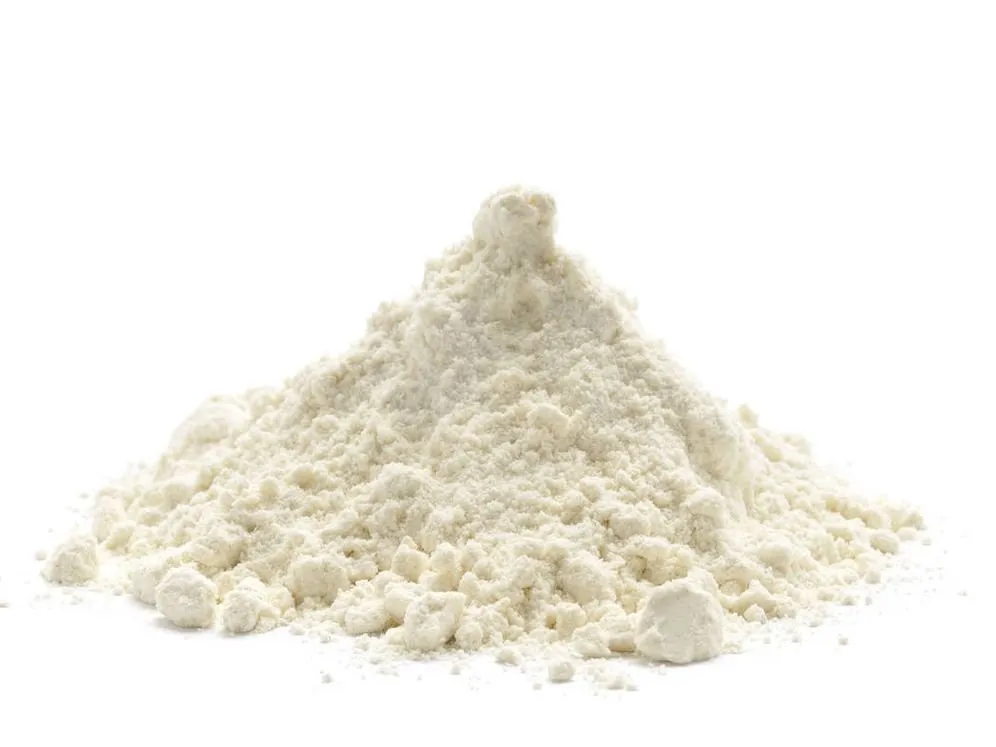
What xanthan gum is
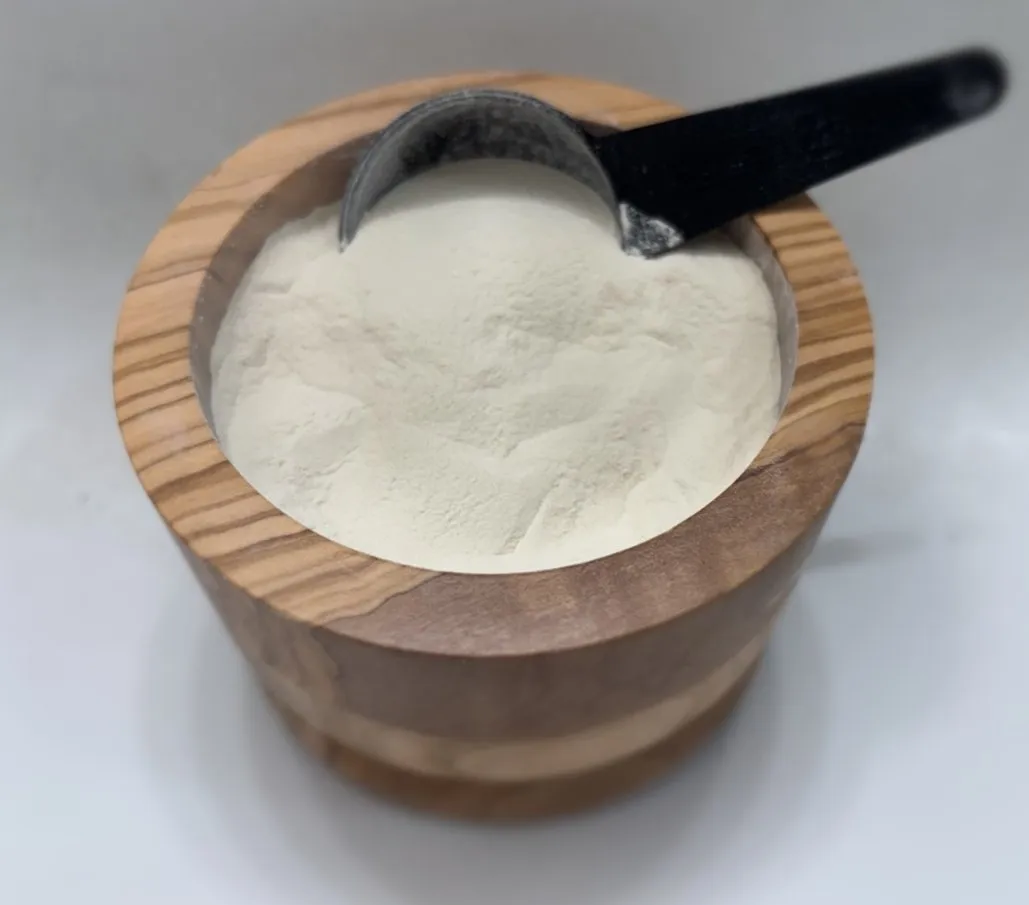
Xanthan gum is a natural polysaccharide used as a thickening and stabilising agent in food. It is produced by fermenting sugars with the bacterium Xanthomonas campestris. This ingredient is prized for its ability to improve the texture of food without altering its flavour.
More precisely: it is an extracellular heteropolysaccharide, a complex sugar that the bacterium excretes into the medium as it ferments sugars, usually maize starch. It performs four functions that don’t always go together — thickener, stabiliser, emulsifier and gelling agent — and in the European Union it is authorised as an additive under the code E415.
One terminological curiosity is worth noting: the Real Academia Española does not currently include an entry of its own for “xantano” or “xantana” in its Diccionario de la lengua española, although it does register related terms such as “xantina” or “xantoma”. It is a laboratory word that reached the kitchen before it reached the dictionary.
Where it comes from: a cabbage bacterium and a laboratory in Illinois
The name carries its own colour. The genus Xanthomonas was coined from the Greek xanthós, “yellow”, and monás, “unit”, after the yellow pigment of its colonies. In nature, Xanthomonas campestris is not an ingredient: it is a plant pathogen that causes “black rot” in brassicas — cabbage, cauliflower, kohlrabi — with necrosis at the leaf edges and darkening of the stem veins. The gum that today thickens a sauce is, in origin, the substance that this bacterium secretes.
The leap from the field to the kitchen has a date and names attached. In the 1950s, the team led by chemist Allene Rosalind Jeanes at the Northern Regional Research Laboratories of the United States Department of Agriculture (USDA), in Peoria (Illinois), identified this gum as part of a programme to search for domestically produced microbial gums, launched after the commercial success of dextran. Commercial production began in early 1964: it was the first biopolymer obtained from a maize-sugar fermentation to gain commercial importance. In 1968, Jeanes and her team received the USDA Superior Service Award for the discovery, and that same year the US FDA approved its use in food production.
What it does in a liquid: the science of xanthan gum
Xanthan gum has a main chain of β-D-glucose — the same as cellulose — from which side chains of three sugars hang. The repeating unit is a pentasaccharide of glucose, mannose and glucuronic acid in a molar ratio of 2:2:1. This branched architecture explains its behaviour: the molecule traps water and tangles with itself, so that at very low concentrations the liquid gains viscosity.
| Parameter | Value |
|---|---|
| EU additive code | E415 |
| Formula of the monomeric unit | C35H49O29 |
| Molar mass | ≈ 933.75 g/mol |
| Solubility | In cold water and in hot water |
| Stable pH range | 2.5 – 11 |
| Working temperature range | From freezing to temperatures close to boiling |
| Concentration for most food uses | ≤ 0.5 % |
| Concentration for a very pronounced effect | 1 % |
References for each figure are given in “Sources consulted”, at the end of the page.
These two ranges explain why it has become the go-to choice where other thickeners fail: a pH of 2.5 to 11 covers everything from lemon juice to an alkaline preparation, and the temperature range allows freezing and reheating without the texture collapsing. It is also soluble in cold liquids, which is not the case for thickeners that require cooking.
Its most useful trait, and the least well explained, is that it forms a pseudoplastic fluid (shear-thinning): its viscosity drops while it is stirred, pumped, poured or chewed, and recovers as soon as the force stops, just like ketchup. Hence the doubt that comes up again and again in any kitchen: the sauce looks runny as it leaves the saucepan and thickens once it settles on the plate. It is not a dosing mistake.
In the kitchen: dosage and measurements
When it comes to using xanthan gum in the kitchen, precision is key. Because of its powerful thickening capacity, even small variations in the amount can have a significant impact on the texture of the final product.
These measurements are for the use of pure, food-grade xanthan gum; for premixes such as gelespessa or others, assess their dosage through trials.
| Desired result | % of liquid weight | Per litre | External comparison |
|---|---|---|---|
| Stabilise (emulsions, dressings) | ≈ 0.1 % | ≈ 1 g | ≈ 1 g/l (Basmatic) |
| Light texture (thin sauces, soups) | 0.1 – 0.3 % | 1 – 3 g | ≈ 3 g/l (Basmatic) |
| Medium texture (thick sauces, creams) | 0.4 – 0.7 % | 4 – 7 g | 5 – 6 g/l for "very thick" (Basmatic) |
| Firm texture (gels, pastry fillings) | 0.8 – 1.0 % | 8 – 10 g | — |
The two scales agree at the lower end and diverge at the top: what is called “firm texture” here is above what other sources already describe as “very thick”. It is more a difference of vocabulary than of chemistry, and testing settles it.
Tips for dosing:
- Use precise scales. A kitchen scale capable of measuring grams accurately is worth having, especially for small amounts.
- Dissolving. To avoid lumps, mix the xanthan gum with a little sugar or salt before adding it to the liquid: this disperses it more evenly.
- Adjustments. Start with the lowest recommended dose and adjust as needed. The final texture can vary depending on the other ingredients in the recipe.
Practical example: if you are making a tomato sauce and want it to have a slightly thick consistency without altering its flavour, you could start by adding 2 g of xanthan gum to 1 litre of sauce. Stir well until the xanthan gum has fully dissolved and assess the consistency, adjusting if necessary.
Important note: xanthan gum can go on thickening a preparation after it has first been added, so it is advisable to wait a few minutes to observe the final consistency before making further adjustments.
Practical applications
- In the kitchen: thickening sauces, soups and smoothies, improving the texture of ice creams and gluten-free baked goods, and forming gels and foams.
- In gluten-free cooking: it acts as a functional substitute for gluten, giving doughs and baked goods part of the elasticity and structure that gluten provides. It is one of its most widespread uses in baking for people with coeliac disease.
- In emulsions and ice creams: it acts as an emulsifier in dressings and vinaigrettes, gives body to ice creams by slowing crystallisation, and stabilises foams and gels in technical cooking.
- In Chef Schattenhofer’s kitchen: it could be used to innovate in plate presentation, such as thickening a stock without changing its clean flavour or creating unexpected textures in desserts and main courses, always keeping the focus on quality and purity of flavour.
All of this rests on a property worth underlining: it does not noticeably alter either the flavour or the colour of a preparation, even at the doses needed to thicken it.
For culinary professionals and students
Xanthan gum is highly valued in molecular cuisine and contemporary gastronomy for its effectiveness in small quantities and its versatility in cold and hot preparations. It allows the creation of novel textures, from soft gels to liquids that can “break” in the mouth, bringing a creative and sensory dimension to the culinary experience. It is compatible with a wide range of ingredients, which makes it indispensable in experimental cooking and in formulating gluten-free recipes.
Varieties of xanthan gum available on the market
Although it is commonly called “xanthan gum”, this ingredient can be found under different names and forms, each suited to specific uses.
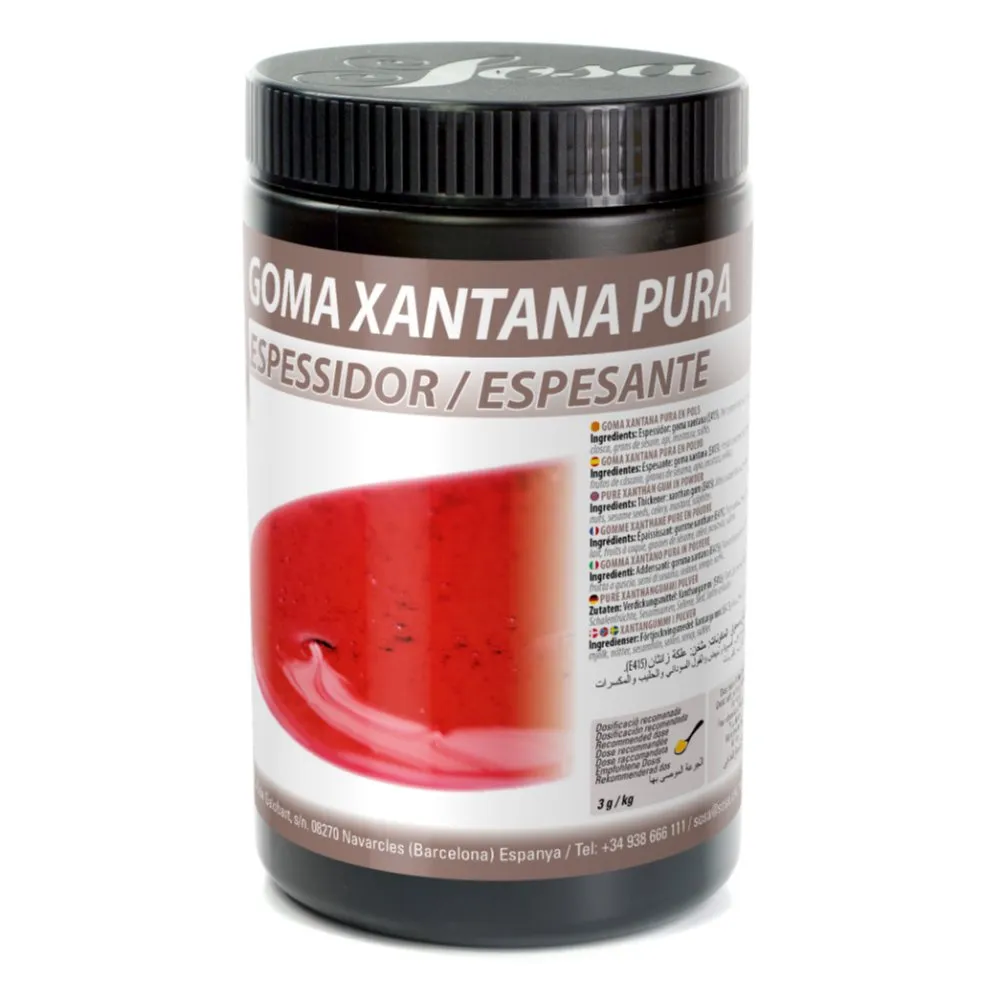
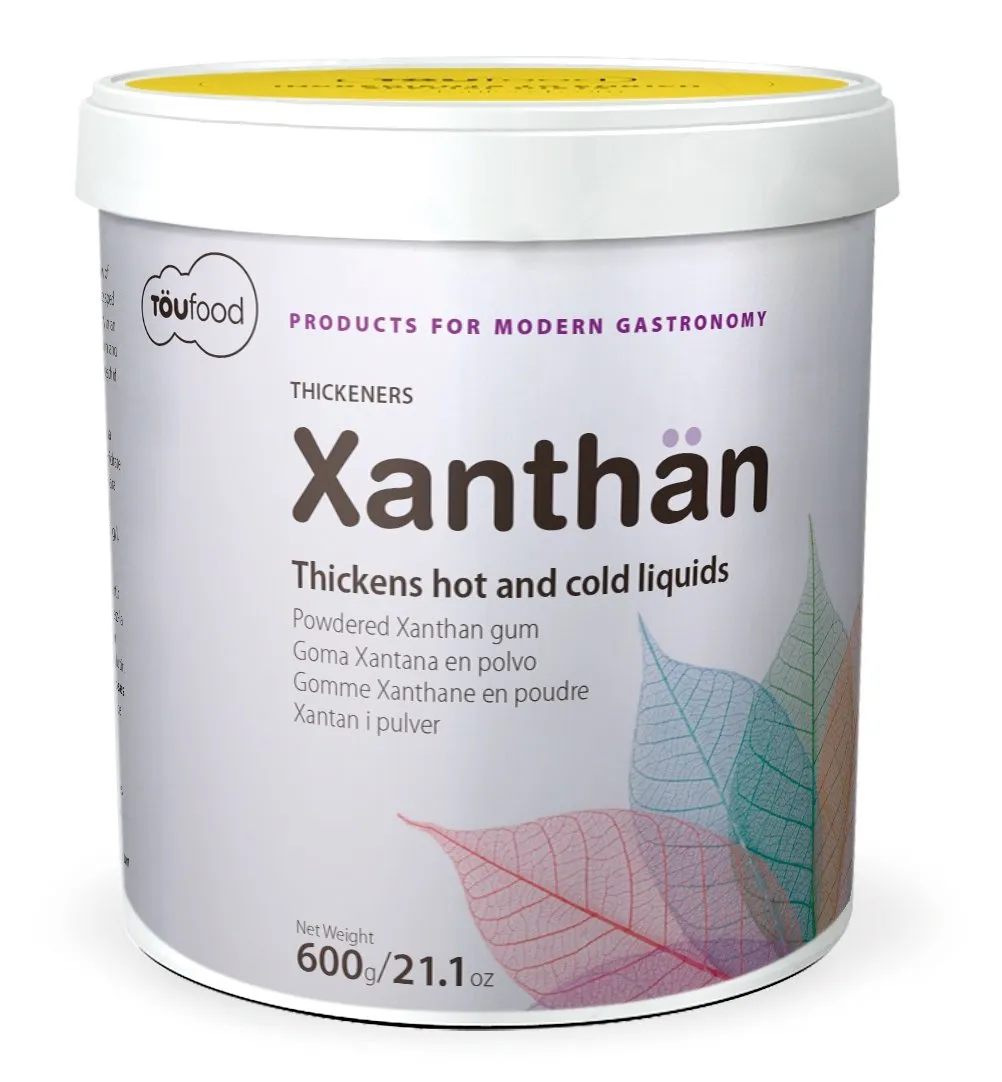
1. Standard xanthan gum. The most common form, used across a wide range of culinary applications. Ideal for thickening sauces and creams, and as a stabiliser in ice creams and drinks.
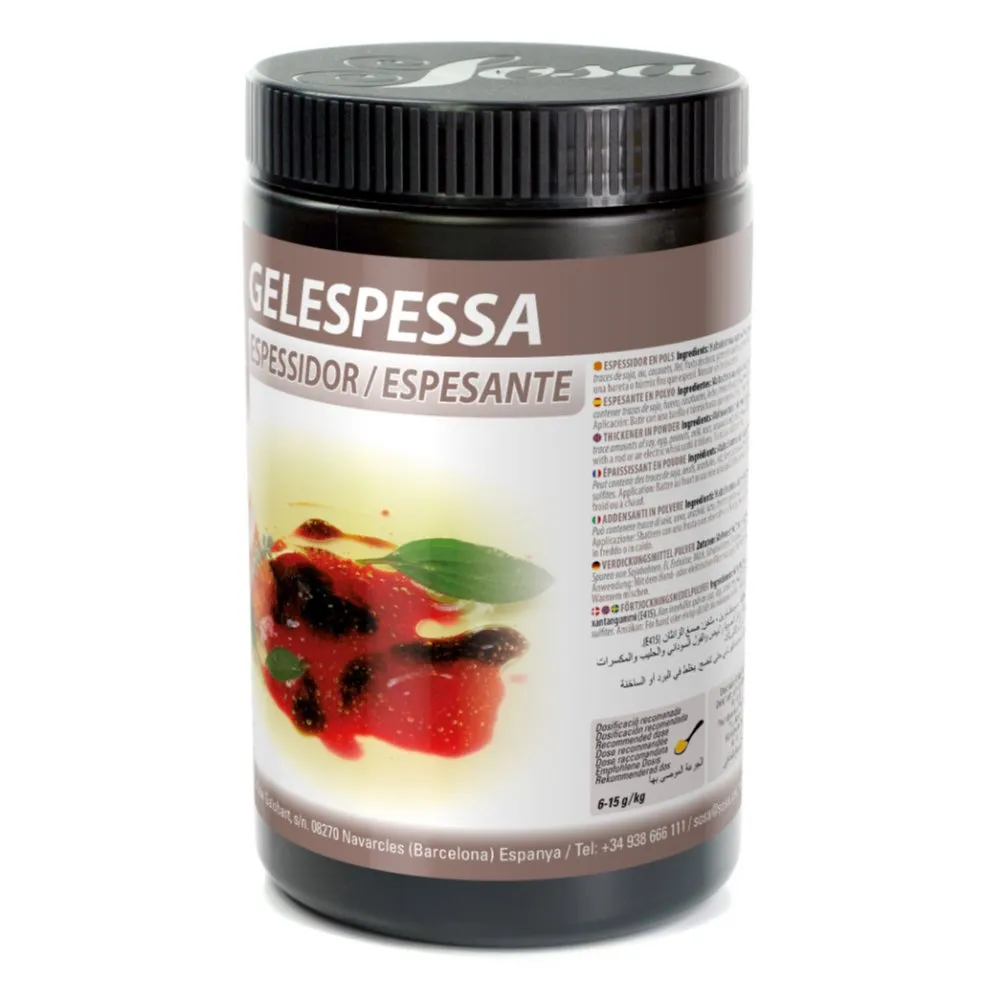
2. Gelespessa (fast-dispersing xanthan gum). A variant that disperses quickly in liquids without forming lumps, even without vigorous whisking. Useful in preparations that need a smooth, even texture without much effort in mixing.
3. Clear xanthan gum. Developed for applications where the clarity of the final product is crucial: gels, clear drinks and some sauces. It minimises the cloudiness that standard xanthan gum can introduce.
4. Powdered xanthan gum versus gel xanthan gum. The first is the most common form, easy to store and measure, and requires proper dispersion to avoid lumps. The second comes pre-hydrated and ready to use, ideal for quick texture adjustments.
5. Xanthan gum for gluten-free applications. Designed to replace gluten in bread-making and pastry-making, it helps mimic the texture and elasticity that gluten provides in doughs and baked goods.
Three things matter when choosing: the desired result (clarity, speed of dispersion), the reliability of the supplier and prior testing. And it is worth remembering that these five varieties are manufacturers’ commercial categories, not regulatory designations: on the label, they are all E415.
Some varieties available on the food-grade market
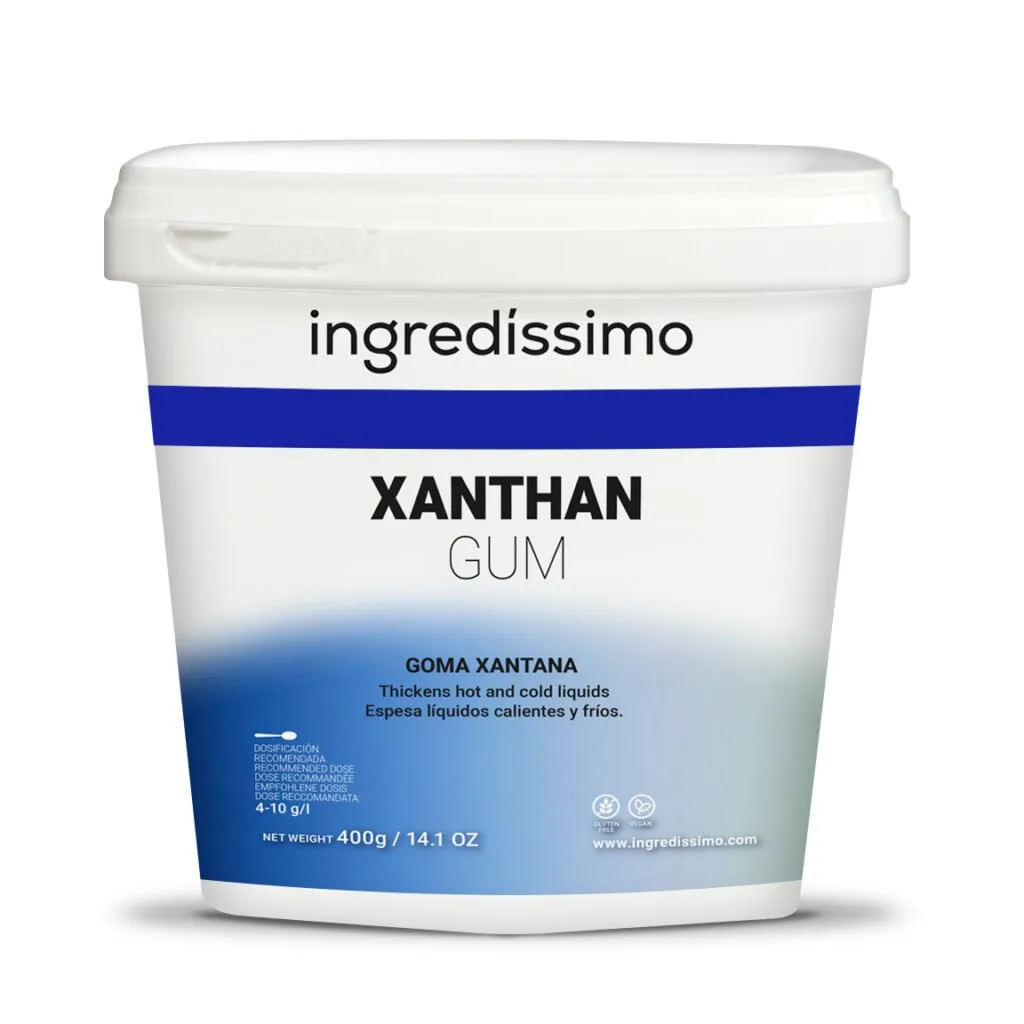
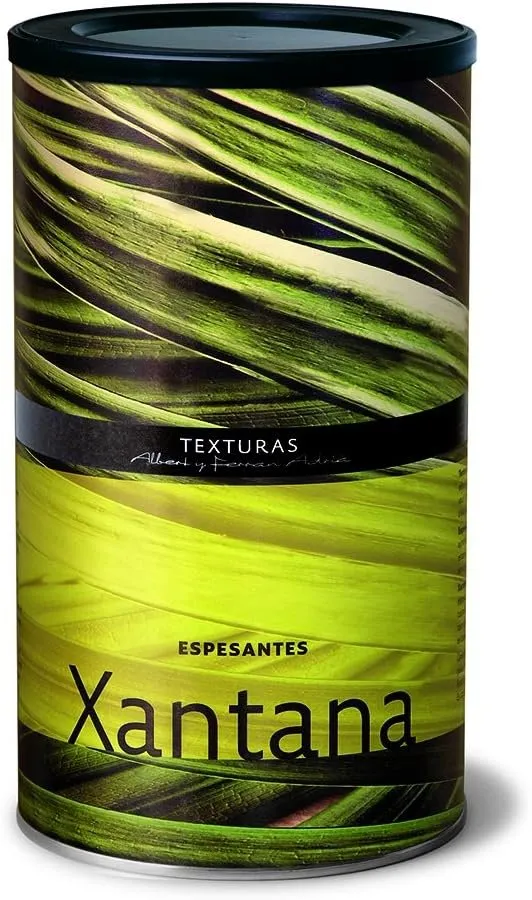
Alternative names for xanthan gum
Knowing what it is called in each context avoids buying the same product twice or failing to recognise it on a label.
1. Xanthan gum. The most common and widely recognised name, on labels, in recipes and in culinary publications.
2. E415. The food additive code used to identify it in Europe and in labelling that follows international standards.
3. Xanthan or xanthan polysaccharide. A designation that refers to its chemical nature, produced by Xanthomonas campestris.
4. Xanthan viscosity agent. Reflects its use as an agent that increases the viscosity of liquids and solutions.
5. Goma de xantano and goma xantán. Spanish-language variants of the name, common in technical texts and publications.
6. Xanthan thickening agent. Highlights its main function in the food industry.
7. Maize xanthan gum. Less common; refers to the substrate from which the fermented sugar usually comes.
8. Bacterial gum. A generic name that emphasises its origin; not very specific and rare in culinary contexts.
9. Xanthan polymer and xanthic polysaccharide. In scientific and technical contexts, these highlight its molecular structure.
Safety: what EFSA and OCU say
The European Food Safety Authority reassessed xanthan gum (E415) in 2017 and concluded that there is no need to set a numerical Acceptable Daily Intake (ADI): at the estimated exposure levels there is no safety concern for the general population. In a later review in 2023, focused on formulae for infants under sixteen weeks of age, EFSA reached the same conclusion for the concentrations declared by industry.
In the tolerance studies EFSA reviewed, a repeated intake of up to 214 mg per kilogram of body weight per day for ten days was well tolerated by adults, although some subjects noticed abdominal discomfort; this is classified as an undesirable effect, not an adverse one. In the same vein, the consumer organisation OCU classifies E415 as “tolerable”: it notes possible intestinal discomfort at high doses or when combined with other gums, and the risk that a sensitive consumer might accumulate more than intended over the course of a day.
Beyond the kitchen
Xanthan gum does not stay on the plate. It is used as an additive in pharmaceuticals and cosmetics (emulsifier and suspending agent), in agriculture (to keep herbicides and fungicides in suspension) and in the oil industry, in drilling fluids.
For the general public
Xanthan gum is found in many supermarket products, from processed foods to gluten-free products. Adding it to home recipes is a simple way to explore new textures in the kitchen.
Considerations and tips
It is important to start with small amounts and adjust as needed, since its thickening power is considerably high: excessive use leads to unwanted gummy textures. Xanthan gum dissolves in both cold and hot liquids, but it is best to disperse it first in a liquid at room temperature to avoid lumps. It is an ingredient that science brought into the kitchen, and the only way to master it is through recorded testing: same recipe, same scales, different dose.
Related terms
- Agar-agar — the natural gelling agent extracted from red algae; it sets firm where xanthan gum only thickens.
- Aspic — clarified savoury gelatine, the classic route to textures that are now achieved with gums.
- Acidification — the ground where pH range matters: xanthan gum holds up from 2.5 to 11.
- Water activity (a_w) — the free water in a food, the water that gums immobilise as they thicken.
- Albumin — the egg protein that raises foams; xanthan gum stabilises them.
- What is culinary innovation — the framework these ingredients entered the kitchen through.
Sources consulted
- EFSA: re-evaluation of xanthan gum (E415) as a food additive, EFSA Journal 2017;15(7):4909
- EFSA: xanthan gum (E415) in formulae for infants below 16 weeks of age, EFSA Journal 2023;21(4):7951
- Summary of EFSA’s 2017 assessment (PubMed)
- OCU: additives calculator, E415
- National Inventors Hall of Fame: Allene Jeanes — supports the 1968 FDA approval
- Wikipedia: Allene Jeanes (EN) — supports the 1968 USDA Superior Service Award to the xanthan team and the location of the laboratory in Peoria (Illinois)
- Canal Cocina: xanthan gum (glossary)
- Basmatic: xanthan gum in the kitchen
- Estudia Hostelería: xanthan gum as a thickener
- Boletín Agrario: xanthan gum (glossary)
- Real Academia Española: Diccionario de la lengua española
- Wikipedia: Xantano · Xanthan gum (EN) · Xanthomonas (EN) · Xanthomonas campestris (EN)
Frequently asked questions
What is xanthan gum?
What is xanthan gum used for in the kitchen?
How much xanthan gum should be added per litre?
What other names does xanthan gum have?
Is xanthan gum (E415) safe?
Where does xanthan gum come from and how was it discovered?
Does xanthan gum contain gluten, or is it useful for gluten-free cooking?
Does xanthan gum have roots in Canarian cuisine?
Also in the glossary
Acidification
Acidification is an essential culinary and preservation method that plays a fundamental role in modern and traditional gastronomy.
Agar-agar
Agar-agar is a natural gelling agent extracted from several species of red algae such as Gelidium, Gracilaria and Eucheuma.
Aguardiente
The definition of aguardiente as a broad category of distilled alcoholic beverages covers an impressive diversity of products around the world, each with unique characteristics that reflect the raw materials available, the production techniques and the…