Agar-Agar: Nutritional and Culinary Essentials
- Term
- Agar-agar
- Tags
- Gelling agents · Seaweed · Additives · Canary Islands · Spain · Argentina
- Published
- Updated
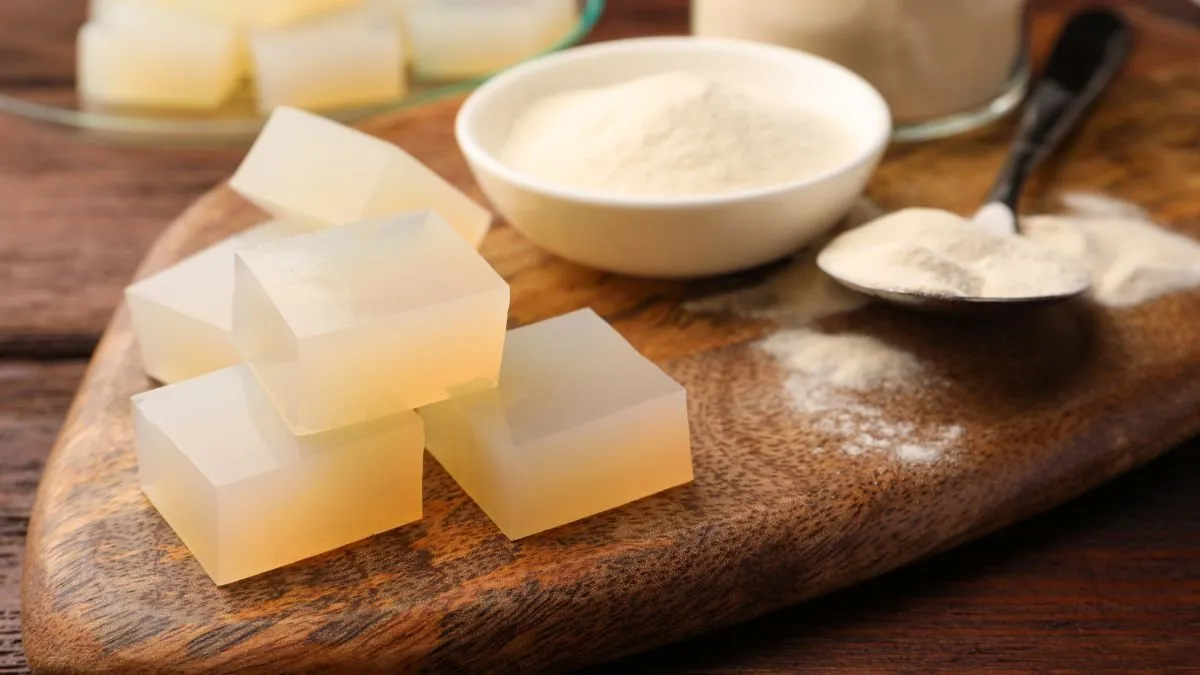
What agar-agar is
Agar-agar is a natural gelling agent extracted from several species of red algae such as Gelidium, Gracilaria and Eucheuma. Known for its ability to form gels at low concentrations, agar-agar is highly valued in cooking and in the food industry for its stabilising and thickening properties.
The Diccionario de la lengua española records “agar” and “agar-agar” as synonyms: a mucilaginous substance obtained from certain algae, used as a culture medium, in pharmacy, in bacteriology and in certain industries. The word reached Spanish from the English agar, which comes from the Malay agar. In the European Union it is registered as additive E-406: a gelling agent, thickener and stabiliser.
Characteristics and properties
- Gelling agent: it forms firm gels that can withstand temperatures of up to 85 °C without melting.
- Solubility: it dissolves in hot water and sets as it cools.
- Fibre: it is an excellent source of fibre, which contributes to satiety and to regulating intestinal transit.
- Versatility: odourless and tasteless, which allows its use in a wide range of preparations without altering flavour.
Where it comes from: from Japanese “tokoroten” to Petri dishes
The method for obtaining agar was discovered in Japan around 1658 and tradition attributes it to the innkeeper Tarazeamon Minoya (Minoya Tarōzaemon), who has a commemorative monument in Shimizu-Mura. Legend has it that he threw the remains of an algae jelly outdoors: they froze at night and thawed in the sun over several days, leaving a white, hard, porous residue that, when dissolved again in boiling water, produced a clearer jelly than the original.
There the phycocolloid was first called “tokoroten”; the name “agar-agar” did not become widespread until the early twentieth century, because of its resemblance to the extract of a Malay alga. In the West it did not begin to be used until the late nineteenth century, through Europeans who had encountered it in the East, and the first chemical analysis was carried out by the Frenchman Anselme Payen in 1859.
The decisive breakthrough, however, was not culinary. In 1882 agar began to be used as a solidifier for culture media, and it is considered one of the great advances of microbiology: it solved the two flaws of animal gelatine, which many microorganisms liquefied and which melted around 37 °C, precisely the temperature at which bacteria had to be incubated. The German physician Walther Hesse, who learned of it through his wife, Fanny Hesse, familiar with the product from her time in the East, was the first to culture germs with it alongside Robert Koch, Nobel laureate and founder of modern bacteriology; Koch’s assistant, Julius Richard Petri, began spreading it onto flat glass dishes. Hence the name Petri dishes.
Until shortly before the Second World War, production was almost restricted to the Far East: around 1936 the Japanese industry handled around 12,000 tonnes of algae, yielding more than 25,000 kg of agar. Japan’s entry into the war cut off that supply, and the United States sought an alternative in the Gelidium robustum of Baja California.
The science: why it withstands heat
Agar is not a single molecule, but a mixture of two polysaccharides: agarose, around 70%, and agaropectin, the remaining 30%. Agarose is a linear polymer of repeating agarobiose units (D-galactose and 3,6-anhydro-L-galactopyranose). That is where the first fundamental difference from ordinary gelatine lies: agar is a plant-based carbohydrate and animal gelatine is a protein, the collagen from bones and cartilage. That is why agar-agar works in vegetarian and vegan diets.
The second difference is what makes it unique in the kitchen: thermal hysteresis. Agar sets between 32 and 42 °C, but does not melt again until above 85 °C. No other common gelling agent has that gap of more than forty degrees between its setting point and its melting point, and it is what allows a hot gel to be served without it falling apart on the plate.
| Agar-agar | Animal gelatine | |
|---|---|---|
| Chemical nature | Polysaccharide (agarose + agaropectin) | Protein (collagen) |
| Origin | Red algae (Gelidium, Gracilaria) | Bones and cartilage |
| Setting point | 32-42 °C (cooking guides place it at 35-40 °C) | Around 15 °C |
| Melting point | Above 85 °C | 25-30 °C |
| Gelling power | Between 6 and 10 times that of gelatine (indicative figure) | Reference |
| Gel texture | Firm, transparent and matt | Soft and elastic |
| Vegetarian and vegan diets | Suitable | Not suitable |
The figures for gelling power and the temperatures for gelatine come from cooking guides that agree on the order of magnitude, not from a standard: they should be taken as a working reference and adjusted with a test.
In the kitchen: uses, doses and common mistakes
Agar-agar is used in a variety of culinary applications thanks to its gelling capacity:
- Desserts: jellies, mousses, panna cottas and tarts.
- Thickener: in sauces, soups and dressings.
- Stabiliser: in products such as ice creams and sorbets, to improve texture and prevent ingredients from separating.
- Substitute for animal gelatine: ideal for vegetarian and vegan preparations, since it is plant-based.
How to use it
- Dissolve: mix the agar-agar with a liquid (water, juice, milk) and bring it to the boil, stirring constantly until it dissolves completely. One or two minutes of boiling is enough.
- Setting: pour the mixture into moulds and leave it to cool so that it solidifies. It sets even at room temperature, with no need for a fridge.
- Proportions: use roughly one teaspoon of powdered agar-agar per cup of liquid for a firm texture. Adjust according to the type of preparation and the concentration desired.
As a rule of thumb, cooking guides work with three benchmarks: 1.6 g/l for thickening, 3 g/l for a soft, custard-like texture and 10 g/l for a firm texture, of the kind used in a savoury terrine. These are orders of magnitude, not a regulatory table.
Culinary considerations
- Temperatures: do not subject it to excessively high temperatures, to avoid losing its gelling properties.
- Texture: the amount of agar-agar used determines the firmness of the gel. For softer textures, reduce the amount.
- Acidic liquids: if you use acidic liquids, increase the amount of agar-agar to achieve proper setting.
| Property | Culinary use | Health benefits |
|---|---|---|
| Gelling agent | Jellies, mousses, panna cottas | Promotes satiety, regulates intestinal transit |
| Thickener | Sauces, soups, dressings | Controls cholesterol, stabilises glucose |
| Stabiliser | Ice creams, sorbets, dairy products | Provides essential minerals |
| Vegan substitute | Desserts and dishes without animal gelatine | Ideal for vegetarian and vegan diets |
The E-406 additive: what the regulations say
In the European list of additives agar appears as E-406, obtained from red seaweed — mainly of the genera Gracilaria and Gelidium — and authorised as a gelling agent, thickener and stabiliser. The European Food Safety Authority (EFSA) re-evaluated it in 2016: it is unlikely to be absorbed unchanged, it is partly fermented in the large intestine, it presents no risk to the general population at current consumption levels and there is no cause for concern over its genotoxicity in light of the available in vitro and in vivo studies. The panel also did not consider it necessary to set a numerical acceptable daily intake.
The only caveat is one of dose: in high amounts agar can have a mild laxative effect and could interfere with the intestinal absorption of iron and calcium, with no serious consequences described at the levels typical in cooking.
Health benefits
- Digestion: it helps prevent constipation and improves digestive health by acting as an intestinal regulator.
- Satiety: its high fibre content promotes satiety, which is useful in diets aimed at controlling weight.
- Cholesterol and glucose control: it helps reduce cholesterol levels and stabilises blood glucose.
- Rich in micronutrients: it provides essential minerals such as iron, sodium and zinc, beneficial for various bodily functions.
In the Canary Islands: the “black mujo” of Puerto de la Cruz
Agar-agar has its own industrial chapter in Tenerife, documented and almost unknown outside academic circles. It begins on mainland Spain: once the Civil War ended, agar was an indispensable raw material for the laboratories manufacturing vaccines and sera, it had to be imported, and the Second World War cut off external supply until the country’s stocks ran out. On 12 July 1942, the Directorate-General of Fisheries issued the first instructions for gathering red algae for agar.
The Instituto Llorente — Spain’s leading pharmaceutical laboratory, founded by a Canarian physician trained at the Institut Pasteur in Paris — led that domestic production until the sixties and created in the forties its subsidiary PRONA (Productos Naturales, S.A.), with a factory in Brihuega (Guadalajara). Its technical director was José María Perelló Barceló, professor of Plant Physiology at the Complutense, and the factory director was the Canarian chemist Antonio Rodríguez Armas, a graduate of the University of La Laguna.
Perelló travelled to Tenerife in 1951 to assess the island’s algae. He surveyed the north coast from Garachico to Bajamar and noted that the populations around Puerto de la Cruz met the conditions to be exploited. There, over fifteen summer campaigns, Gelidium canariense was harvested: an alga endemic to the Canary Islands, almost black, up to 30 cm long, growing on rock between 0 and 6 m and found only in the north of Tenerife, Gran Canaria, La Palma and La Gomera. Fishermen called it “black mujo”.
| The "black mujo" campaign | Documented figures |
|---|---|
| Period | 1951-1966, fifteen summer campaigns |
| Species | Gelidium canariense, endemic to the Canary Islands |
| Yield | ≈25% of the alga's dry weight is agar |
| Annual production | 40-50 tonnes of dry weight |
| Bale weight | 50-60 kg |
| Payment to harvesters | 10 céntimos per kg of wet alga; later, 50 céntimos per kg of dry alga |
| Weekly income of a family | Up to 300 pesetas (a labourer's day-wage did not exceed 150) |
| Share of the Spanish total | ≈2.5% of the ≈2,000 tonnes of Gelidium processed annually in Spain (1964-1966) |
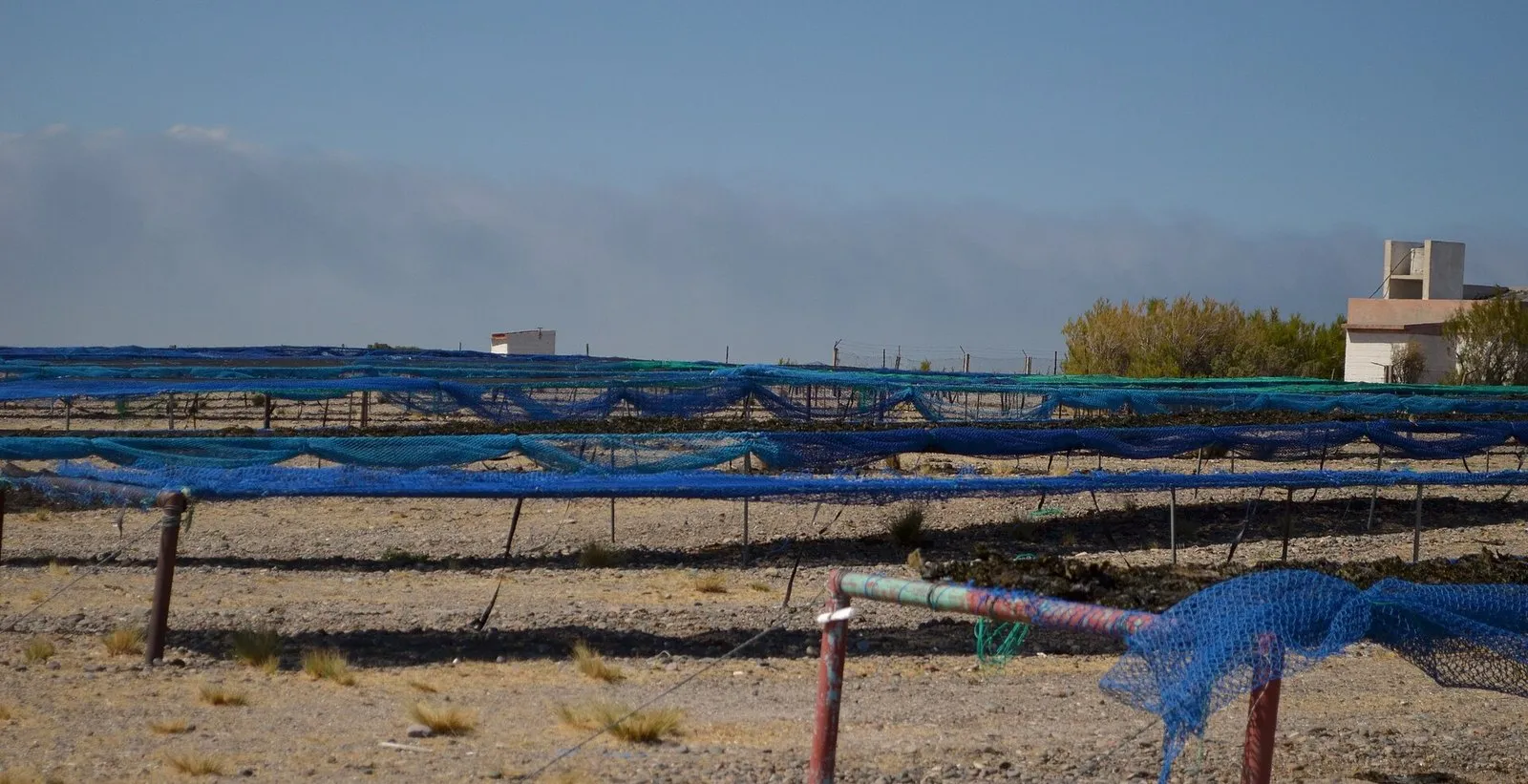
The harvest was managed by Ignacio Torrents Pérez, who paid “una perra gorda” per kilo of wet alga and, later, “media peseta” per kilo of dry alga: an income that comfortably exceeded a labourer’s day-wage. The alga was dried on the esplanade of the El Penitente pier, with council permission until 1955, and afterwards on the rooftops of the fishing quarter of La Ranilla, whose streets filled every summer with the smell of algae drying in the sun. The bales went down to the port of Santa Cruz, crossed by boat to Cádiz and reached Guadalajara by train.
The last campaign was run in 1966, and not because the resource had run out: Puerto de la Cruz — barely 12,000 inhabitants and an agricultural, banana-growing economy in the fifties — had thrown itself into tourism, which paid far better, and algae from the Cantabrian coast were cheaper and closer to the factory. The legacy is bittersweet. Fifteen years of harvesting degraded the shallows of Puerto de la Cruz, unusual in the Canary Islands for their biological richness; that was compounded, from the late sixties, by their use as a dumping ground and, between 1963 and 1977, by the destruction of the reefs between the Ermita de San Telmo and Martiánez beach to build Lago Martiánez.
In Spain: from the post-war years to hot jelly
That self-sufficiency industry did not disappear: it consolidated. With PRONA’s technical leadership and seven former Spanish producers, Hispanagar, S.A. was founded in Burgos, today the world’s largest producer of agarose and, according to the company itself, the only manufacturer that controls its entire supply chain, from harvesting the alga to the finished product. The mainland raw material it started with was Gelidium sesquipedale, a red alga found from the British Isles to Cape Bojador, with exploitable populations on the Cantabrian coast — from Fuenterrabía to Cabo Peñas — and in Portugal.
The second Spanish chapter is culinary. In 1998, Ferran Adrià and his team dined at a Japanese restaurant in Barcelona and found a gelatinous element in a soup that did not dissolve with heat. Albert Adrià and Oriol Castro investigated and confirmed that ground agar-agar filaments withstood up to 85 °C. In July that same year, elBulli served history’s first dish of “hot jelly”: Roquefort sorbet with hot apple jelly. A technique that today is common heritage of culinary innovation began as a physical property of an alga. The account comes from Hispanagar, a manufacturer and therefore an interested party, though it matches what is documented about elBulli and the Adrià brothers’ textures.
In Argentina: Bahía Bustamante
There is a third episode that rhymes with the Canarian one. In 1953, the Spanish businessman Lorenzo Soriano was looking for a substitute for gum arabic for “Malvik”, his hair fixative, and founded an algae-harvesting camp on the Patagonian coast of Chubut, in a place then called “Bahía Podrida” and later renamed Bahía Bustamante. In 1956 he achieved Argentina’s first-ever production of agar-agar, the origin of the algae company Algamar. In its best years, the sixties and seventies, it came to extract between 2,000 and 3,000 tonnes of dried Gracilaria per season, and the activity continued until Soriano’s death in 1986.
The parallel with Puerto de la Cruz is hard to ignore: two coastal communities that spent decades harvesting red algae for an invisible product, and that, once the industry died down, reinvented themselves as tourist destinations.
Related terms
- Xanthan gum — the other great hydrocolloid of modern cooking: it thickens and stabilises where agar sets.
- Aspic — classic, animal-based gelling: the direct contrast with agar’s plant-based route.
- Water activity (a_w) — the water available in a food, the same technical territory as gelling.
- Acidification — another way of transforming a liquid, and one that forces the agar dose to be raised.
- Albumin — gelling by protein, seen from the egg.
Sources consulted
- Real Academia Española, Diccionario de la lengua española: “agar-agar”
- Julio Afonso-Carrillo, “Aprovechamiento industrial de algas marinas canarias para la extracción de agar. Puerto de la Cruz (1951-1966)”, El Pajar. Cuaderno de Etnografía Canaria nº 15 (PDF, RIULL repository of the University of La Laguna)
- EFSA Journal: “Re-evaluation of agar (E 406) as a food additive” (2016)
- Aditivos Alimentarios: “E406 - Agar-Agar”
- Hispanagar: “El único fabricante del mundo que controla toda la cadena de suministro de la agarosa”
- Hispanagar: “El agar en las cocinas de estrella Michelin”
- El Español (Cocinillas): “Agar-agar y gelatina, ¿cuáles son las diferencias?”
- Gastronosfera: “Agar agar y gelatina, similitudes y diferencias”
- El Valle Online: “Soriano fundó un pueblo alguero y hoy es un santuario natural”
- El Valle Online: “Hoy cumpliría 95 años el creador del primer agar-agar argentino”
- Wikipedia (en): Agar
- conasi.eu
- aprende.com
- comidasaludablehoy.com
- todoellas.com
- mejorconsalud.as.com
- aspic.edu.mx
Frequently asked questions
What is agar-agar and what is it used for?
How is agar-agar used in the kitchen?
What are the health benefits of agar-agar?
Where can I buy agar-agar?
Does agar-agar have a flavour?
Is agar-agar suitable for vegans?
Where does the word "agar-agar" come from?
How does agar-agar differ from animal gelatine?
Why does agar-agar withstand heat while ordinary gelatine does not?
Is agar-agar (E-406) safe?
Does agar-agar have any roots in the Canary Islands?
What is agar-agar used for outside the kitchen?
Also in the glossary
Aguardiente
The definition of aguardiente as a broad category of distilled alcoholic beverages covers an impressive diversity of products around the world, each with unique characteristics that reflect the raw materials available, the production techniques and the…
Al dente
"Al dente" is an Italian expression that translates literally as "to the tooth".
Albumin
Explore albumin's essential role in the kitchen, from improving texture to creating unique sensory experiences.