Al Dente: The Art of Perfect Cooking
- Term
- Al dente
- Tags
- Techniques · Pasta
- Published
- Updated
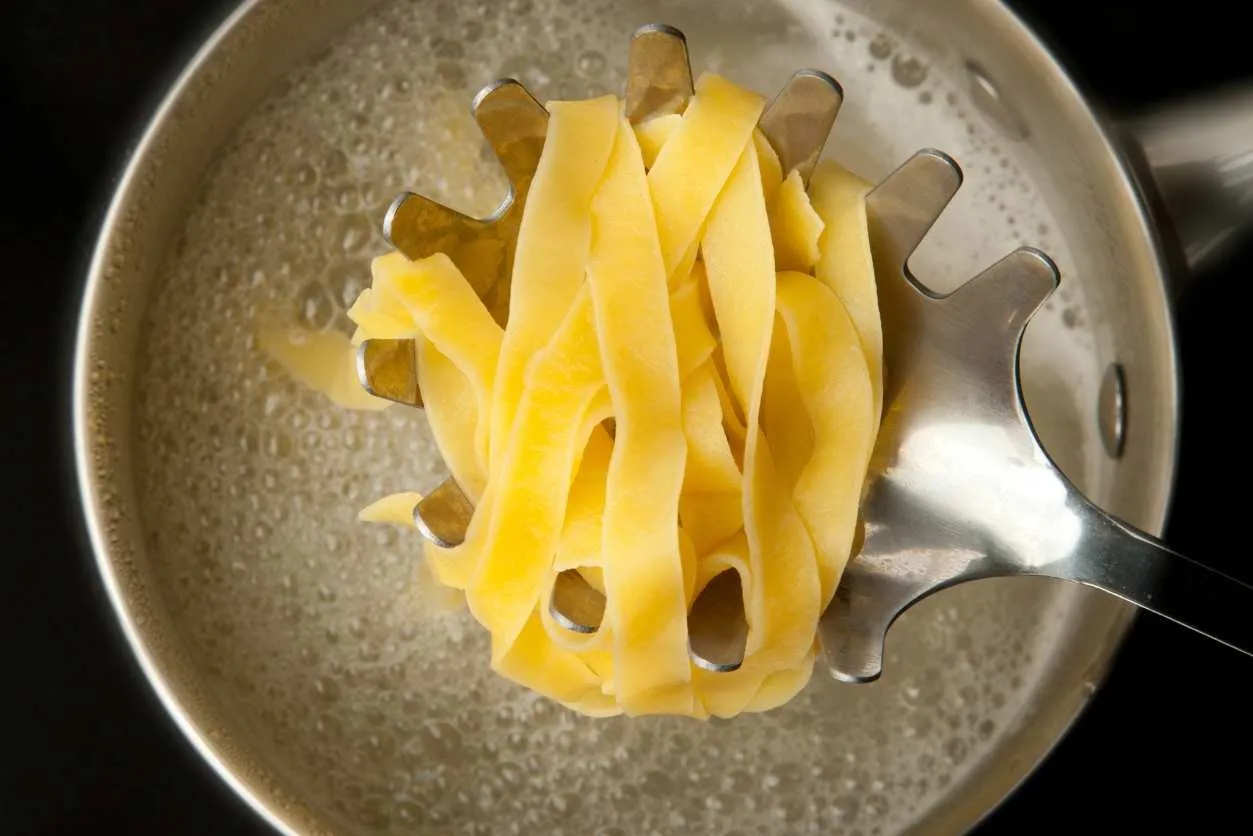
What “al dente” means
“Al dente” is an Italian expression that translates literally as “to the tooth”. The term is used to describe the cooking of pasta and other foods, such as rice or vegetables, cooked until firm to the bite.
Al dente pasta offers a slight resistance when bitten, but without being raw. This degree of cooking lets the pasta keep its shape and texture, delivering an optimal eating experience.
The Diccionario de la lengua española settles it with a drier formula: it records “al dente” as an adjectival phrase referring to noodles, macaroni or other pasta, “cooked so that they keep some firmness when bitten”. It’s an Italianism well settled in Spanish, and it names a resistance, not a time on the clock.
Where the term comes from
The name is the literal translation of the Italian — “al diente” in Spanish, calqued into English too as to the tooth: it describes the gesture used to check the point. And it’s more recent than it looks. Between the fifteenth and sixteenth centuries, Italian recipe books recommended cooking pasta for hours, until very soft; it was in the seventeenth century, in Naples, that much shorter cooking times began to be documented. Historians Silvano Serventi and Françoise Sabban, authors of Pasta: The Story of a Universal Food, hold that brief, firm cooking became the norm for all pasta by the mid-nineteenth century, but that before the First World War the expression “al dente” was unknown: it became popular later, once pasta became tied to Italian national identity. By the second half of the twentieth century, the term had left Italy and spread internationally through restaurants.
Put another way: the way we cook pasta today, which we assume to be immemorial, is little more than a century and a half old, and its name is younger still.
The science: what happens to the starch
What happens inside pasta as it boils has a precise name: starch gelatinisation. When heated in an excess of water, the granules swell irreversibly and lose their crystallinity; that change turns the insoluble starch in semolina into a soluble form, the one that gives cooked pasta its texture. In wheat, the process starts at around 70 °C.
That’s where the most reliable trick for spotting the point comes from, better than a clock: break a piece of pasta in half and look at the cut. As long as you can see a whitish, floury core in the centre, the starch in that area hasn’t gelatinised. Once that core has just disappeared, the pasta is al dente.
Why al dente pasta has a lower glycaemic index
Cooking pasta al dente isn’t only essential for its texture and flavour, it also has a significant nutritional impact. Pasta cooked al dente has a lower glycaemic index than pasta cooked for a long time — as pointed out by the American Diabetes Association — which can be beneficial for managing blood sugar, helping to avoid glucose spikes.
The mechanism is the one from the previous section: the more complete the gelatinisation, the more accessible the starch becomes to α-amylase, the enzyme that breaks it down into simple sugars. A study published in the journal Foods in 2022 compared three degrees of spaghetti cooking and measured its starch digestion in vitro.
| Degree of cooking | How it was defined in the study | Starch digestion |
|---|---|---|
| Al dente | Full cooking time minus 5 minutes | The starch digests to a lesser extent |
| Fully cooked | Full cooking time: the point at which the central starch core disappears | The study's reference point |
| Overcooked | Full cooking time plus 10 minutes | The starch digests to a greater extent |
The finding held across the whole protein range analysed: prolonged cooking increases the in vitro digestion of starch compared with al dente cooking.
In the kitchen: how to get the point right
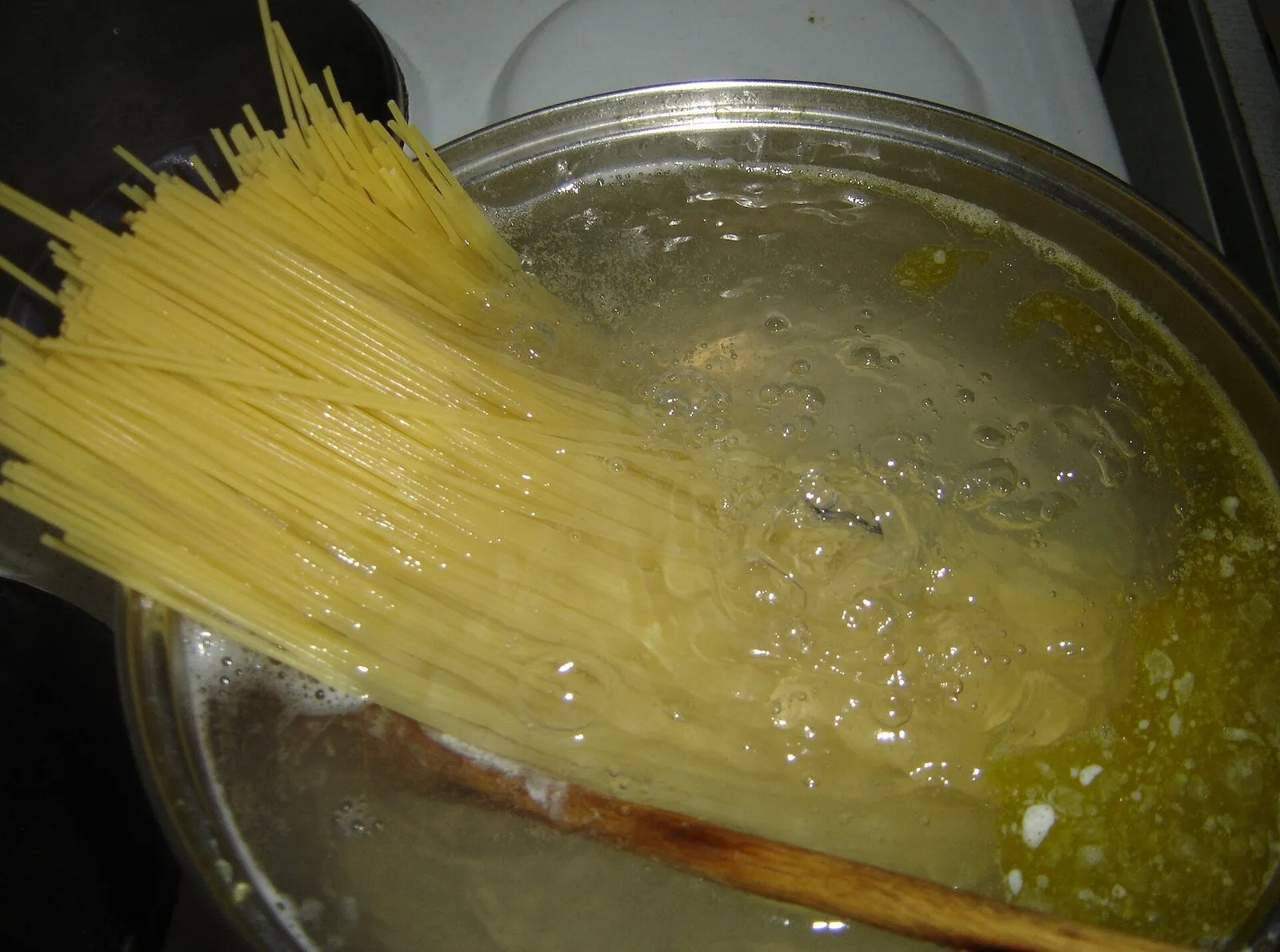
To achieve a perfect al dente bite, it’s important to use plenty of boiling water and cook the pasta according to the timings on the packet, tasting it often towards the end of the recommended time. Dried pasta timings vary a great deal by shape and maker, but usually run between 2 and 12 minutes: a thin vermicelli is nothing like a thick-walled rigatoni. These are the classic parameters:
| Parameter | Reference | Why |
|---|---|---|
| Water | 1 litre for every 100 g of pasta | Traditional Italian rule |
| Salt | About 10 g per litre of water | Seasons the pasta from within |
| Salt's effect on boiling | ≈ 1 °C rise | Doesn't speed up cooking: it only seasons |
| Altitude | ≈ 3 °C less for every 1,000 m | Water boils below 100 °C and timings run longer |
| Gelatinisation of wheat starch | ≈ 70 °C | Temperature at which the pasta really starts cooking |
Two rows deserve attention: salt doesn’t make the water boil sooner — it raises the boiling point by 1 °C — while altitude really does extend the timings.
From there, four practical tips:
- Amount of water: use at least one litre of water for every 100 grams of pasta.
- Salt in the water: add salt to the cooking water to bring out the pasta’s flavour, about 10 g per litre.
- Stir occasionally: stir from time to time to stop the pasta sticking together.
- Cooking time: taste the pasta a minute before the suggested minimum time to avoid overshooting the al dente point, and check the cross-section.
Once the al dente point is reached, it’s common to drain the pasta and mix it with the sauce in the final minutes of cooking, letting the flavours come together while it finishes cooking. This method is widely used in Italian cooking and is celebrated by chefs and pasta lovers around the world for how it improves the final dish.
Is rice also cooked al dente?
The term is also used for rice and vegetables meant to be firm to the bite. With rice, one nuance is worth noting from the most authoritative source there is: the manager of the Denominación de Origen Arroz de Valencia holds that rice “has only one cooking point, and it isn’t al dente”. The grain should be gelatinised, but without losing its structure, which isn’t the firm core sought in pasta. The practical rule cooks quote for paella valenciana is a reference cooking time of 18 minutes, with an initial 8-to-10-minute phase over high heat and a final rest of about 5 minutes off the heat.
The conclusion isn’t that the term is off-limits outside pasta, but that each product has its own point: a firm core is the goal in pasta and a fault in a paella’s rice.
In Spain: what pasta legally is
Spain has a legal definition of what pasta is. Decree 2181/1975, which approves the Technical-Sanitary Regulation for Pasta, describes it as products obtained by drying an unfermented dough made with durum, semi-durum or soft wheat semolina, semolina flour or flour — or blends of these — and drinking water.
From there comes a distinction seen on many packets without knowing what it means: when plain pasta is made exclusively with durum wheat semolina or semolina flour (Triticum durum), it can be called top-grade pasta (“pasta de calidad superior”), a category with its own figures:
| Requirement (art. 9) | Ordinary plain pasta | Top-grade pasta |
|---|---|---|
| Maximum moisture | 12.5 % | 12.5 % |
| Minimum protein (N × 5.7, on dry matter) | 9.5 % | 11.0 % |
| Maximum ash (on dry matter) | Not set by art. 9.1 | 0.9 % |
| Maximum acidity | Not set by art. 9.1 | 4º |
The standard goes as far as the raw material: Royal Decree 677/2016 sets the particle size of durum wheat semolina at 600-850 microns for coarse semolina (20 % tolerance) and 132-600 microns for fine semolina (25 % tolerance).
One necessary note: wheat pasta is one of the sources of gluten that people with coeliac disease need to watch. AESAN points out that a food can only be labelled “gluten-free” when its content doesn’t exceed 20 mg/kg, a threshold set at European level.
In the Canary Islands: La Isleña, semolina pasta in Arucas
There’s no Canarian recipe that uses the term “al dente” nor a distinct island way of cooking pasta, but there is a century-old factory that the Cabildo de Gran Canaria recognises as historical-industrial heritage.
La Isleña, in Arucas, was born in 1870, when Gabriel Megías Santana set up a mill on Calle Quintana to grind grain, gofio and cacao under the name Chocolates Megías. In 1890 he legalised the business as a chocolate factory before Arucas Town Council, in 1901 it received the title of Royal Supplier — with the right to use the royal coat of arms on invoices and labels — and in 1902 the business was renamed “La Isleña”.
The move into pasta came between 1920 and 1930, under the direction of Gabriel Megías Fernández: the company moved from chocolate-making to the production of durum wheat semolina pasta and modernised its machinery — exactly the raw material that Decree 2181/1975 would reserve decades later for top-grade pasta.
The factory is still at its historic premises in Arucas, is the leading pasta brand in Canarian homes, and in 2019 was named “Best Family Business in the Canary Islands” by the EFCA association, after more than 150 years of activity. And it keeps moving: between 2025 and 2026 it signed an agreement with the Instituto Tecnológico de Canarias to add to its pasta a spirulina strain isolated in the Los Molinos reservoir, in Fuerteventura, adapted for more than two years to sea water. The product is gradually being introduced to the market.
In Argentina: the pasta brought by Italian immigration
The third layer lies across the Atlantic. Pasta took root in Argentine food culture through the mass Italian immigration of the late nineteenth and early twentieth centuries — millions of people in a few decades — and the country’s pasta industry was born and grew with that wave, in the second half of the nineteenth century.
The result can be measured: Argentina consumes about 9 kg of pasta per person per year, against 23.5 kg in Italy, according to the International Pasta Organization.
The most recognisable custom from that heritage is ñoquis del 29 (a monthly gnocchi tradition). They originate in north-eastern Italy, in the Veneto, where the climate favoured potato growing; before the potato became popular in Europe, similar preparations already existed made with flour, semolina, bread or cheese. The tradition of eating them on the 29th of each month, with a banknote placed under the plate to ask for prosperity, is linked to the legend of Saint Pantaleon, a physician and Christian martyr who, according to popular tradition, blessed with coins the table of some Italian peasants who fed him on a 29th.
Related terms
- Amylase — the enzyme that breaks down starch: the chemical reason al dente pasta digests more slowly.
- Sensory appreciation — how what the bite perceives is described and measured, which is everything “al dente” names.
- Acidification — another cooking point controlled by a measurable parameter rather than a clock.
- Gastronomic products of the Canary Islands — the island pantry that the pasta from Arucas belongs to.
- Aday Martín, master of paellas and rice dishes — the rice point as seen by a Canarian rice cook honoured in Sueca.
Sources consulted
- Real Academia Española, Diccionario de la lengua española: “dente”
- Wikipedia (en): “Al dente” — with references to Silvano Serventi and Françoise Sabban, Pasta: The Story of a Universal Food (Columbia University Press), and to the American Diabetes Association
- Ciencia y Gastronomía: “Cocción de la pasta”
- “Influence of Some Spaghetti Processing Variables on Technological Attributes and the In Vitro Digestion of Starch”, Foods 2022, 11(22), 3650
- Decree 2181/1975, Technical-Sanitary Regulation for Pasta (consolidated text, BOE, PDF)
- Royal Decree 677/2016, quality standard for flours, semolinas and other cereal-milling products (BOE)
- AESAN: “Information about gluten”
- El Economista: “Los cocineros marcan el tiempo justo: cómo cocinar la paella valenciana”
- Cabildo de Gran Canaria, Patrimonio Histórico: “Fábrica de pastas alimenticias La Isleña”
- La Isleña: “Conócenos”
- Canarias7: “Una pasta que une tradición y biotecnología”
- Canal26: “Ñoquis del 29: la historia de la tradición…”
- Página/12: “Los ñoquis del 29: cómo nació la tradición”
- El Cronista: “La herencia italiana: Argentina, entre los países donde más pastas se consumen”
- Il Mercato della Pasta: “¿Qué significa al dente?”
Frequently asked questions
What does "al dente" mean?
How do I know pasta is al dente without overcooking it?
Why does al dente pasta have a lower glycaemic index than well-cooked pasta?
How much water and salt should I use to cook pasta?
How long does it take for pasta to become al dente?
Is rice also cooked al dente?
What is "pasta de calidad superior" (top-grade pasta)?
Is pasta made in the Canary Islands?
Also in the glossary
Albumin
Explore albumin's essential role in the kitchen, from improving texture to creating unique sensory experiences.
Alfalfa
Alfalfa, known scientifically as Medicago sativa, is a leguminous plant widely used in both animal feed and human food.
Alkalisation
A process that decreases the amount of acid in a solution.