Alkalisation, Outside and Inside the Kitchen
- Term
- Alkalisation
- Tags
- Techniques · Chemistry
- Published
- Updated
What is alkalisation
A process that decreases the amount of acid in a solution.
Alkalisation in gastronomy is a chemical process that changes the pH of food, making it more alkaline. This method has various culinary applications, from improving the texture and colour of certain foods to influencing their flavour and preservation. The technique is especially relevant in preparing pulses, grains and certain kinds of dough, where adjusting the pH can produce finished products of higher quality and with specific desirable characteristics.
What the dictionary says and what the pH scale says
“Alkalisation” is the action and effect of “alkalising”, and to alkalise is to give something alkaline properties: to put an alkali into a substance to make it alkaline. That is the reading recorded in the entries of the Diccionario de la lengua española.
Those “alkaline properties” have a clear numerical boundary. pH is measured on a scale from 0 to 14: 7 is the neutral point, below 7 the substance is acidic and above 7 it is alkaline — or basic, which in chemistry is the same thing. Alkalising means, in numbers, moving that value upwards.
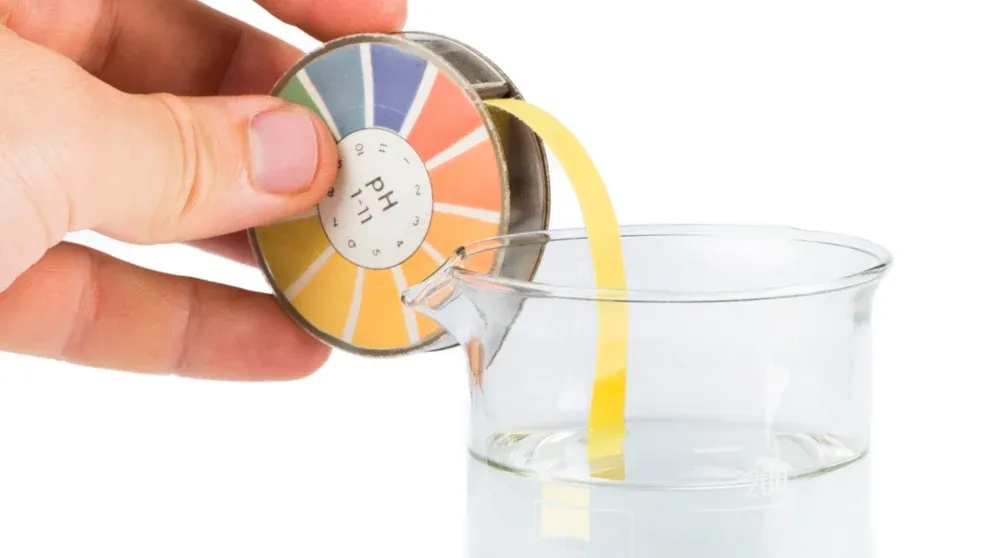
It is the exact opposite movement to acidification, and the two techniques are checked with the same instrument: a pH meter or an indicator strip. The difference lies in the direction, not in the method.
The “alkaline diet” alkalises nothing
This is worth clearing up before getting to the kitchen, because it is the most repeated confusion around the word. Alkalising a food is one thing — a real, measurable and reproducible chemical process — and the promise of “alkalising the body” by eating a certain way is quite another.
The pH of human blood is kept within a very narrow range: between 7.35 and 7.45. It is not a comfortable margin. A blood pH below 7 or above 7.7 would cause death quickly, and that is why the body does not leave that value in the hands of what one has for dinner: it is defended at once by blood proteins, phosphate, bicarbonate, the lungs and the kidneys. It is not diet that alkalises the blood.
There is a second reason to be wary of the idea: other compartments of the body have their own functional pH, and alkalising them is not desirable. The stomach sits at around pH 2, needed to absorb iron. The vagina is kept at around pH 4.5, maintained by lactic-acid-producing bacteria. Raising their pH would not be an improvement: it would be breaking something that works.
None of this takes away from the value of eating fruit and vegetables. A diet rich in vegetables does have measured benefits — a lower risk of kidney disease, for example — but not because it “alkalises” the blood, rather because it eases the workload of the mechanisms that regulate pH. The benefit is real; the explanation that circulates is not.
In the kitchen: what changes when pH rises
On the plate, however, alkalisation does a concrete, verifiable job. These are its four usual effects:
- Texture. Alkalising the medium softens pulses and grains and shortens their cooking times.
- Colour. In some vegetables, raising the pH intensifies the colour and makes the dish more appealing.
- Flavour. The alkali neutralises acidic or bitter flavours and allows a more balanced palette.
- Preservation. Some alkaline techniques help preserve food better and extend its shelf life.
Three rules of the trade go with the technique. The first, experiment: each food responds differently to the same dose of alkalising agent. The second, choose the compound: sodium bicarbonate is the most common agent, but calcium carbonate is also used depending on the result sought. And the third, measure: the pH must be adjusted precisely, because an excess of alkali leaves a soapy taste and dull colours. Alkalising agents are handled with care and knowledge; taken too far, the result stops being edible.
The three best-documented culinary uses of alkalisation are these.
Alkalised cocoa: the Dutch process
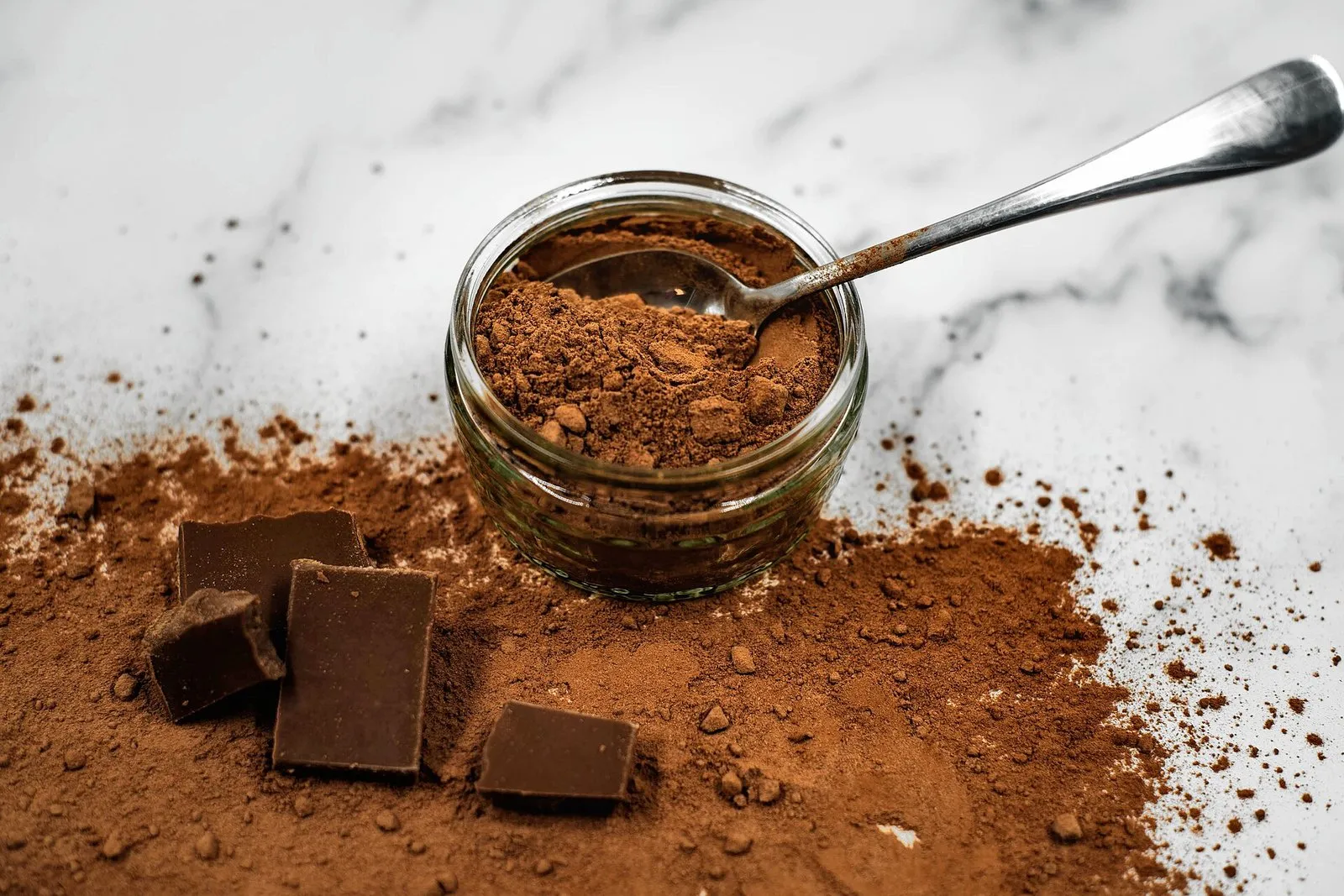
This is the case with the longest history behind it. The Dutch process was patented in 1828 by the Dutch chemist Coenraad Johannes van Houten, and consists of adding an alkali — usually potassium carbonate, ammonium bicarbonate or sodium bicarbonate — to the ground cocoa mass, which neutralises the bean’s natural acidity before pressing.
The result is measurable:
| Parameter | Natural cocoa | Alkalised cocoa |
|---|---|---|
| pH | ≈5 | 6.0-8.8 |
| Acidity | Marked | Lower |
| Colour | Lighter | Darker |
| Solubility | Lower | Better |
The darkening is not a dye: it comes from the change in flavonoid composition caused by the alkali. That combination of smoothness, colour and solubility explains why alkalised cocoa is the most common choice in ice creams and cocoa drinks, where it needs to dissolve well and not bring an acidic edge.
Nixtamalisation: maize cooked with lime
Nixtamalisation is one of the best-documented culinary alkalisations. It is a technique of Mesoamerican origin — the earliest evidence is found in south-eastern Mexico — that consists of cooking maize kernels in an alkaline solution of water and lime (calcium oxide or hydroxide), or in plant ash as an alternative. The word itself tells the story: nixtamal comes from the Nahuatl nextli, “lime ash”, and tamalli, “cooked maize dough”.
In traditional cooking the maize is cooked close to boiling point for between a few minutes and an hour, and then left to soak from a few minutes to around a day, depending on the type of kernel and local custom. When it needs to be reproduced with precision, there is a standardised laboratory protocol (Billeb de Sinibaldi, 2001) that sets the parameters:
| Laboratory protocol parameter | Value |
|---|---|
| Lime | 1.2% |
| Water | 200 ml per 50 g of maize |
| Cooking time | 50 minutes |
| Temperature | Constant 96 °C |
What is interesting is what the alkali unlocks. Nixtamalisation significantly increases the availability of niacin (vitamin B3) in maize, and that is why populations that eat it as their main cereal and nixtamalise it do not develop pellagra. It also improves the availability of calcium, phosphorus and amino acids, and reduces phytic acid, which favours mineral absorption. And there is a food-safety effect rarely mentioned: the process inactivates up to 91% of aflatoxin contamination in the grain, even starting from high concentrations.
Bicarbonate in cooking water
The most widespread domestic use is also the simplest. Sodium bicarbonate (E500) in cooking water raises the pH and softens the skin and texture of dried pulses and grains. It is an age-old kitchen habit, older than any chemical explanation, and it is exactly the first of the four effects listed above, applied to a pot.
Authorised alkalising agents: E500 and E501
When alkalisation moves from the pot to industry, the alkalis have an additive number and regulated use.
| Additive | What it is | What it is used for |
|---|---|---|
| E500 | Sodium carbonates | Acidity regulator, anti-caking agent, raising agent and stabiliser: sweets, desserts, cakes, chocolates, biscuits and pastries; also to regulate the acidity of certain cheeses and stop condensed milk from coagulating |
| E501 | Potassium carbonates (E501i, carbonate; E501ii, bicarbonate) | Acidity regulator and stabiliser |
E500 has no numerical acceptable daily intake (ADI) set for it, and the reason is the opposite of what is usually assumed: it is not that the data is missing, it is that its consumption poses no appreciable risk to health. E501 is also considered safe, and the body metabolises potassium normally, as it is an essential mineral.
In Spain: the “Seville-style” green olive
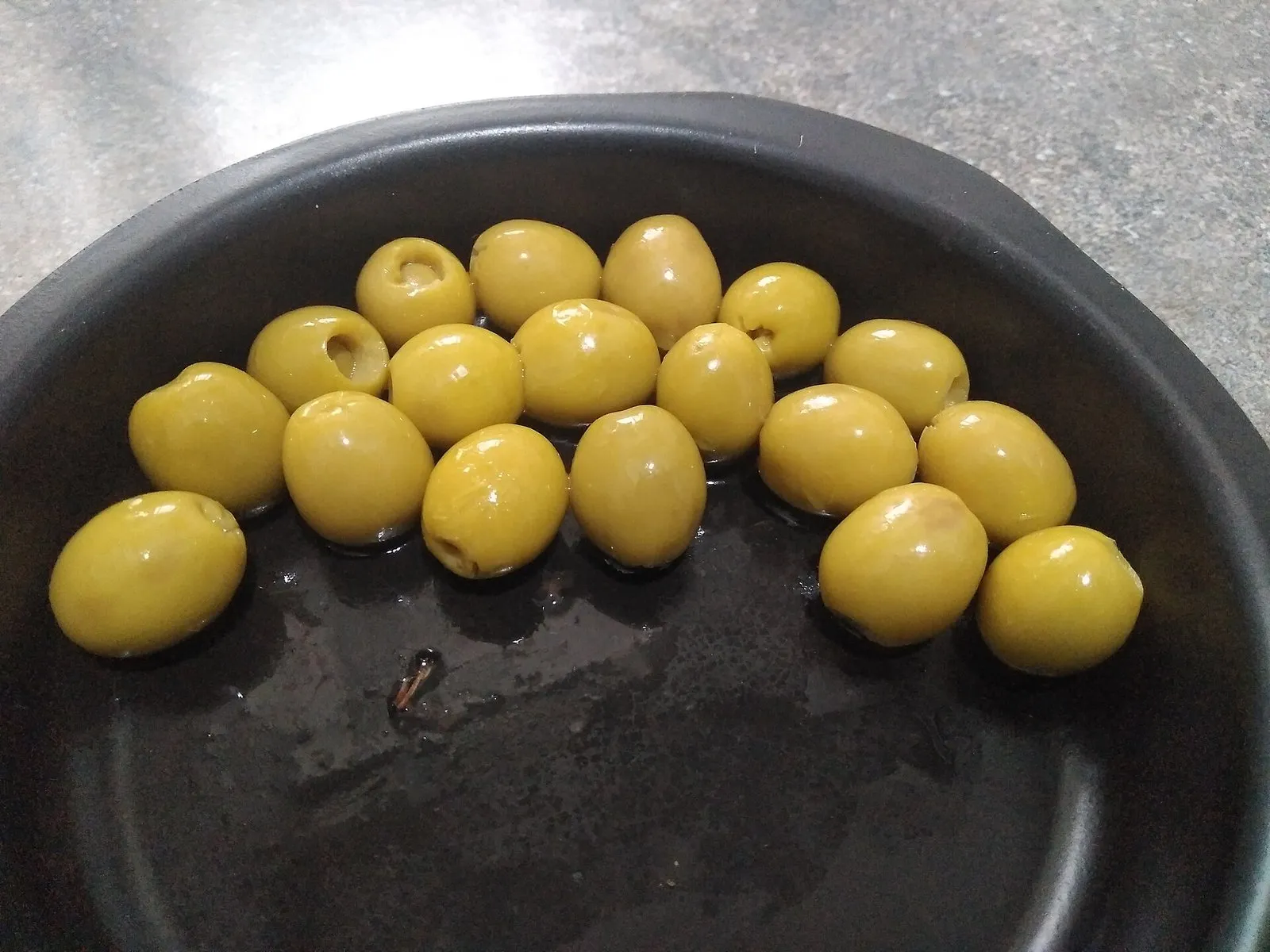
If there is one Spanish food product born of alkalisation, this is it. The “Sevillano” style of table olive — green olives treated with lye — is the most widespread method in the world: it accounts for around 60% of all table olives produced on the planet.
The procedure is pure alkalisation, with figures:
| Step of the Seville process | Parameter |
|---|---|
| Solution | Caustic soda (sodium hydroxide, NaOH) diluted to 2-4% |
| Immersion time | 8-10 hours |
| Chemical objective | Hydrolyse oleuropein, the compound responsible for the bitterness |
| End point | When the soda has penetrated two thirds of the fruit |
| Afterwards | One or more washes to remove the alkaline solution |
The varieties typically treated this way are Gordal Sevillana and Manzanilla. That disappearing bitterness is not masked with salt or time: it is chemically broken down, and that is the whole craft of it.
Using a base to remove bitterness from olives is not exclusive to Spain. The French picholine method uses a brine of bases from oak ash and other hardwood ashes: the same principle as Mesoamerican nixtamalisation, on another continent and with another fruit.
Alkalisation outside gastronomy
Outside the kitchen, alkalisation refers to any process that raises the pH of a substance above 7. The concept applies in scientific, industrial and environmental contexts.
- Water treatment. Alkalisation neutralises the acidity of water, mainly to prevent pipe corrosion; alkalising compounds such as calcium hydroxide (slaked lime) are added to adjust the pH.
- Chemical industry. Adjusting pH is part of manufacturing processes: optimising reactions or precipitating some compounds before others.
- Agriculture. Liming — adding agricultural lime, calcium carbonate — raises the pH of overly acidic soils and improves nutrient availability for crops.
- Health and beauty. Some hair and skin treatments work in an alkaline medium, for example to alter the hair’s structure in perming or straightening.
- Materials science. Pre-treatment of metal surfaces can include an alkaline cleaning and preparation stage before applying a protective coating, as in galvanising.
- Environment. Adding alkaline substances to lakes and rivers affected by acidification from acid rain helps restore the pH balance and protect aquatic ecosystems.
It is, in short, the same chemical operation — raising the pH — put to very different uses: an edible olive, a pipe that does not corrode, a soil that yields a harvest again.
Related terms
- Acidification — the opposite process: lowering pH instead of raising it, with its own food-safety threshold.
- Water activity (a_w) — the other great barrier to preservation; European regulation combines pH and a_w in a single criterion.
- Xanthan gum — a thickener stable across a pH range of 2.5 to 11, that is, from lemon juice to an alkaline preparation.
- Aguardiente — another chemical transformation with a name of its own, this time by distillation.
- Sensory appreciation — how the result of moving pH in either direction is detected in the mouth.
Sources consulted
- Real Academia Española, Diccionario de la lengua española: “alcalinización” · “alcalinizar”
- T. Colin Campbell Center for Nutrition Studies: “The Myth of Alkalising Your Body”
- OCU, entry on additive E500 (sodium carbonates)
- Wikimedia Commons: “PH Test Strips” (description of the pH scale)
- Wikipedia: Dutch process · Nixtamalisation · Olive

Frequently asked questions
What does alkalise or alkalisation mean?
Is alkalising a food the same as the "alkaline diet"?
What is cocoa alkalised for?
What is nixtamalisation?
Why is bicarbonate of soda added to pulses when boiling them?
Is there any Spanish product made by alkalising?
Is alkalisation safe in food?
What is the difference between alkalising and acidifying?
Also in the glossary
Allicin
Allicin is an organosulfur compound that forms when raw garlic is crushed or chopped.
Amino acids
Amino acids are organic compounds that combine to form proteins, essential for the function and structure of living cells.
Amylase
Amylase, an enzyme fundamental to the digestion and culinary processing of carbohydrates, plays a critical role in both human nutrition and gastronomy.