Amino Acids: Essential Building Blocks of Life
- Term
- Amino acids
- Tags
- Proteins · Nutrition · Canary Islands
- Published
- Updated
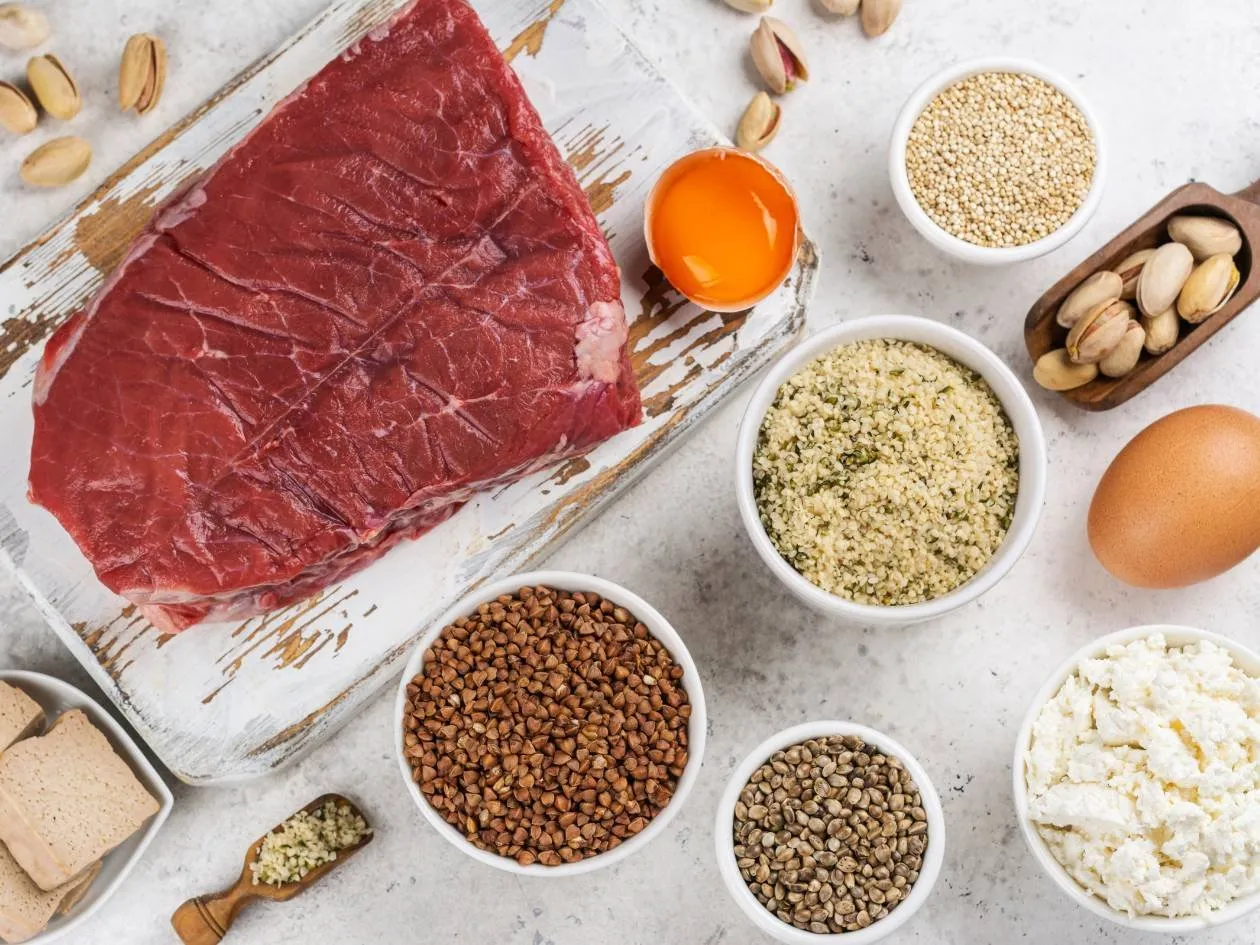
Amino acids are organic compounds that combine to form proteins, essential for the function and structure of living cells. They are classified into essential ones, which must be obtained through the diet, and non-essential ones, which the body can synthesise. Their importance in gastronomy extends from nutrition to culinary innovation, playing a vital role in developing flavours and textures in food.
What they are and where they come from
Chemically, an amino acid is an organic molecule with an amino group (-NH₂) and a carboxyl group (-COOH) attached to a central carbon, the alpha carbon, together with a hydrogen atom and a side chain (the “R”) unique to each amino acid: it is that side chain that gives it its identity and its chemical behaviour.
Nature uses a short alphabet to write every protein on the planet: 20 “standard” amino acids are encoded in the genome of the vast majority of organisms, plus two exceptional cases —selenocysteine and pyrrolysine— which brings the figure to 22 proteinogenic amino acids. Almost all share the same spatial orientation (L-chirality, “L-alpha-amino acids”); the only exception is glycine, which, having no asymmetric carbon, lacks that optical activity.
The first to be isolated was asparagine, in 1806, when the French chemists Louis-Nicolas Vauquelin and Pierre Jean Robiquet extracted it from asparagus —hence its name. The last standard amino acid to be described was threonine, in 1935. Between those two dates, the discovery of glutamic acid —in 1866, by the German chemist Karl Heinrich Ritthausen, while treating wheat gluten with sulfuric acid— would lay, without anyone knowing it yet, the foundations of the most debated flavour of twentieth-century cooking: umami.
Science: how they bond and what they trigger when cooking
Two or more amino acids link together through a peptide bond: a condensation reaction in which the amino group of one reacts with the carboxyl group of another, a water molecule is released and an amide bond remains. Linked by the thousands, those bonds are what build a protein.
That same underlying chemistry —an available amino group— is what explains two phenomena that any professional kitchen recognises every day, even if it rarely carries the label “biochemistry”: umami and the Maillard reaction.
| Milestone | Date | Who | What it means |
|---|---|---|---|
| Discovery of glutamic acid | 1866 | Karl Heinrich Ritthausen | Isolates the amino acid from wheat gluten |
| Identification of umami | 1908 | Kikunae Ikeda | Identifies glutamate in kombu broth and names the flavour |
| Description of the Maillard reaction | 1912 | Louis-Camille Maillard | Explains the browning between sugars and amino acids |
| Glutamate + ribonucleotide synergy | 1913 and 1957 | Shintaro Kodama / Akira Kuninaka | Isolate inosinate (IMP) from katsuobushi and guanylate (GMP) from shiitake |
| Full mechanism of the Maillard reaction | 1953 | John E. Hodge | Describes the exact chemical pathways of browning |
The Maillard reaction always needs two ingredients: a reducing sugar (aldose or ketose) and a free amino group from an amino acid or a protein. It reaches its maximum speed at pH 10 —in an alkaline medium— although its low activation energy means it also proceeds, more slowly, at low temperatures. Toasted bread, roast meat, biscuits, coffee, beer, caramel, sweated onion and dulce de leche are examples cited of that same mechanism.
Umami follows a different path: glutamic acid, in its free glutamate form, is one of the metabolically most active amino acids in the human body —the stomach, intestine, pancreas and spleen consume close to 95% of the glutamate that arrives with the diet before it reaches other organs. Its salt form, monosodium glutamate, is used as a flavour enhancer under the additive code E-621.
Nutritional and culinary importance
Nutrition: amino acids are fundamental to human nutrition, contributing to growth, tissue repair, and the production of enzymes and hormones. Their presence in the diet is crucial for maintaining health and wellbeing.
Molecular gastronomy: in modern cooking, especially in molecular gastronomy, amino acids play a prominent role. They allow chefs to explore new textures and flavours, such as umami, enhancing the culinary experience.
Flavour pairing: knowledge of amino acids can help chefs create complex, balanced flavour combinations, enhancing the flavour profile of dishes.
In the kitchen
Umami is, by far, the best-known gateway for amino acids into professional cooking: it is naturally present in fish, shellfish, cured meat, edible mushrooms, vegetables such as tomato, Chinese cabbage or spinach, green tea and fermented and aged products —cheeses, shrimp paste, soy sauce. In cured, fermented and aged products, that flavour is explained by proteolysis: the process by which proteins break down and release free amino acids, glutamate among them.
That proteolysis is what drives three classic techniques:
- Flavour enhancement: glutamate intensifies umami in meats, cheeses and tomatoes, and explains why a reduced stock or a cured cheese “tastes of more” than its ingredients on their own.
- Fermentation: making cheese, yoghurt and miso depends on microorganisms breaking down proteins into free amino acids, gaining depth of flavour over time.
- Maturation and tenderisation: the enzymes that break down proteins into amino acids soften meat while concentrating its flavour —the same principle, on a different scale, that governs the maturation of Canarian goat (see below).
There is also a food-safety chapter that affects millions of “sugar-free” products: phenylketonuria (PKU), a rare disease that prevents the metabolism of the amino acid phenylalanine. Those who have it must avoid aspartame, which contains it at high levels and appears in chewing gum, sweets and “diet” drinks —hence the warning on the label. The estimated worldwide incidence is 1 case per 23,930 births, with huge variation by country: 1 in 4,000 in Italy compared with 1 in 125,000 in Japan.
What follows is a list of amino acids, essential and non-essential, which perform fundamental functions in nutrition and have interesting applications in gastronomy.
Essential amino acids
Essential amino acids are those the human body cannot synthesise itself and must therefore be obtained through the diet. It is not necessary to eat all nine at every meal: what matters is achieving a balance of all of them over the course of the day.
- Lysine: important for growth and tissue repair. Found in meat, fish, eggs and soy.
- Methionine: involved in metabolism and detoxification. Present in nuts, whole grains and animal products.
- Valine: promotes muscle growth and tissue repair. Found in protein-rich foods such as meat and dairy products.
- Threonine: important for protein function and metabolism. Present in meat, fish and soy.
- Leucine: stimulates muscle protein synthesis. Abundant in dairy products, meat and legumes.
- Isoleucine: involved in blood sugar regulation and muscle development. Found in meat, fish, legumes and seeds.
- Phenylalanine: precursor of neurotransmitters such as dopamine and noradrenaline. Present in meat, fish, dairy and some nuts.
- Tryptophan: needed for serotonin production. Found in turkey, eggs, cheese and tofu.
- Histidine: essential for growth and tissue repair, as well as for histamine production. Found in meat, fish and dairy products.
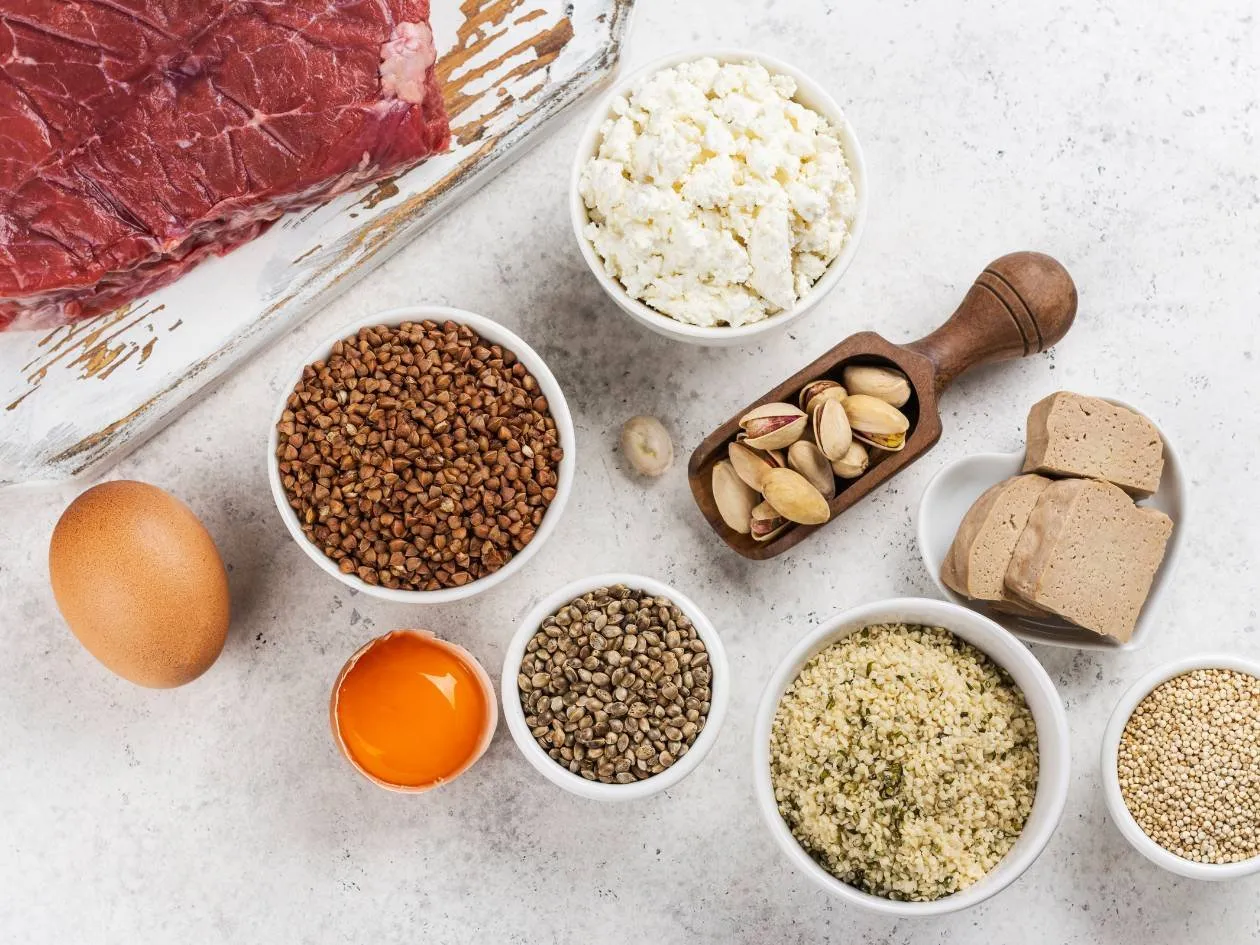
Non-essential amino acids
Non-essential amino acids are those the body can synthesise itself, although their presence in the diet remains important for optimal health.
- Alanine: used by the body to produce energy. Abundant in meat, fish and dairy products.
- Arginine: involved in the immune response and wound healing. Found in nuts, seeds, meat and legumes.
- Aspartic acid: used in the synthesis of other amino acids. Present in plants and animals, particularly in grains and meats.
- Glutamic acid: improves brain function and metabolism, and is the amino acid behind umami (see “Science”). Found in almost all protein-rich foods, especially soy and meats.
- Serine: needed for forming phospholipids and antibodies. Abundant in soy, nuts, meat and fish.
- Tyrosine: precursor of important hormones and neurotransmitters. Found in dairy products, meat, fish and nuts.
- Glutamine: key for immune function and gut health. Found in high amounts in meat, fish and spinach.
Important nuance: three amino acids —arginine and tyrosine from the list above, and also cysteine— are not simply “non-essential”: they are considered conditionally essential, because the body synthesises them, but not always in sufficient quantity to meet demand (for example, during childhood growth or in certain illnesses).
These amino acids have very diverse functions, from developing and repairing muscle tissue to producing enzymes and neurotransmitters, which makes them fundamental to health and wellbeing, and also to cooking and nutrition. ( More information on non-essential amino acids here )
Practical tips
- Nutritional balance: when planning menus, consider the balance and variety of amino acids to ensure a nutritious diet.
- Experimentation: try different sources of amino acids to explore new flavour and texture profiles in your dishes.
- Continuous learning: keep up to date with research and culinary trends related to amino acids to enrich your cooking and your technique.
In the Canary Islands: Queso Majorero and proteolysis
In the Canary Islands, the strongest example of amino acids “in action” has its own name and designation: Queso Majorero (Majorero goat’s cheese), with Designation of Origin recognised since 16 February 1996, made with milk from Majorera goats in the six municipalities of Fuerteventura —and which can include up to 15% Canarian sheep’s milk when destined for curing. Its protein content varies very markedly depending on the degree of curing, and that variation is precisely the signature of the proteolysis that releases free amino acids over time:
| Type of curing | Protein | Fat |
|---|---|---|
| Tierno, young (8-20 days) | 17.40% | 52% |
| Cured (60 days or more) | 27.50% | 55.5% |
The more protein a cheese concentrates, the more substrate there is for enzymes to break down into peptides and free amino acids during maturation: the same phenomenon, on a dairy scale, studied in matured goat meat (see below).
In Spain: Iberian ham and prolonged curing
On the Peninsula, the most recognisable example of “cured meat” —one of the categories that naturally provide umami flavour— is Iberian ham, usually cured for between 24 and 48 months, longer the larger the leg. 60% of Spain’s Iberian ham production belongs to the Jamón de Guijuelo Designation of Origin, alongside Jabugo (Huelva), Los Pedroches (Córdoba) and Dehesa de Extremadura. There is no published figure quantifying the free amino acids in ham by months of curing, but the general principle —prolonged curing, proteolysis, free amino acids, flavour— is the same one illustrated by Queso Majorero.
In Argentina: dulce de leche and the Maillard reaction
The third layer, that of Diego Schattenhofer’s Argentine origins, provides the most precise of the three examples. In the industrial production of dulce de leche, sodium bicarbonate neutralises the lactic acid in the milk and favours the Maillard reaction, which combines and polymerises casein and lactalbumin —proteins rich in amino acids— with the milk’s reducing sugars, giving its characteristic toasted colour. The process passes through a pre-concentration to 45-50 °Brix and a final concentration of 68 °Brix. Its origin is disputed: a document from Argentina’s National Historical Museum places its accidental invention in 1829, while the historian Víctor Ego Ducrot argues for a Chilean origin around 1817, carried to the Río de la Plata by José de San Martín. Since 1998, every 11 October marks the International Day of Dulce de Leche.
At Taste 1973: the maturation of Canarian goat
At Taste 1973, chef Diego Schattenhofer researches —together with ICIA and CSIC— the maturation of Canarian goat meat. According to that study, during the maturation process “the concentration of free amino acids increases” and protein digestibility improves, the same proteolysis mechanism that explains how Queso Majorero evolves with curing. It can be read in more detail in the site’s own post Beneficios nutricionales de la carne de cabra madurada.
Conclusion
Amino acids are more than simple nutrients: they are a vital tool in the culinary art that allows chefs to innovate and perfect their creations. Understanding their role in nutrition and in gastronomy opens up a range of possibilities for culinary exploration, from enhancing flavours to creating unusual, satisfying textures.
Related terms
- Non-essential amino acids — the other half of the essential/non-essential classification.
- Albumin — a specific protein built from amino acids.
- Antioxidants — several amino acids and their derivatives also perform this function.
- Omega-3 fatty acids — the other major nutritional block in matured goat meat, alongside protein.
- Amylase — another key biomolecule of scientific cooking, for contrast: enzyme versus structural building block.
- Sensory appreciation — how umami is perceived in tasting, the most direct sensory effect of an amino acid.
Sources consulted
- Wikipedia (es): Aminoácido
- Wikipedia (es): Aminoácido esencial
- MedlinePlus (US National Library of Medicine, NIH): “Essential amino acids”
- Wikipedia (es): Proteína
- Wikipedia (es): Ácido glutámico
- Wikipedia (es): Umami
- Wikipedia (es): Reacción de Maillard
- Wikipedia (es): Fenilcetonuria
- Wikipedia (es): Queso majorero
- Wikipedia (es): Jamón ibérico
- Wikipedia (es): Dulce de leche
- Site post: Beneficios nutricionales de la carne de cabra madurada
Frequently asked questions
What are amino acids?
How many amino acids are there?
Which are the essential amino acids?
What is the difference between essential and non-essential amino acids?
Which amino acid produces umami flavour?
What relationship do amino acids have with the Maillard reaction?
Is aspartame dangerous because of the amino acids it contains?
How much protein does an adult need per day?
Also in the glossary
Amylase
Amylase, an enzyme fundamental to the digestion and culinary processing of carbohydrates, plays a critical role in both human nutrition and gastronomy.
Antioxidants
Antioxidants are molecules capable of preventing or slowing down the oxidation of other molecules.
Aperitivo
The aperitivo, a tradition deeply rooted in many cultures, acts as an introduction to the culinary experience, preparing the palate and the digestive system for the main meal.