Tenerife Eats with the Nose: Diego Schattenhofer's Sensory Revolution
- Published
- Section
- In the press
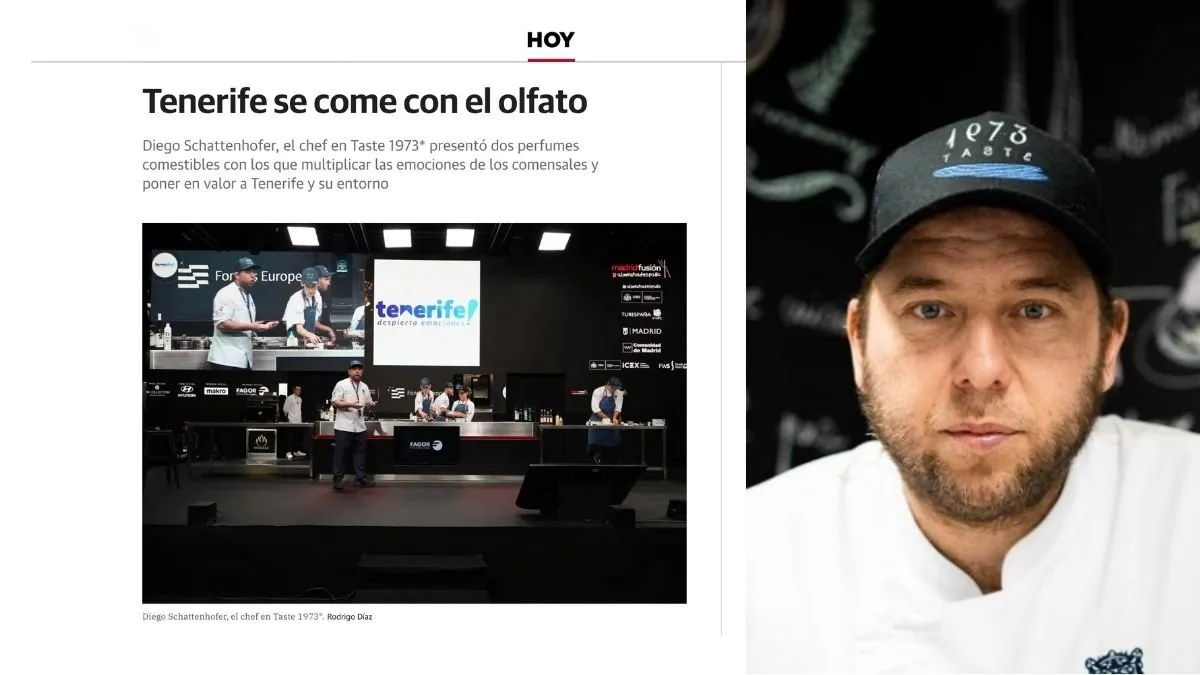
Modern gastronomy goes far beyond the simple act of eating. It’s a multisensory experience that engages all our senses, and chef Diego Schattenhofer knows this very well. This innovative Argentine, at the helm of the restaurant Taste 1973* in Arona, Tenerife, is taking Canarian cuisine to new heights with his focus on emotions and aromas.
The power of smell in the culinary experience
During his participation in Madrid Fusión Alimentos de España, Schattenhofer presented a fascinating project that combines science, gastronomy and local culture: two edible perfumes that transport diners to the heart of Tenerife before they even taste the first bite.
“In the kitchen, flavour matters, but we’re working on emotions and on how to bring them to the table so that the diner enjoys a complete experience”, the chef explained. This philosophy is grounded in scientific research that has shown the close relationship between smell and our gastronomic experiences.
Pinar del Teide: the scent of happiness
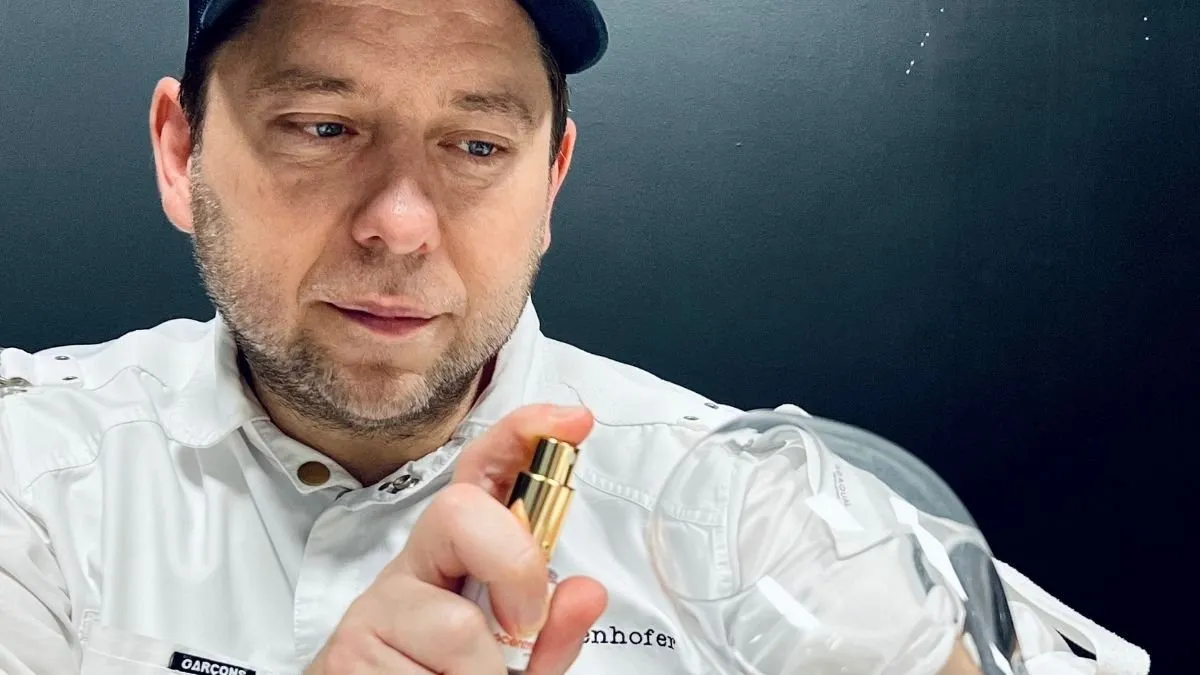
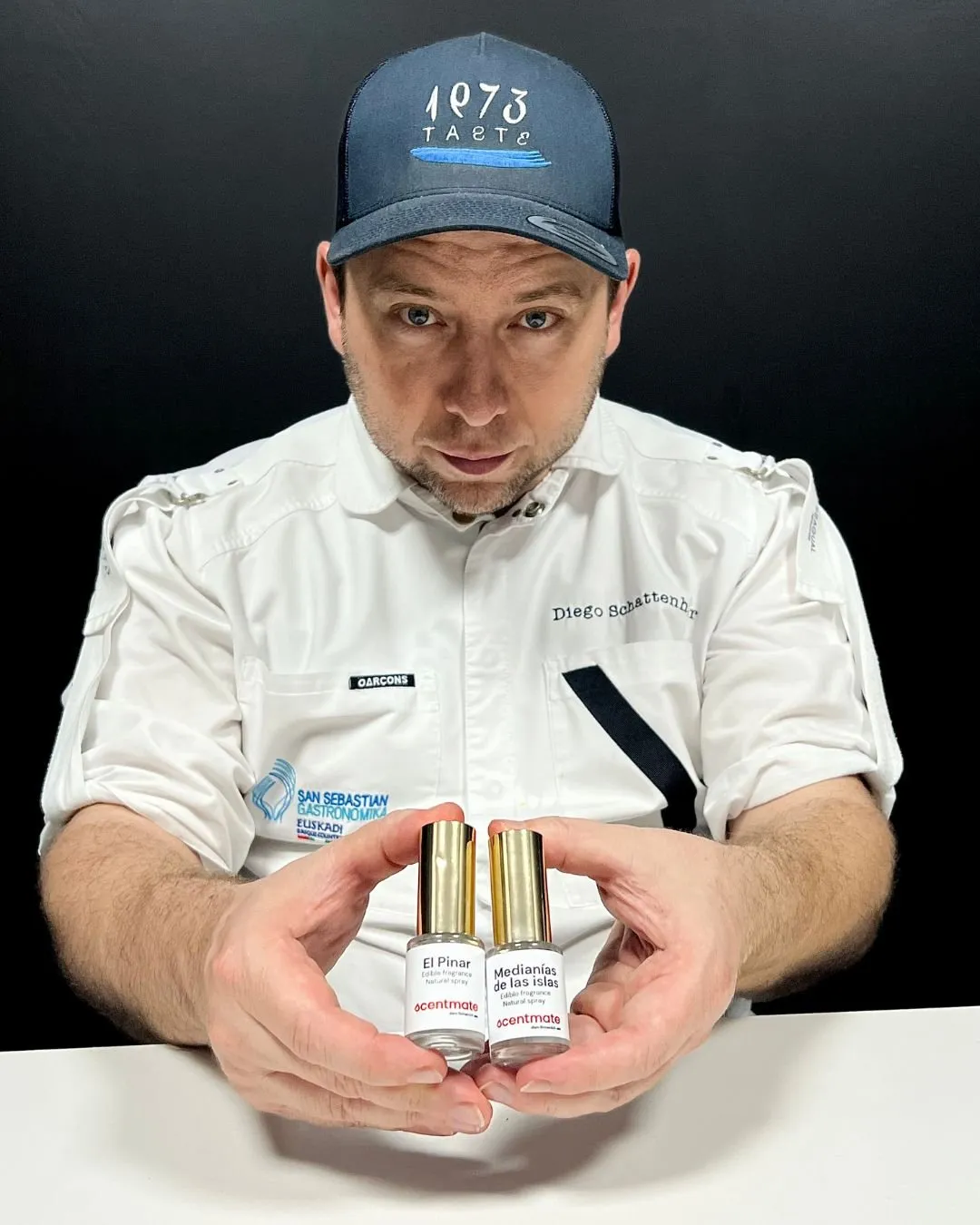
The first of these perfumes, called “Pinar del Teide”, is presented to diners at the start of the experience at Taste 1973*. This aroma seeks to evoke the majesty of the iconic Tenerife volcano, creating a sense of happiness and calm that prepares the diner for the culinary journey about to begin.
To create this unique perfume, Schattenhofer worked with Alfonso Álvarez, an aroma expert and founder of Scentmate by dsm-firmenich. Together, they managed to develop the first certified edible perfume with emotions, an innovation that promises to revolutionise the way we experience gastronomy.
Medianía: a tribute to the Tenerife goat
The second perfume, “Medianía”, is a tribute to one of Tenerife’s most emblematic products: the goat. To create it, Schattenhofer immersed himself in an extensive research process that included collaboration with María Fresno, a doctor of veterinary science at the Instituto Canario de Investigaciones Agrarias.
This study revealed that goat meat can contain up to 130 different aromatic compounds depending on its maturation. With this information, the chef and his team travelled across the island, exploring the different ways of preparing and enjoying goat meat in traditional Tenerife cuisine.
The result is a perfume that transports the diner to the island’s mid-altitude areas, evoking the world of the goatherds and Tenerife’s rich livestock-farming tradition. This aroma is woven into the menu, offering an experience that goes beyond taste to reach the depths of olfactory memory.
The science behind the emotion
What makes Schattenhofer’s approach truly revolutionary is its scientific basis. By collaborating with experts in various fields, from veterinary science to aroma chemistry, the chef has managed to create a gastronomic experience that not only delights the palate, but also stirs emotions and memories through smell.
This innovation represents a step forward in modern gastronomy, where cooking becomes a vehicle for telling stories, evoking memories and creating emotional connections with the land and its traditions.
The future of sensory gastronomy
Diego Schattenhofer’s work at Taste 1973* doesn’t stop here. The chef revealed that in the coming months he will unveil three additional edible perfumes, further expanding the range of sensory experiences he offers his diners.
This commitment to sensory gastronomy is not only raising Tenerife’s culinary profile, but is also laying the groundwork for a new way of understanding and enjoying cooking. In a world where experience is increasingly valued, initiatives like this show that the future of gastronomy is as exciting as it is delicious.
The Magic of Eggs in Tenerife: A Culinary Tribute by Diego Schattenhofer
Diego Schattenhofer: The Culinary Wizard Revolutionising Canarian Gastronomy
This article is based on information published by Javier Varela in the newspaper HOY, available at the following link: Tenerife eats with the nose.