Management software for fine-dining restaurants, with AI Chef Pro
- Published
- Section
- Industry
What management software has to settle in a fine-dining kitchen
Management software for a fine-dining restaurant is the system that holds, before the plate reaches the dining room, the costing sheet, the ingredients, the allergens and the hygiene trail. Someone typing “fine-dining software”, “an app for fine dining” or “a fine-dining platform” is usually looking for that. Today those searches land on the AI Chef Pro article, which introduces the suite and does not explain what kitchen work any programme, whichever it is, has to cover.
Two things the search engine lumps together need separating. A management app works on kitchen figures: weights, purchase prices, waste, substitutions and the list of what must be declared. A video platform teaches people to cook. Both can be called a “fine-dining platform” and they do not do the same job. Choosing badly is not a marketing detail: it is asking a filmed course to say what tonight’s pass costs.
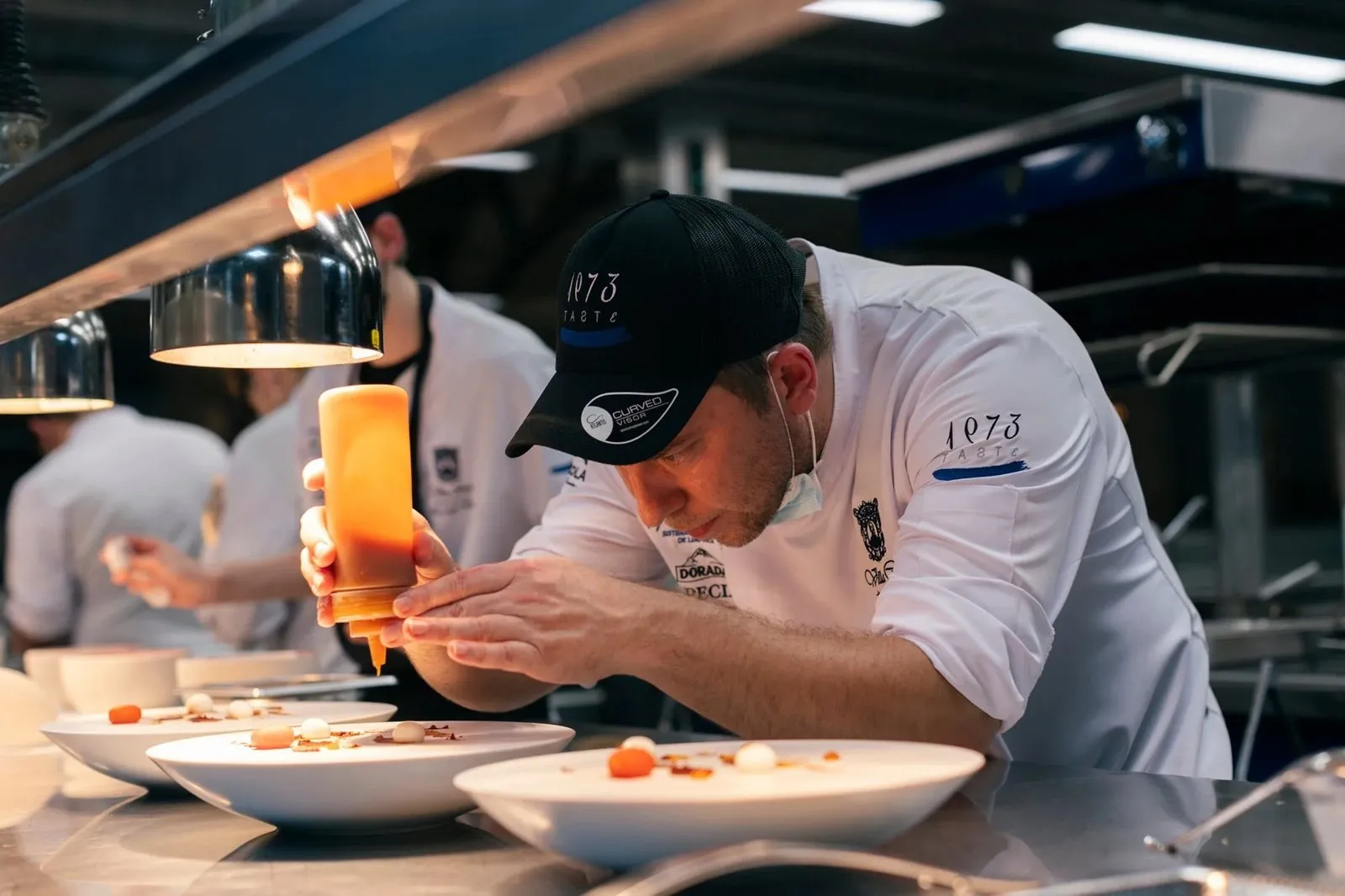
At Taste 1973 the pass is the moment when that information no longer allows a “I’ll check later”. The plate leaves or it does not. What follows does not describe an imaginary in-house programme. It describes the work any software of this kind has to withstand, and then what AI Chef Pro says about itself on its homepage and what this site has already published about Diego Schattenhofer.
What the rules require to be findable
Regulation (EU) No 1169/2011 requires information on every ingredient or processing aid in Annex II that causes allergies or intolerances and remains present in the finished product, including when the food is served unpackaged. AESAN recalls this in its allergen-control programme: the duty does not stop at the jar in the store. It reaches the plate.
Those groups number 14. A serious record names them as the annex does, and when it helps the guest it specifies the food (hake, not merely “fish”; squid, not merely “mollusc”). The AESAN guide on unpackaged food, which develops Royal Decree 126/2015, allows several ways of saying it: a label, a sign, the menu, a recipe book or oral information. It has to be at hand before the purchase is finished and it cannot be charged for separately. If it is spoken, the premises also need a written or electronic record — product sheets or the recipes of the dishes — present on site, available to official control and to anyone who asks, plus a visible notice of where that information is obtained or whom to approach.
| Annex II group | What the record must be able to point to |
|---|---|
| Cereals containing gluten | Wheat, rye, barley, oats and their hybrids |
| Crustaceans | The animal and the products made from it |
| Eggs | Egg and egg products |
| Fish | Fish and fish products |
| Peanuts | Peanut and peanut products |
| Soybeans | Soya and soya products |
| Milk | Milk and products thereof, lactose included |
| Nuts | Almond, hazelnut, walnut, cashew, pecan, Brazil nut, pistachio, macadamia |
| Celery | Celery and products thereof |
| Mustard | Mustard and products thereof |
| Sesame | Sesame seeds and what is made from them |
| Sulphites | Sulphur dioxide and sulphites above 10 mg/kg or 10 mg/litre, expressed as SO2 |
| Lupin | Lupin and lupin products |
| Molluscs | Molluscs and products thereof |
That table is not a menu template. It is the list the record cannot drop. Software that will not let you write the group, or that hides it behind a fantasy name for the dish, fails the job however well it paints the pass.
Beside the allergens sits HACCP, the APPCC. Regulation (EC) No 852/2004 asks anyone operating with food for a permanent procedure based on those principles, and AESAN itself explains that the system has to be flexible enough for a small kitchen: sometimes a guide to good hygiene practice is the reasonable path, provided the premises adapt it to what they actually do. Temperatures, cleaning, suppliers, waste and traceability are not a romantic annex to the trade. They are the notebook an inspector can ask for and the brigade has to find without digging through a chat.
None of this demands a particular brand. It demands that the datum exist, that it be on the premises and that someone know how to open it on a Saturday night.
The parts, named for the trade and not for a brand
Before any suite is mentioned, the work splits into parts any kitchen at this level recognises. The generic name comes first. The brand, if it appears, is a later example and not a requirement.
- Dish costing sheet. Ingredient, quantity, purchase price and what remains after waste. Without that sheet, the menu price is a hunch.
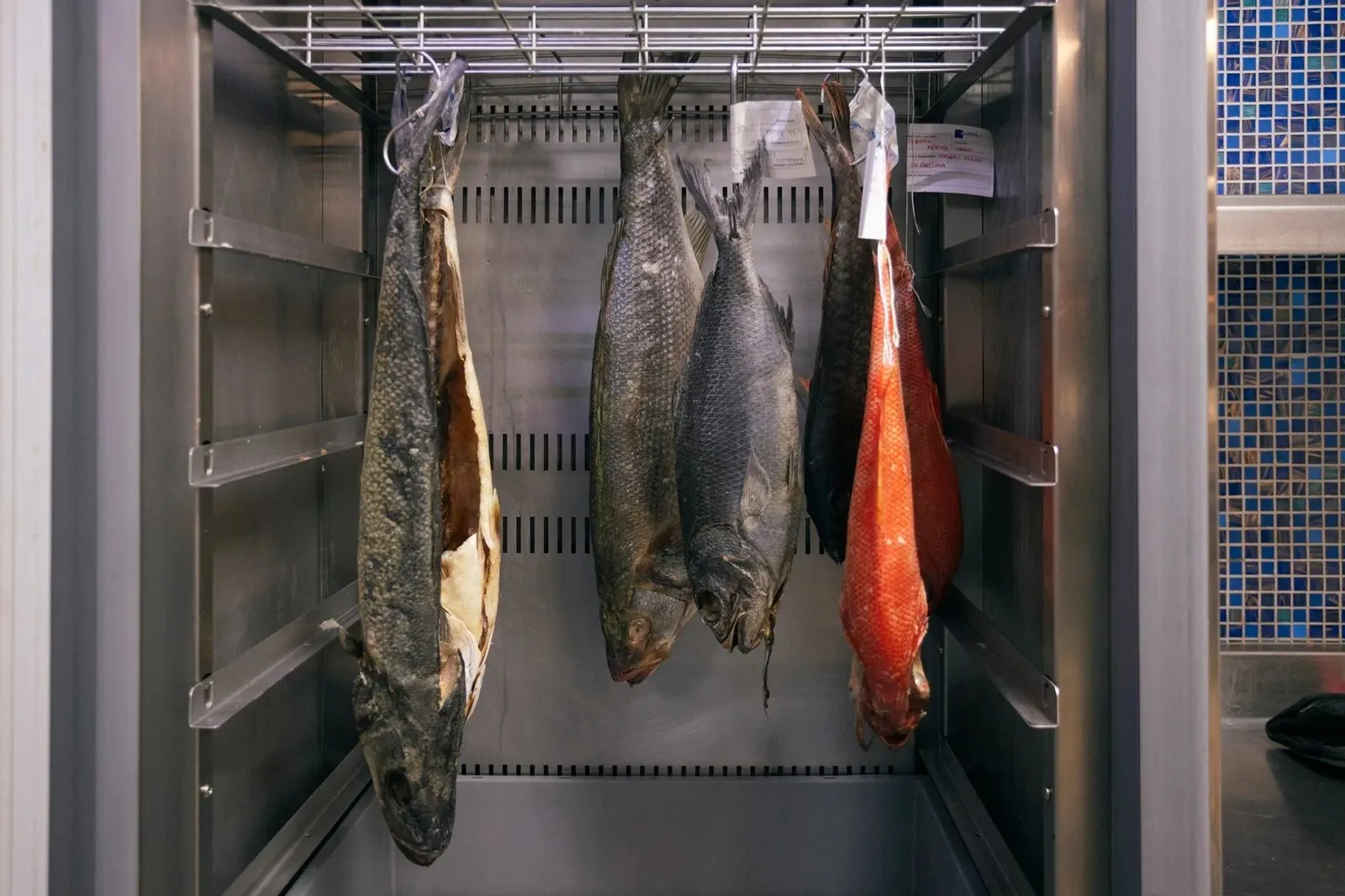
- Inventory and waste. What came in, what was thrown away and what is still in the chamber. The photograph of hanging fish is not decoration: it is produce with a date, and the date does not live in the station chef’s memory.
- Allergens. The 14 groups, tied to the recipe served today and not to last month’s recipe.
- Hygiene records. The APPCC procedure or the guide the premises have adopted, with the logs that actually have to be filled in.
- Menu and substitutions. When an ingredient is missing, the change has to go back through the costing sheet and the allergens. Otherwise the guest eats something other than what was read out.
| Part | Question it must be able to answer |
|---|---|
| Costing sheet | What does this dish cost at this week’s purchase price? |
| Inventory and waste | What is left in the chamber and what has been written off? |
| Allergens | Which Annex II groups are in the plate leaving now? |
| Hygiene | Where is the record the procedure asks for? |
| Substitution | If an ingredient changes, who redoes cost and declaration? |
A programme can cover a single one of those rows and be honest, or promise all five and keep no history. The useful question, when comparing, is not “does it include artificial intelligence?”. It is “does it answer these five questions with this house’s data?”.
AI Chef Pro, the suite of agents Diego is part of
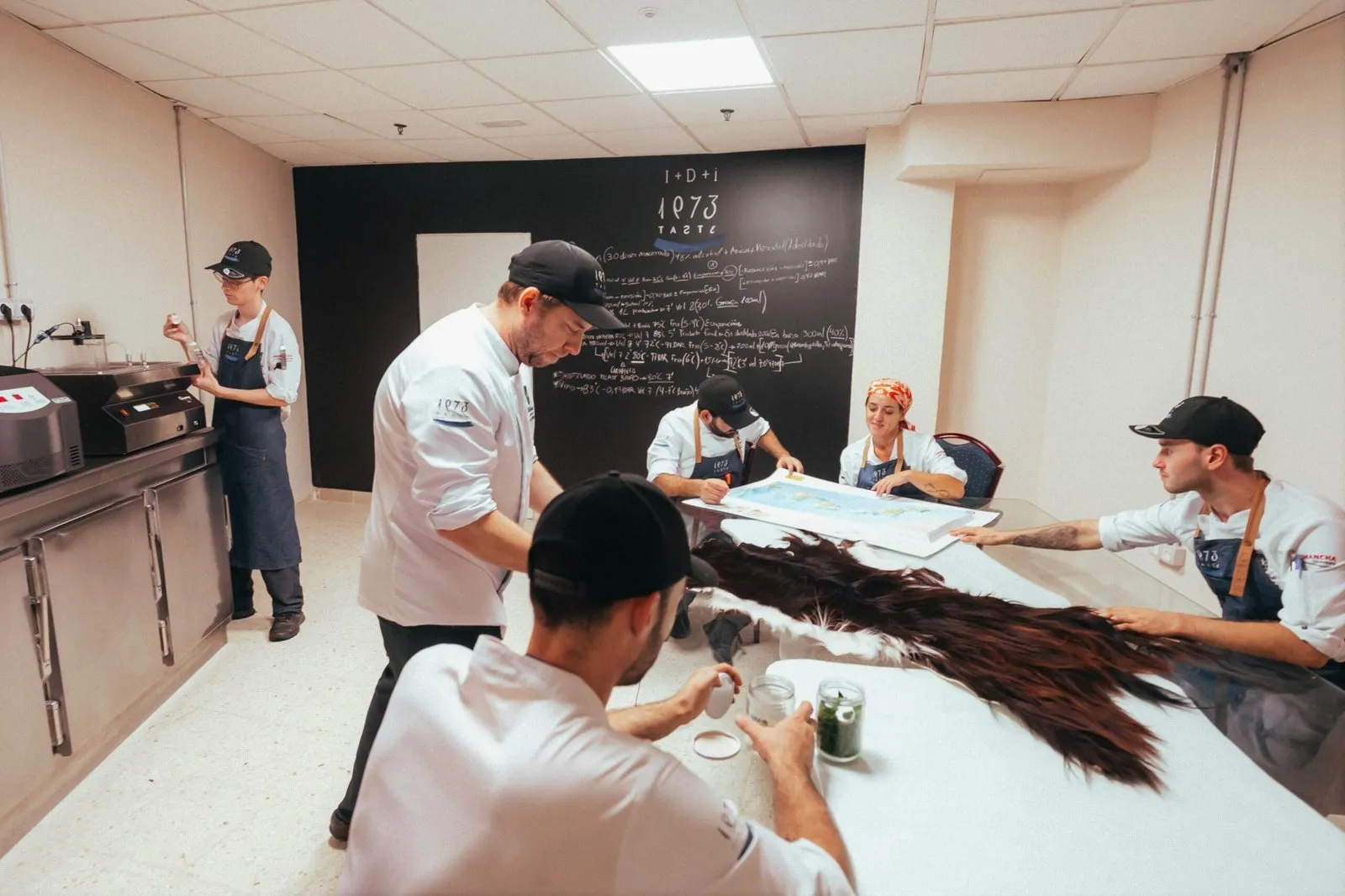
AI Chef Pro is the suite of artificial-intelligence agents this site already presented in an article of its own. That text places Diego Schattenhofer on the expert team, working with John Guerrero, whom it calls CEO, and lists tools with kitchen names: Creative Cooking, Food Pairing AI, Waste GenCal, Allergen ID, Mental Coach, Gastro Lexicum and Catering AI+. The culinary innovation the site talks about is not delegated to the tool: the tool is told as support for the trade, not as a substitute for the pass.
Its current homepage speaks of 75 agents and uses, in English, the same trades: Creative Cooking, Food Pairing AI, Waste GenCal, Allergen ID, Mental Coach, Gastro Lexicum, Catering AI+, plus a portion calculator and a unit converter.
Current plans and prices are published on aichef.pro and change over time: the valid reference is always the site itself.
AI Chef Pro is not the restaurant’s till programme or the reservation book. It is a suite of agents for the chef’s work and for the kitchen’s engine room: writing recipes, crossing ingredients, waste, allergens, vocabulary and catering briefs. Whoever uses it will still have to enter the real supplier price on the costing sheet.
On the management the guest can see, the restaurant page publishes a single fact: reservations are handled by Europe Hotels International.
What can be followed in the journal and in the industry category is the work on produce: the fish chamber, the research and the collaboration with laboratories that other articles cite with their source.
The short answer to “what software a fine-dining chef uses” is this: the one that keeps the costing sheet, the 14 allergen groups and the hygiene record findable, on the day of service and not the following Monday. AI Chef Pro is one of the suites this site can describe because it has published it, with the prices on its homepage and with the role the 2024 article attributes to Diego Schattenhofer. The other brands that appear in the search stay out: we are not going to rewrite their leaflet.
Sources
- Regulation (EU) No 1169/2011, on EUR-Lex: consolidated text.
- Royal Decree 126/2015, in the official gazette: rules on information for unpackaged food.
- AESAN, allergen-control programme: Programme 2.5.
- AESAN, guide to food information for unpackaged food: PDF.
- Regulation (EC) No 852/2004, on EUR-Lex: text.
- AESAN, flexibility of APPCC: page.
- Homepage of the suite: aichef.pro.
- On this site: the AI Chef Pro article and the Taste 1973 page.