A Gastronomic and Wine Journey through the Volcanic Heart of the Canary Islands, a Review of the RTVE Feature
- Published
- Section
- Chefs
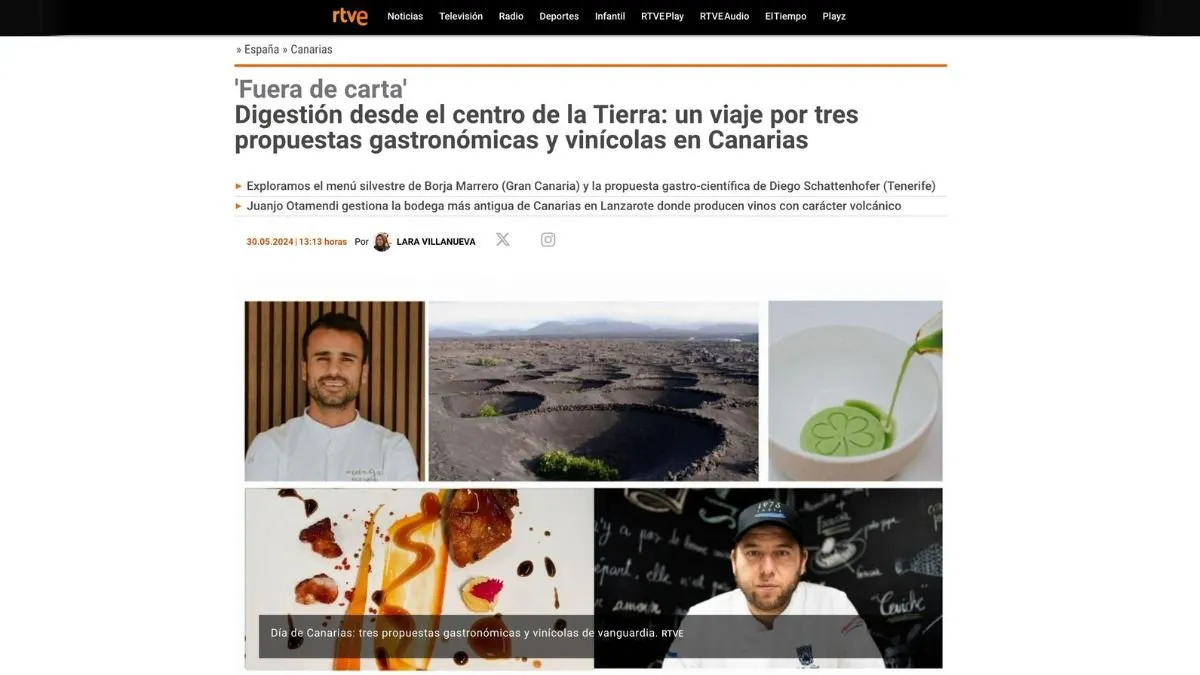
A cuisine that revives Canarian roots
The Canary Islands, known for their natural beauty and enviable climate, are also home to a vibrant and unique gastronomy that deserves to be explored. This year, Canary Islands Day celebrates not only its culture, but also its avant-garde cuisine. In this journey, we highlight three ventures that place the Canary Islands on the world map of haute cuisine: Borja Marrero, Diego Schattenhofer and Juanjo Otamendi. Each of these chefs and winegrowers brings a unique perspective, rooted in the volcanic land that defines the archipelago.

Borja Marrero and his closed-cycle cuisine
Borja Marrero, from Tejeda in Gran Canaria, is a fervent advocate of cooking based on wild, native ingredients. His approach is clear: make the most of everything nature offers in each season. From the Hotel Santa Catalina in Las Palmas de Gran Canaria, one of the island’s most striking colonial-style hotels, Marrero has taken his cuisine to new levels of creativity and sustainability.
The Prickly Pear Cactus and Pine Bark
One of the star ingredients in Borja’s cuisine is the prickly pear cactus, an invasive plant that has been transformed into a culinary delicacy. Its use in dishes such as the Suspiro de Tunera or the vinagrera hollandaise (vinagrera: a tart native Canarian sorrel) shows Marrero’s ability to turn the ordinary into the extraordinary. He has also introduced Canarian pine bark into his menu this year, using this ingredient in 70% of his dishes. This inclusion not only highlights the resilience of the pine tree, but also connects diners with the essence of Canarian land.
A Radical and Sustainable Approach
Borja Marrero’s philosophy is clear: make the most of local resources in a conscious and sustainable way. With menus that showcase vegetables, sea and mountain, and an interesting range of dairy from native sheep and goats, his cuisine is a tribute to the biodiversity of Gran Canaria. His dishes, such as the cheese soup made eight months in advance, demonstrate a deep commitment to quality and innovation.
Juanjo Otamendi and the volcanic wines of El Grifo
We move on to Lanzarote, where Juanjo Otamendi runs El Grifo, the oldest winery in the Canary Islands. Founded almost 250 years ago, this winery is a testament to the resilience and adaptability of viticulture on volcanic land. The eruptions of 1730 to 1736 covered the central part of the island with lava and volcanic ash, creating a unique environment for growing vines.
Heroic Viticulture in Chabocos
The cultivation method used in Lanzarote, which involves planting vines in chabocos (pits dug into the black soil and protected by stone walls), is an example of heroic viticulture. This method shields the plants from the trade winds and retains moisture in the soil. Grape varieties such as Malvasía Volcánica and Listán Negro are hand-harvested, keeping alive traditional techniques that give El Grifo’s wines a unique and romantic character.
Challenges and Opportunities of Volcanic Soils
Volcanic lava, rich in minerals, provides essential nutrients to the vines, although it also creates poor, difficult-to-manage soils. Juanjo Otamendi explains that, despite these challenges, the volcanic ash helps retain moisture and protects the plants from evaporation. This duality between difficulty and opportunity is what makes the wines of Lanzarote so special.
Diego Schattenhofer and the extreme maturation of goat meat
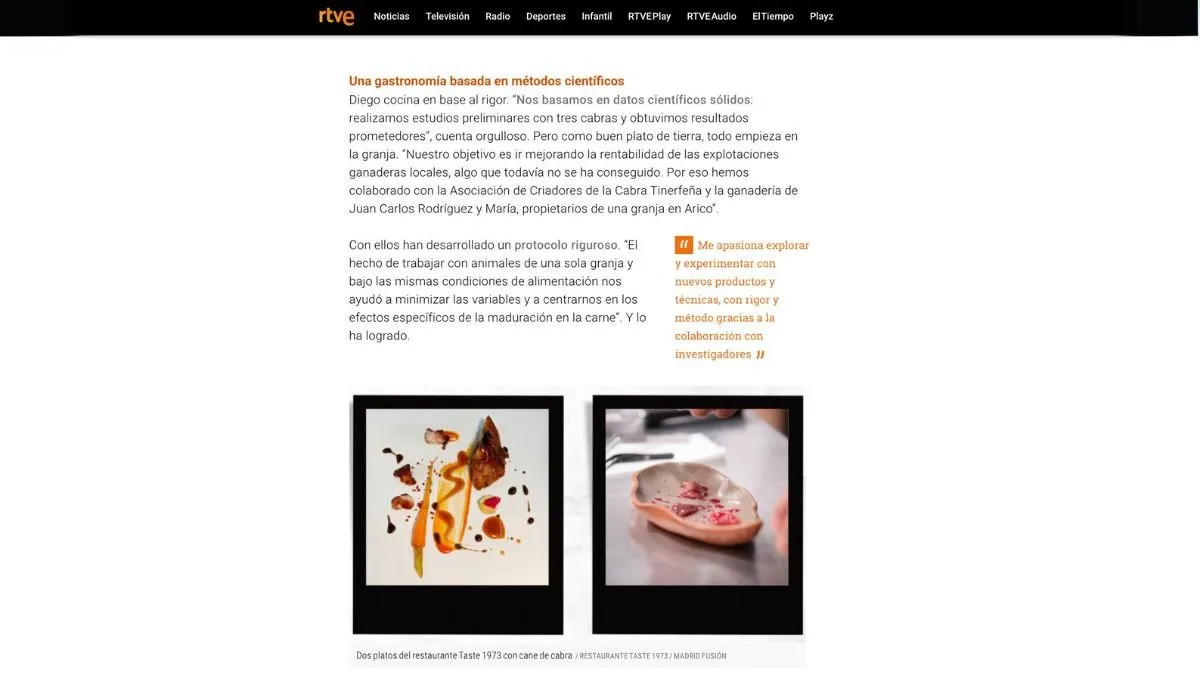
In Tenerife, Diego Schattenhofer heads the restaurant 1973 Taste, where one of his obsessions is the extreme maturation of goat meat. Working with the Tinerfeña Sur goat, Schattenhofer seeks to transform this traditional ingredient into a gourmet experience.
Science and Gastronomy
The collaboration with ICIA and Dr Marichu Fresno has allowed Schattenhofer to explore new frontiers in the maturation of goat meat. The studies carried out have identified more than 130 aromatic compounds that evolve during maturation, contributing complex flavours and unique textures. This scientific approach has led to the creation of innovative dishes that combine tradition and modernity.
Innovation in Every Bite
At 1973 Taste, diners can enjoy goat meat in a variety of preparations, from carpaccios and tartares to stews and roasts. Every dish shows how technique and creativity can elevate local ingredients to new heights.
Conclusion
The Canary Islands are not only a tourist paradise, but also a first-rate culinary destination. The combination of local ingredients, innovative techniques and a deep connection with the volcanic land has allowed chefs and winegrowers such as Borja Marrero, Juanjo Otamendi and Diego Schattenhofer to create distinctive dishes and wines that reflect the richness and diversity of Canarian cuisine. A journey through these islands is an opportunity to discover authentic flavours and unmatched culinary experiences, far beyond sun and beach.
See the full piece and the original source of this content: www.rtve.es
#Canarias, #Gastronomía, #AltaCocina, #BorjaMarrero, #DiegoSchattenhofer, #ElGrifo, #VinosVolcánicos, #CocinaSostenible, #IngredientesAutóctonos, #ViajeCulinario