Oxidation: browning of cut fruit and fat that goes rancid
- Term
- Oxidation
- Tags
- Food science · Chemistry · Preservation
- Published
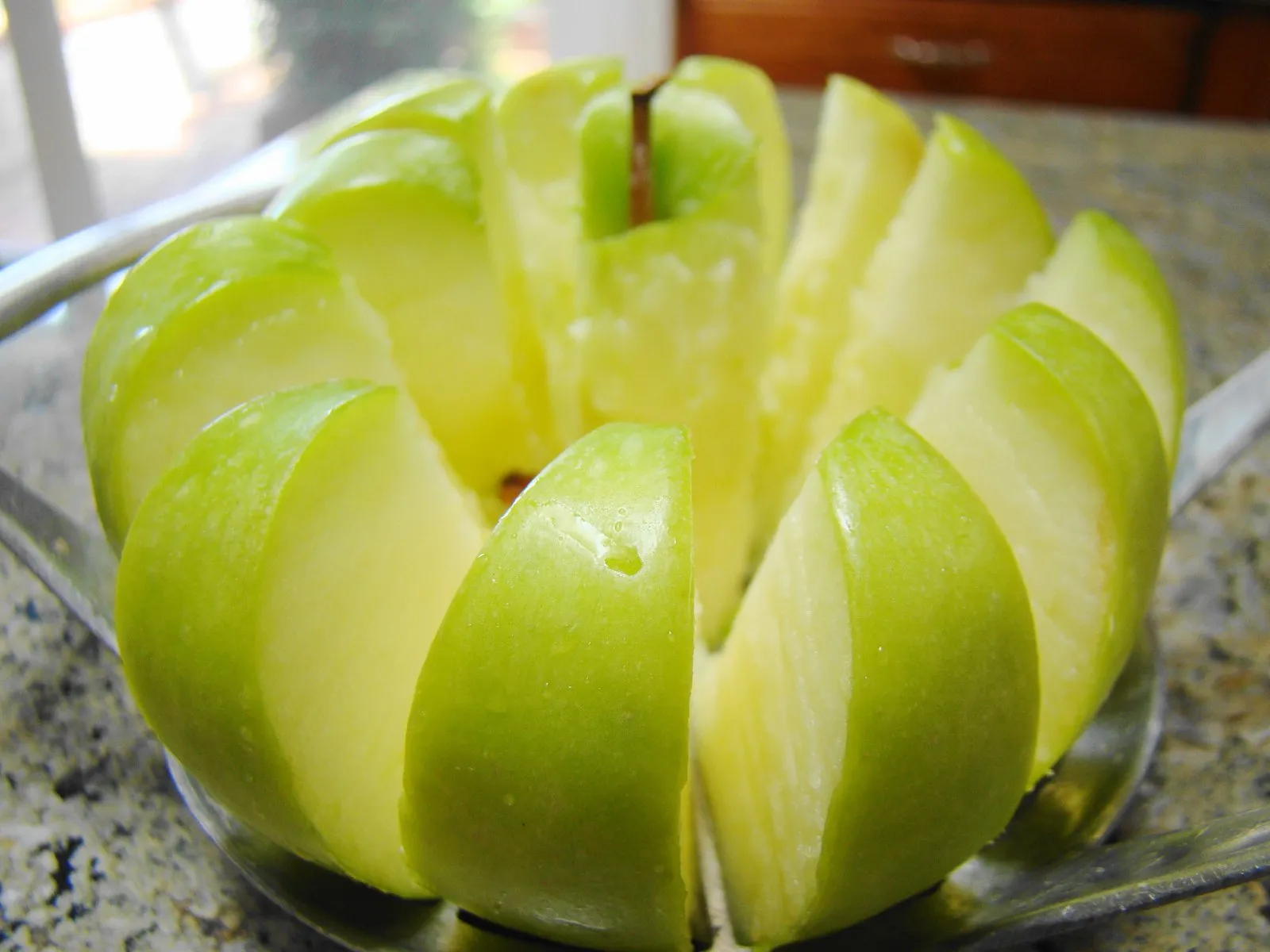
Oxidation, in the kitchen, is the reaction with oxygen that browns cut fruit and, by another path, turns unsaturated fat rancid. The two are named with the same word and are not corrected with the same gesture. In the apple an enzyme is in charge. In the oil the fatty chain is in charge. Mixing them leads to pouring citrus onto a bottle, or to storing an apple as if the problem were the light on the oil.
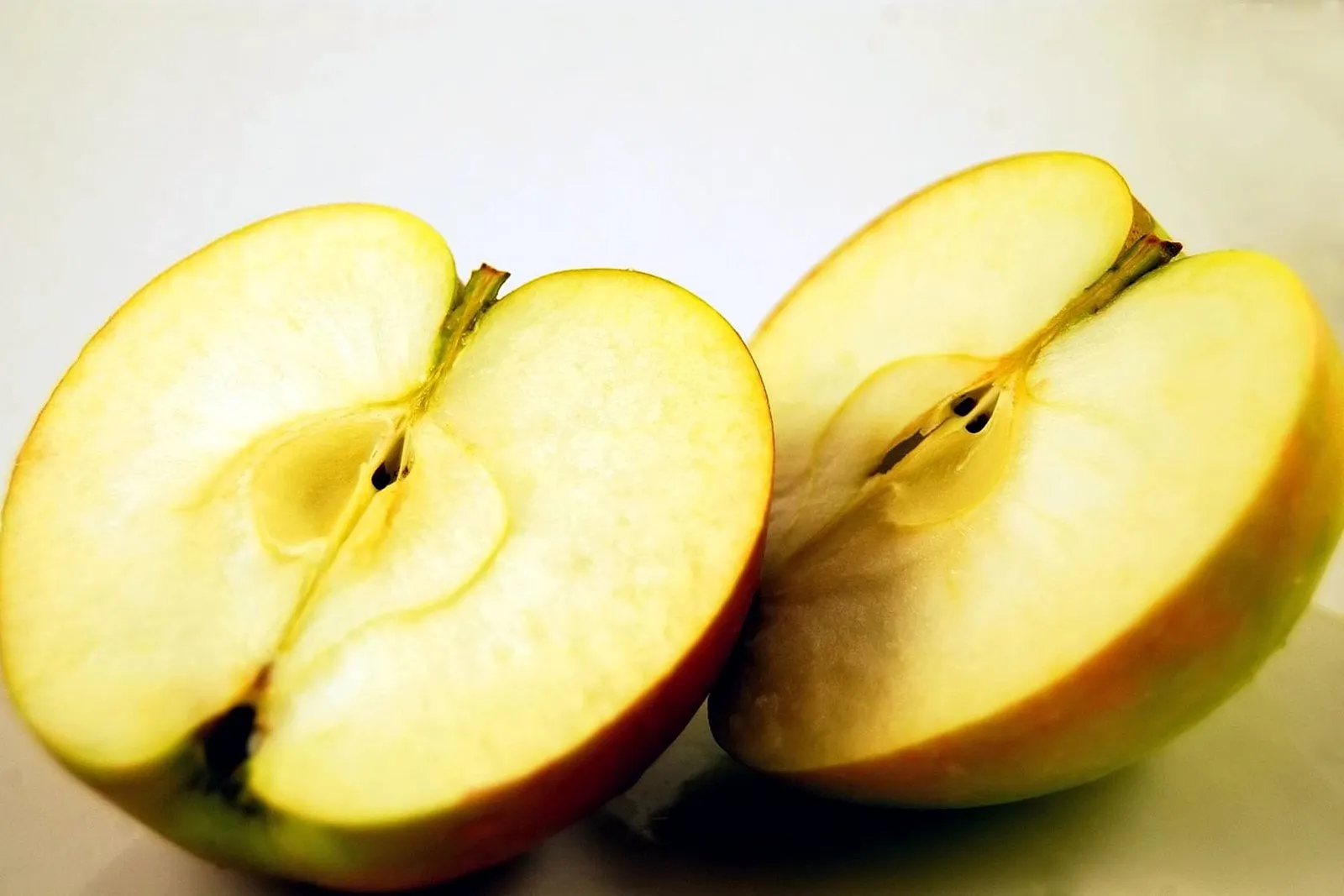
The photographs separate the two substrates. The lead image is an apple already browned. The pale cut is the minute before, flesh still light. The bottle is olive oil: the fat that can go rancid, not an oil presented as rancid. The brand on the glass is the one in the shot, not a house supplier.
Browning of cut fruit
Enzymatic browning of cut fruit and vegetables is catalysed by polyphenol oxidase. The enzyme is in the tissue. The phenols are there too. While the cell is whole, they do not meet in the way that produces colour. The knife breaks that separation and oxygen enters. Quinones appear and, from them, the brown pigments. The apple in the lead image is that end. The one in the gallery is the start.
A review of the chemistry of that browning places the optimum activity of the enzyme between pH 5 and pH 7, and an inhibition below pH 3. The figure matters in the bowl, not as a laboratory recipe. A very acid medium slows the enzyme. A medium close to that of the fruit itself lets it work. That is why a cut of apple, pear, artichoke or banana darkens on the board if nobody intervenes, and darkens less if the medium is truly acidified.
It is not a fault of the variety and not a fruit gone over in the store-room sense. A firm apple, just parted, browns the same. The ochre colour is the enzyme doing its work as soon as there is air. Nor is it the Maillard reaction. That one needs high heat, little moisture and an amino acid beside the sugar. This one happens at cold kitchen temperature, in the minute of the cut.
The craft sees it every day in the mise en place. An apple sliced for a dessert waits on the pass and arrives brown if nobody covered it. A turned artichoke darkens at the edge. The remedy is not to hide the plate: it is to cut the enzyme’s path or to reduce the quinones before they polymerise. Water alone delays little. Acid and the reductant do the work.
Fat that goes rancid
The other kitchen oxidation attacks unsaturated fat. The substrate is the chain of the fatty acid, not the polyphenol of the fruit. There is no polyphenol oxidase at the centre of that story. There is oxygen, and a fat with double bonds that this oxygen can alter. The result in the nose is rancidity: a smell of cardboard, of paint or of old nut, depending on the oil and on how long it has stood open. A single sentence does not give the exact time. It depends on the oil, the air, the light and the heat of the shelf.
Omega-3 fatty acids are the sensitive case of that family. The more unsaturated the chain, the more exposed it is. A fish oil or a seed oil is not stored like a jar of salt. The bottle in the photograph shows the format: glass, a cap, and a place away from the stove. It does not show a spoiled oil. It shows the material that spoils if it is left to air and light.
Ascorbic acid does not move across to this reaction with the same sentence that serves for the apple. There it reduces quinones. Here the problem is another substrate. Treating rancidity as if it were fruit browning leads to a useless gesture: acidulating an oil does not bring it back from a rancid smell. Rancid oil is set aside. It is not corrected with a citrus.
Keeping that fat is physical. Less air in the bottle, less light, less heat. An oil that smells clean when opened and smells rancid a week later has had too much oxygen, not an apple enzyme. The pass finds it in the nose before any laboratory note: the stream is smelled, and if the smell is not that of the fruit, it does not go into the pan.
Ascorbic acid in the kitchen
Ascorbic acid is the kitchen antioxidant of the fruit reaction. It is used as an anti-browning agent because it reduces the quinones back to phenols. While acid remains that is capable of that reduction, the brown colour is slow to come. When it has been fully oxidised to dehydroascorbic acid, the reduction stops and browning can continue. The juice poured at the start is not a policy. It is spent.
That explains the gesture of the bowl with citrus on the sliced apple, and also its limit. If the fruit waits for hours, the acid is exhausted and the ochre returns. If the fruit is eaten in the minute, sometimes it is not even needed. The antioxidant here is not an ornament of the label: it is a reductant with a finite capacity. Asking it to preserve an oil is asking it to do the work of another reaction.
Acidification comes in from the other flank. Lowering the pH inhibits the enzyme, within the range the review marks. Ascorbic acid does both things at once when it is in a juice: it brings acidity and it brings reducing capacity. They are not the same mechanism. They can be separated in a chemistry text and in the kitchen they arrive together in the lemon. Knowing which of the two has been exhausted avoids pouring more juice on a fruit that has browned again because the reductant was spent and the pH is still low.
The acid is named for what it does on the cut: it returns the quinone to a phenol until it is itself oxidised. On the pass, the bowl, the citrus and the clock are enough.
Related terms
- Antioxidants — the group ascorbic acid enters when it slows browning.
- Omega-3 fatty acids — the unsaturated fat that oxygen turns rancid by another path.
- Maillard reaction — a browning of heat, with sugar and an amino acid, distinct from the ochre of fruit.
- Acidification — lowering the pH, one of the ways to inhibit the browning enzyme.
Sources
 — view the full-size photo
The fresh cut has not browned yet. The same fruit, minutes later, shows the work of the enzyme. 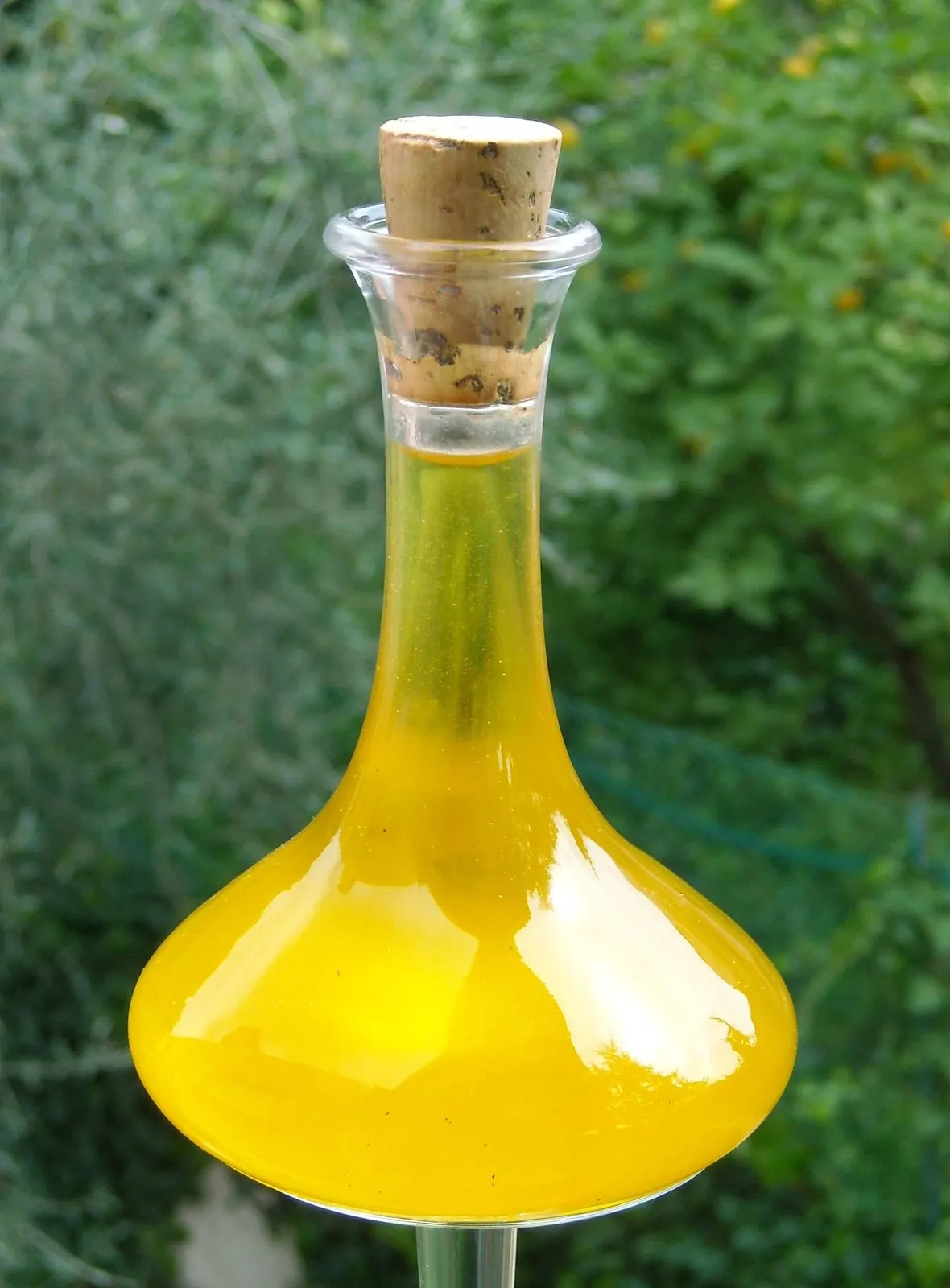 — view the full-size photo
The bottle is the fatty substrate, not an oil already rancid and not an advertisement for the brand printed on the glass.
Photos: 1. Marius Iordache (opens in a new tab) (Public domain) · 2. Lemone (opens in a new tab) (CC BY-SA 4.0 (opens in a new tab))
Frequently asked questions
What is oxidation in the kitchen?
Why does a cut apple turn brown?
Does ascorbic acid stop it forever?
Is rancidity the same reaction?
Is the Maillard reaction an oxidation?
Also in the glossary
Papas arrugadas
Wrinkled potatoes are old Canarian potatoes boiled with salt and dried on the heat, until the skin wrinkles and is eaten.
Pollack
Pollack is a fish highly prized in cooking for its versatility and mild flavour.
Reaction of Maillard
The Maillard reaction is the set of reactions between sugars and amino acids that, with high heat and low moisture, browns food and changes its flavour.