Diego Schattenhofer in Trendencias: from borrowed notes to maturing fish
- Published
- Section
- In the press
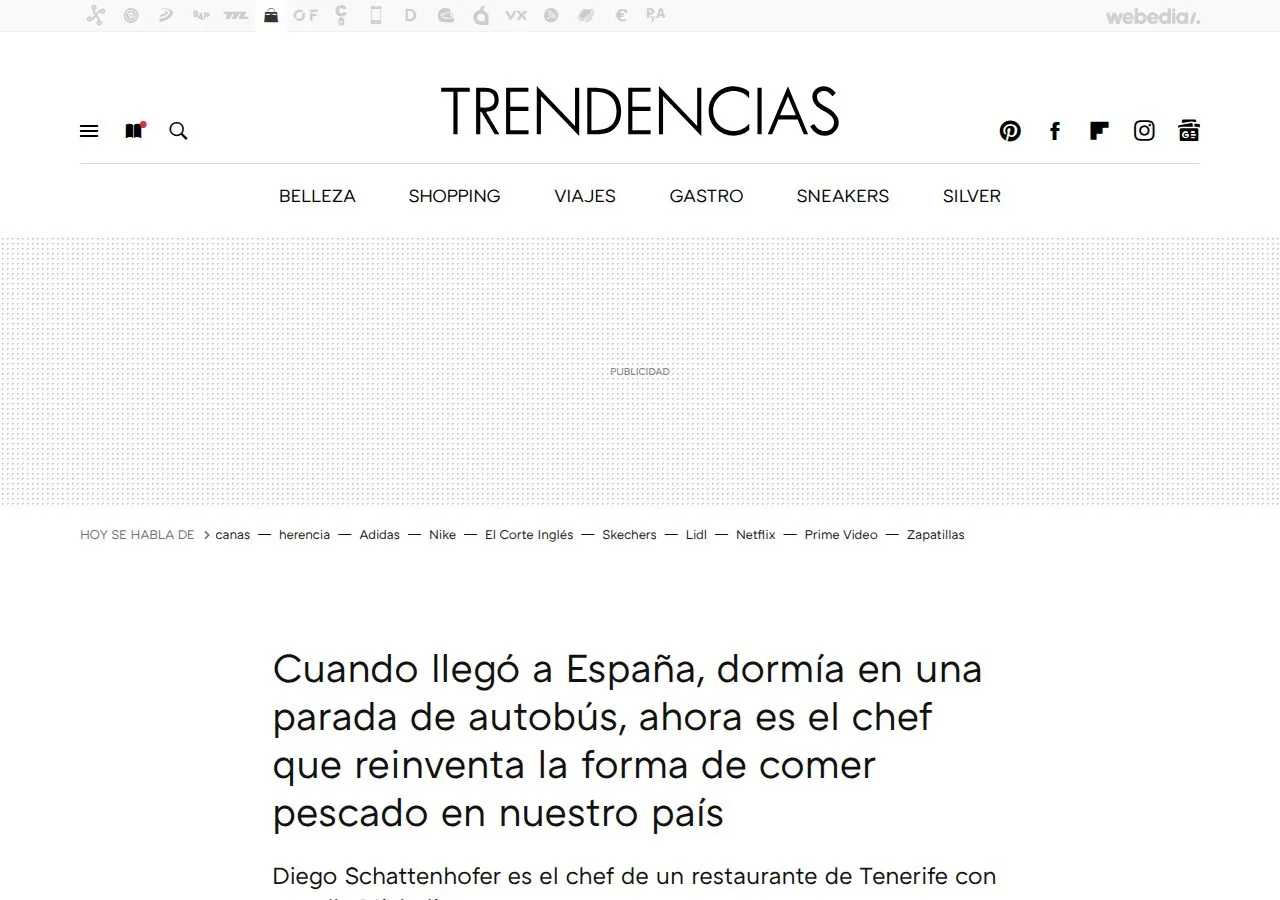
When he arrived in Spain, he slept at a bus stop; now he is the chef reinventing the way we eat fish in this country
by María Yuste, in Trendencias, 18 May 2026
Trendencias has published a long profile of Diego Schattenhofer in its Gourmet section, written by María Yuste. We received it with the joy of seeing told, in full and without shortcuts, the part of the journey that is almost never shown: the part that came before. It matters to us because the piece doesn’t stop at today’s kitchen, but explains where the way of working that sustains Taste 1973 comes from.
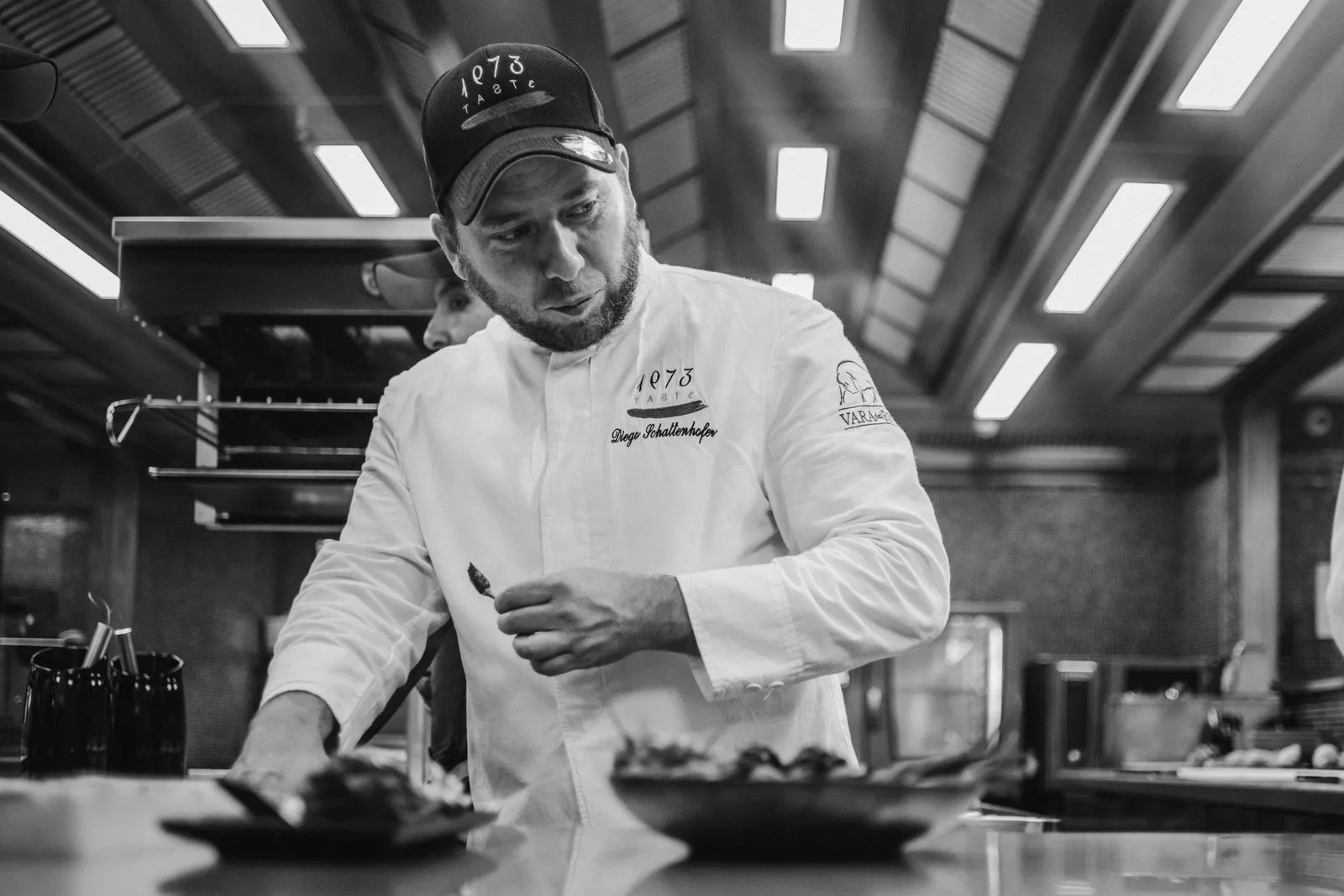
The profile begins in Chajarí, in the Argentine province of Entre Ríos, where Diego was born on 21 July 1978, into a family of Swiss roots and Sicilian tradition. In that home a household rule applied that ended up being a school of its own: no menu was repeated in two weeks. Then came the hard beginnings the outlet describes: early mornings, mopping floors and learning to cook professionally by reading borrowed notes, because there was no money to study.
His arrival in Spain was harsher still. As Trendencias tells it, “with no stable papers and no secure financial situation, he went through a particularly hard period in which he even ended up sleeping on the street and at bus shelters.” From there to Tenerife, where Diego has lived for more than twenty years and has spent more than a decade as executive chef of the Hotel Villa Cortés, and from there to the kitchen that opened its doors in January 2019.
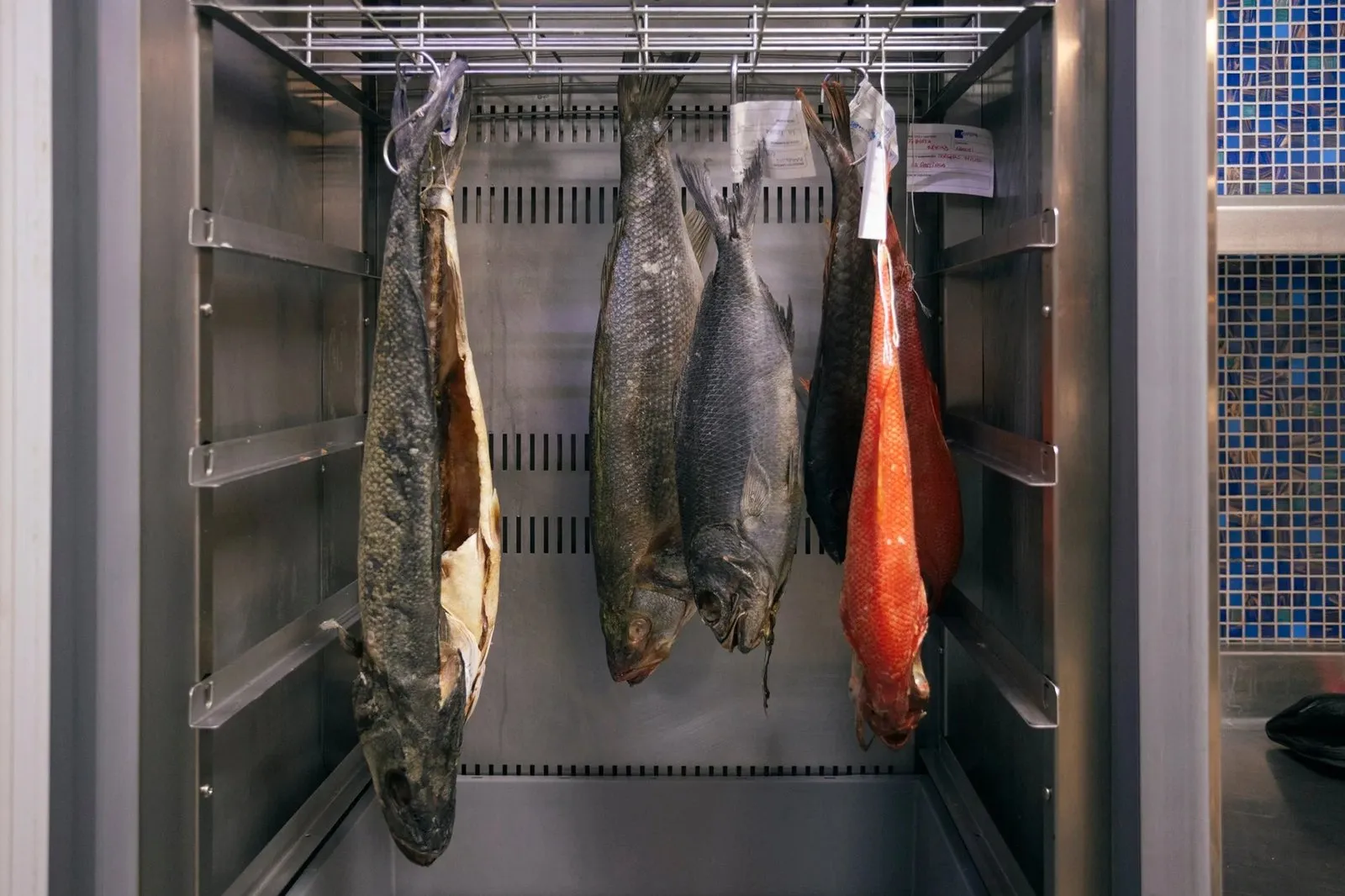
The outlet sums up the present like this: “Today he runs Taste 1973, the restaurant of the Hotel Villa Cortés, in Tenerife, awarded a Michelin star and turned into one of the most innovative places in Spain when it comes to the treatment of fish.” The core of that assessment is the controlled maturation of fish: working with temperature, humidity and oxidation to gain texture and flavour and make better use of produce that, taken whole, gives far more than we usually ask of it. It is the same territory we have been exploring with the science of maturation and with Gastrosinapsis, which the article describes as “a creative laboratory where cooking, science and narrative coexist”, with scientists, engineers and neurologists around the table.
The author sums up what the chef is after, and the line explains rather well why we keep at this: “a dish should not simply taste good. It should activate something more in the diner.” At Taste 1973 we put it another way, but it comes down to the same thing: we don’t create recipes, we create emotions.
Read the full piece at Trendencias: When he arrived in Spain, he slept at a bus stop; now he is the chef reinventing the way we eat fish in this country.
Thank you to María Yuste and Trendencias for the attentive eye and the respect with which they have told this story. We remain in the same kitchen, with the same questions.
Madrid Fusión 2025: Diego Schattenhofer among the Revolutionaries of Spanish Gastronomy