Diego Schattenhofer's culinary innovation: Exploring fish maturation in Tenerife
- Published
- Section
- Cooking
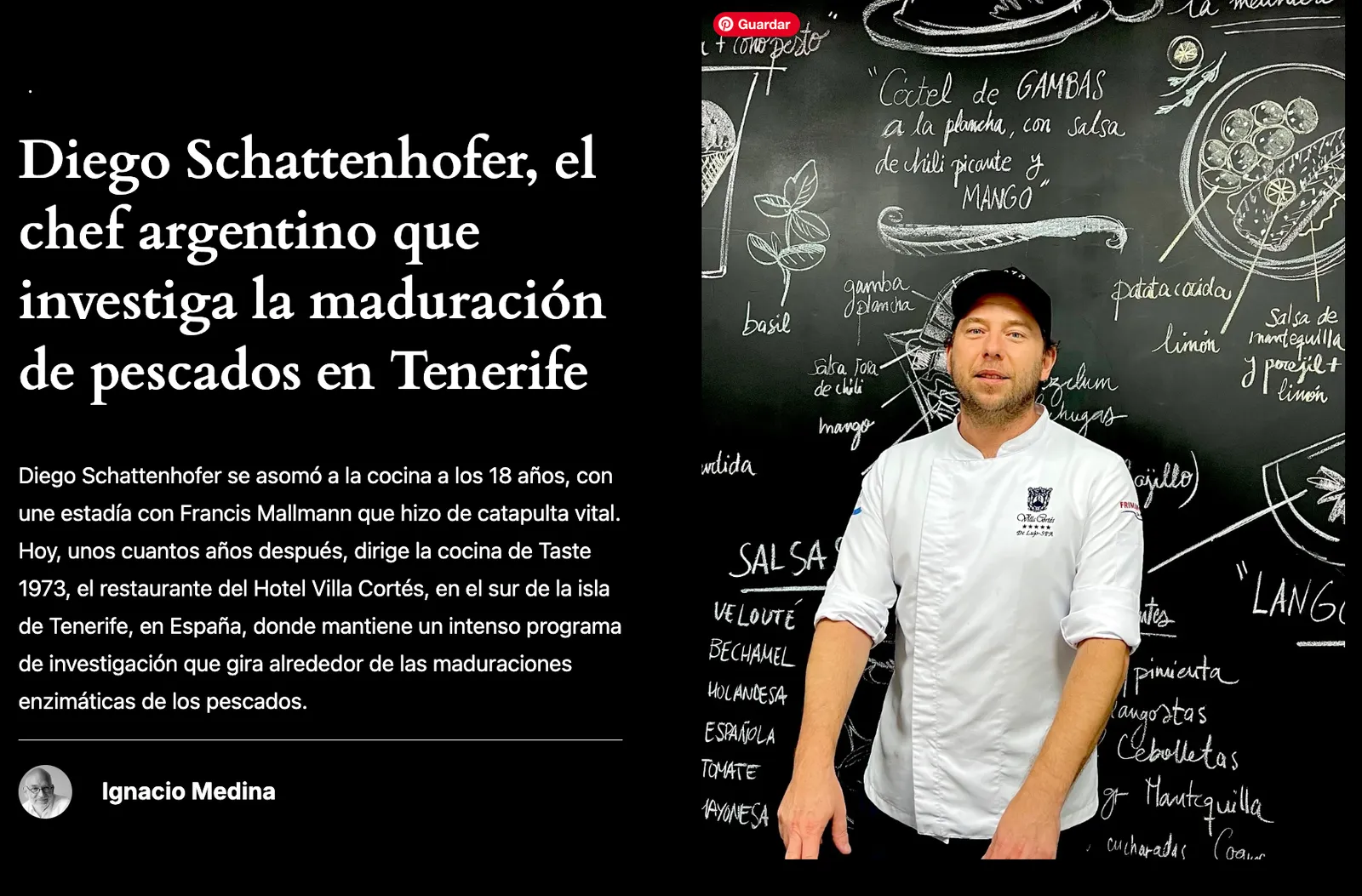
In the world of culinary innovation, few chefs stand out as much as Diego Schattenhofer. This talented Argentine chef, currently at the helm of Taste 1973 restaurant in Tenerife, Spain, is redefining Canarian gastronomy through his fascinating research into the enzymatic maturation of fish.
From Entre Ríos to the Canary Islands: Diego Schattenhofer’s culinary journey
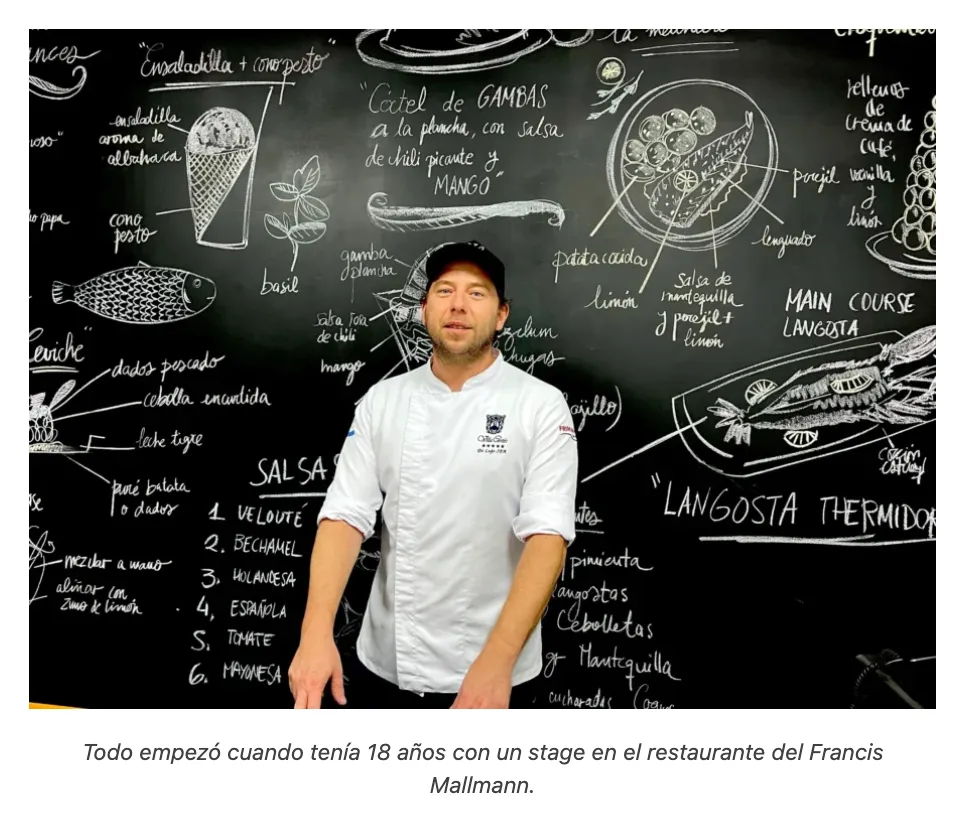
Born in Chajarí, Entre Ríos, Argentina, Diego Schattenhofer comes from a family with a rich history in hospitality and butchery. His passion for cooking took him to Buenos Aires at the age of 18, where he had a brief but inspiring spell with the renowned chef Francis Mallmann. He went on to learn from leading chefs such as Pablo Massey, Doris Irigoyen and Martín Arrieta.
The Argentine economic crisis known as “el corralito” marked a turning point in his career, prompting him to seek opportunities in Spain. After stints at prestigious restaurants such as Martín Berasategui’s in Lasarte, Schattenhofer finally found his home in the Canary Islands in 2007.
Taste 1973: A culinary laboratory in paradise
Today, Diego Schattenhofer heads the kitchen at Taste 1973, the restaurant of the Hotel Villa Cortés in Tenerife. With only 12 covers per service and open just four nights a week, Taste 1973 has become a true culinary laboratory where Schattenhofer can give free rein to his creativity and research spirit.
Schattenhofer’s effort and dedication have not gone unnoticed. In 2023, Taste 1973 received its first Michelin star, a recognition that has further boosted the restaurant’s visibility and prestige.
The enzymatic maturation of fish: A silent revolution
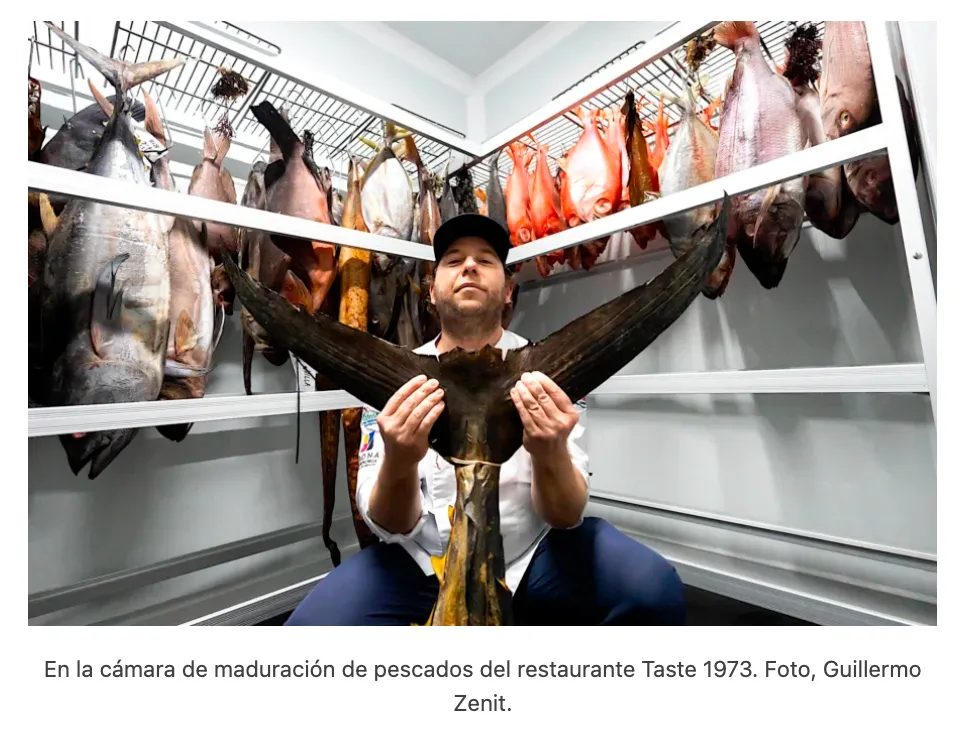
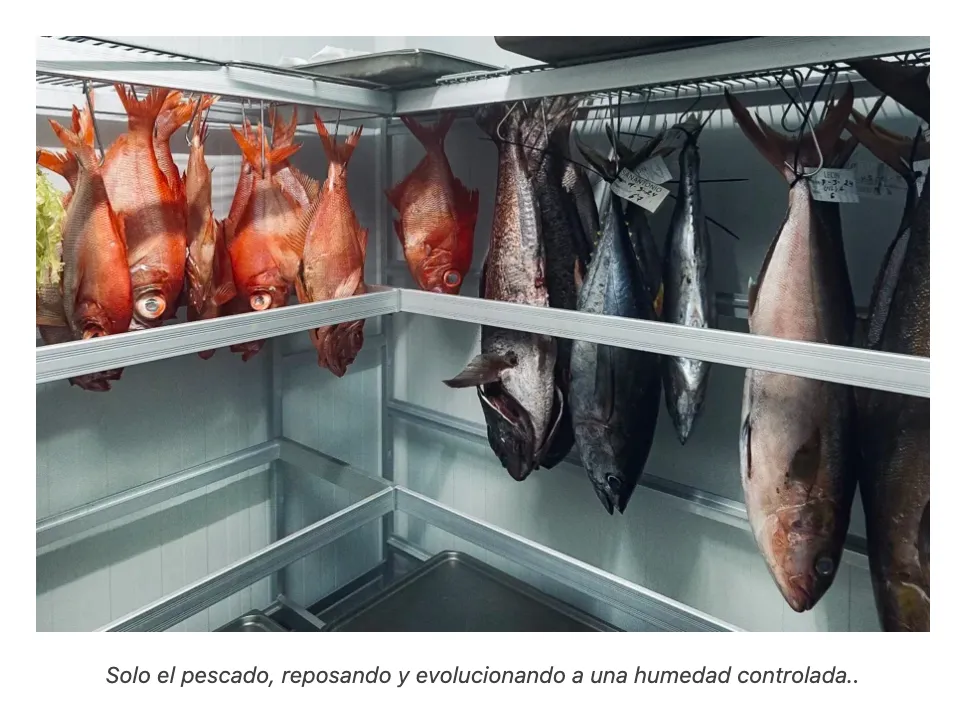
Schattenhofer’s true passion lies in his research into the enzymatic maturation of fish. This process, which involves hanging fish in controlled-environment chambers for extended periods, is challenging traditional perceptions of freshness and flavour in seafood.
How does enzymatic maturation work?
Schattenhofer explains the process simply: “It’s about hanging a fish in a chamber where there is nothing else; just the air and the fish, and the moisture held by the muscle itself”. The chamber’s conditions are crucial, with humidity controlled between 38% and 42%, depending on the amount of fish present.
This method allows the fish’s natural enzymes to work slowly, breaking down the muscle fibres and concentrating the flavours. The result is fish with an improved texture and a more complex flavour profile.
Ideal species for maturation
| Species | Optimal maturation time | Characteristics |
|---|---|---|
| Grouper | 30-40 days | Firm flesh, concentrated flavour |
| Wreckfish | 35-45 days | Delicate texture, intense flavour |
| Wahoo | 40-50 days | Lean flesh, complex flavour |
Not all fish are suited to this process. Schattenhofer has discovered that species such as grouper, wreckfish and wahoo respond particularly well to maturation. These firm-fleshed fish can mature over extended periods, some reaching 40 to 50 days.
On the other hand, flatfish and crustaceans such as the carabinero prawn are not suited to maturation, as they tend to quickly develop ammoniacal flavours.
Diego Schattenhofer’s Culinary Innovation
The Chef
- Argentine by birth, cooking in Tenerife since 2007
- Executive chef of Taste 1973 at Hotel Villa Cortés
Accolades
- Michelin star awarded in 2023 to Taste 1973
- Pioneer of Canarian gastronomic innovation
Enzymatic Maturation
- Innovative process in controlled chambers
- Improves texture and concentrates the flavour of fish
- Ideal species: grouper, wreckfish and wahoo
Research
- Collaboration with the IEO-CSIC Oceanographic Centre
- Study of bacteria during maturation
- Guaranteeing food safety
Beyond the Kitchen
- GastroSinapsis: a network of more than 50 professionals
- A multidisciplinary approach to gastronomy
- Preserving the Canarian culinary heritage
“Even if it loses a little water, you gain juiciness on the palate”.
Research and food safety
Schattenhofer’s research goes beyond simply experimenting with flavours. In collaboration with the Canary Islands Oceanographic Centre IEO-CSIC, he is conducting a rigorous study to identify the bacteria present during the maturation process and guarantee the food safety of the final products.
Initial results are promising, confirming that the process is safe and free from dangerous pathogens such as listeria, salmonella and staphylococcus. The next step is to identify the beneficial bacteria that help break down the muscle fibres, with a view to potentially isolating them and using them to further improve the process.
Beyond maturation: A holistic approach to gastronomy
Schattenhofer’s passion for culinary research is not limited to fish maturation. Through his GastroSinapsis initiative, he has brought together more than 50 professionals from various fields to explore the intersection between gastronomy and other disciplines.
This multidisciplinary approach is reflected in every aspect of Taste 1973, from the careful selection of more than 100 Canarian cheeses to the attention to detail in every dish on the tasting menu.
The future of Canarian gastronomy
Diego Schattenhofer is not only innovating in the kitchen, but is also helping to preserve and promote the rich gastronomic heritage of the Canary Islands. His work with the Tenerife goat and local goat farmers demonstrates his commitment to sustainability and the region’s culinary traditions.
As he himself points out: “The goat is the animal of the future: it uses little water, eats little and can withstand an inhospitable climate”. This philosophy of adaptation and respect for the local environment is fundamental to Schattenhofer’s culinary vision.
Conclusion: A chef in constant evolution
Diego Schattenhofer represents a new generation of chefs who combine a passion for cooking with a scientific approach and a deep connection to the land. His work at Taste 1973 and his research into fish maturation are not only elevating Canarian gastronomy to new heights, but are also laying the foundations for a more sustainable and conscious way of cooking and eating.
As he continues to explore the limits of what is possible in the kitchen, Schattenhofer reminds us that true culinary innovation is not just about creating new flavours, but about reimagining our relationship with ingredients and the environment around us.
Source: Adapted from an article originally published in 7 Caníbales.