Diego Schattenhofer Brings Enzymatic Fish Maturation to the Basque Culinary Center
- Published
- Section
- Congresses
A Day in Donostia to Talk About Time
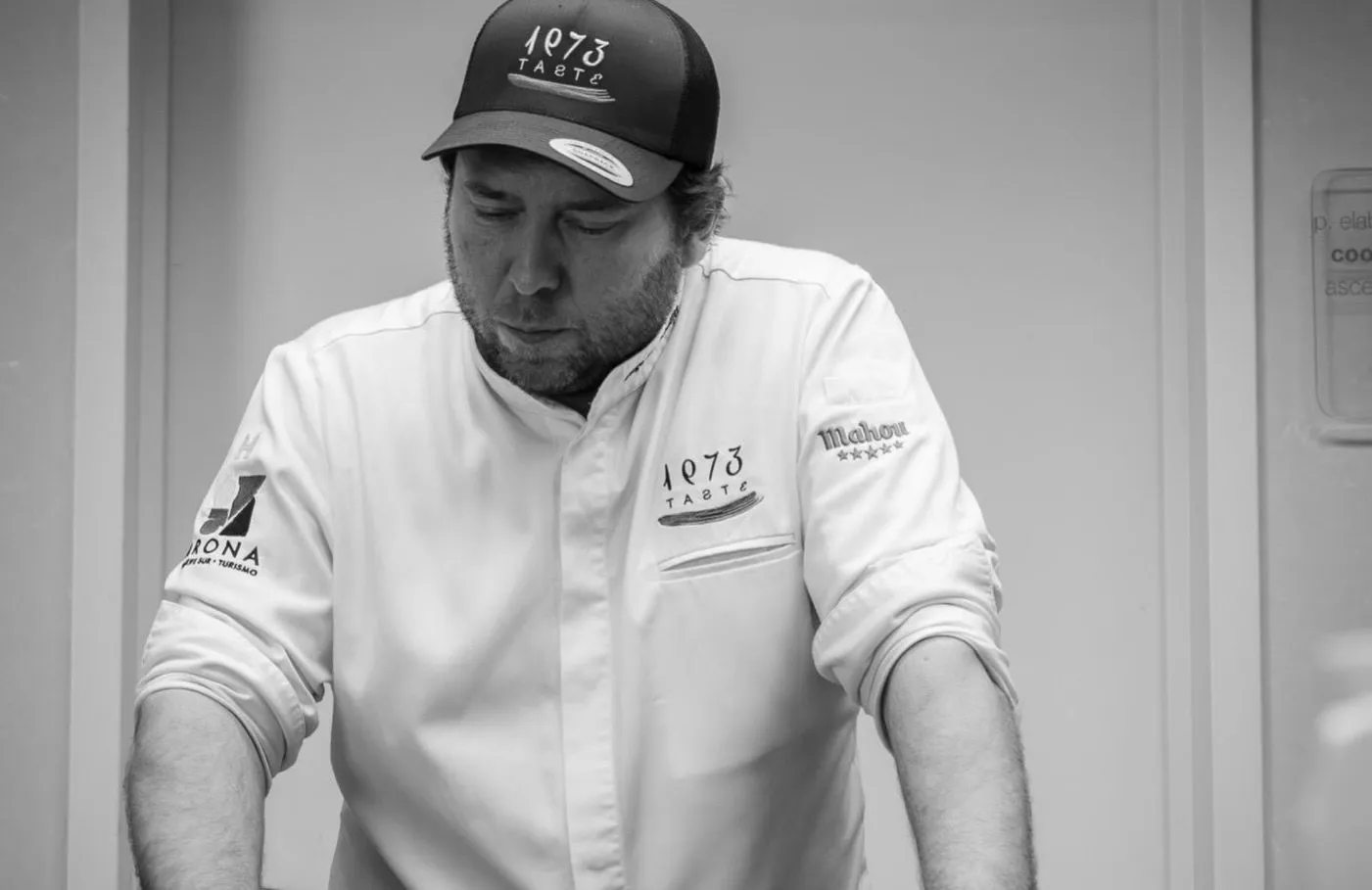
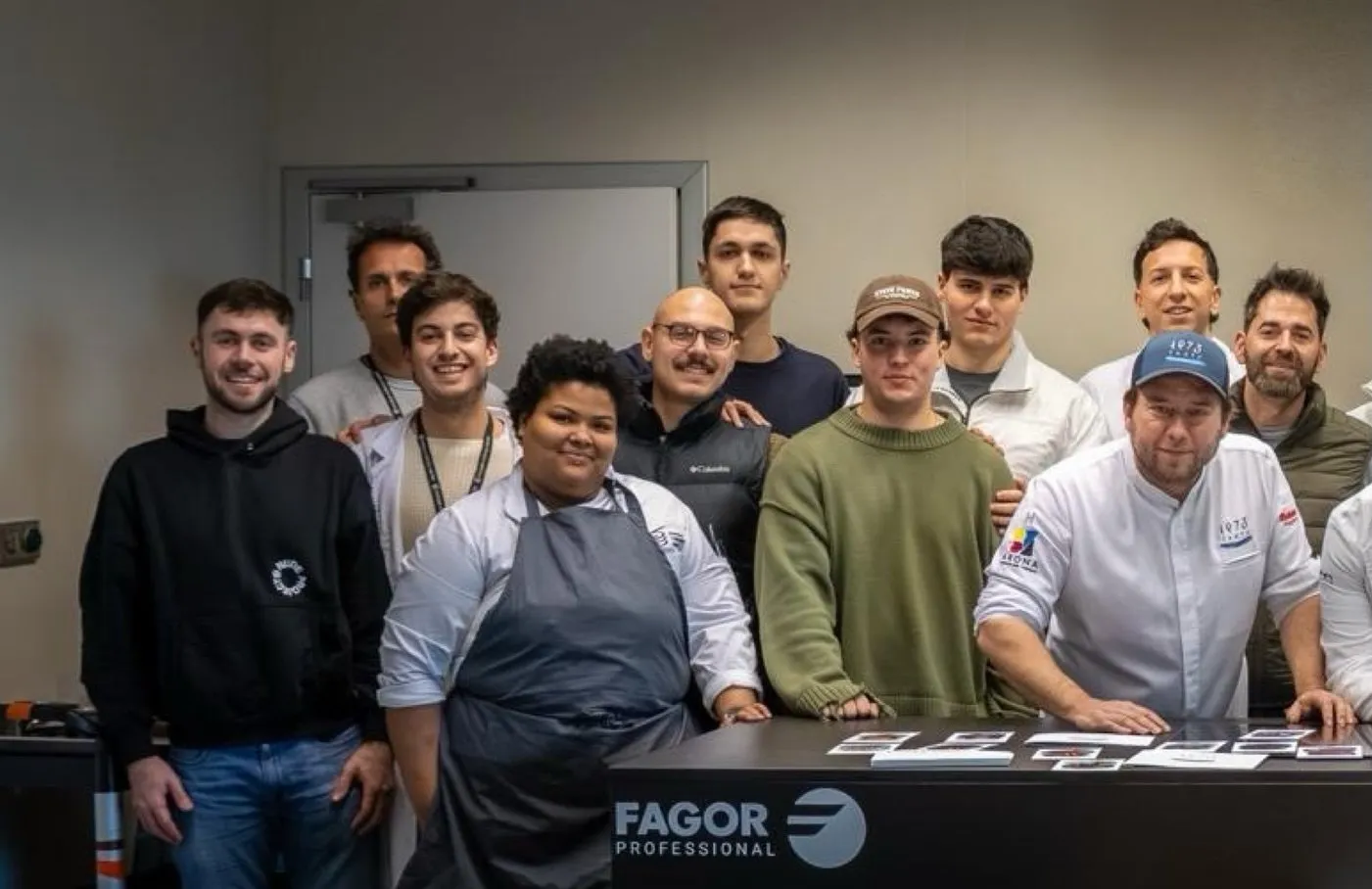
In early February 2026 we travelled to Donostia-San Sebastián to spend a day at the Basque Culinary Center, the gastronomic education and research institution that has been based there since 2011. We wrote about it on Instagram the following day, still turning over what had been discussed: “Yesterday we experienced a very special masterclass at the Basque Culinary Center, an intense session of exchange, reflection and knowledge.”
It is worth pausing on that word, exchange. On paper the engagement was a masterclass on enzymatic fish maturation; in practice it was a long conversation, with questions flowing in both directions and the kitchen right there in the middle of it. It is the way of working we like best and, probably, the only one that justifies the journey from Tenerife.
Three Linked Ideas
What we brought back in our luggage is summed up in a paragraph we wrote on our return: “We shared our view of the enzymatic process as the basis for understanding the transformation of produce, how cooking techniques are not just methods but conscious decisions, and how the internal temperature of animal muscle defines texture, juiciness and the true point of doneness.”
There are three ideas, and they are linked. The first is that the enzymatic process is not a side effect of the passing days, but the key to understanding what is happening inside a piece. The second is uncomfortable for anyone raised on the recipe book: choosing a cooking method — the degree, the medium, the duration — is making a decision about the produce, not applying an inherited procedure. And the third is the one that always sparks the most discussion, because it means looking at a thermometer instead of a clock: the internal temperature of the muscle is what decides texture and juiciness, and therefore the true point of doneness of a fish.
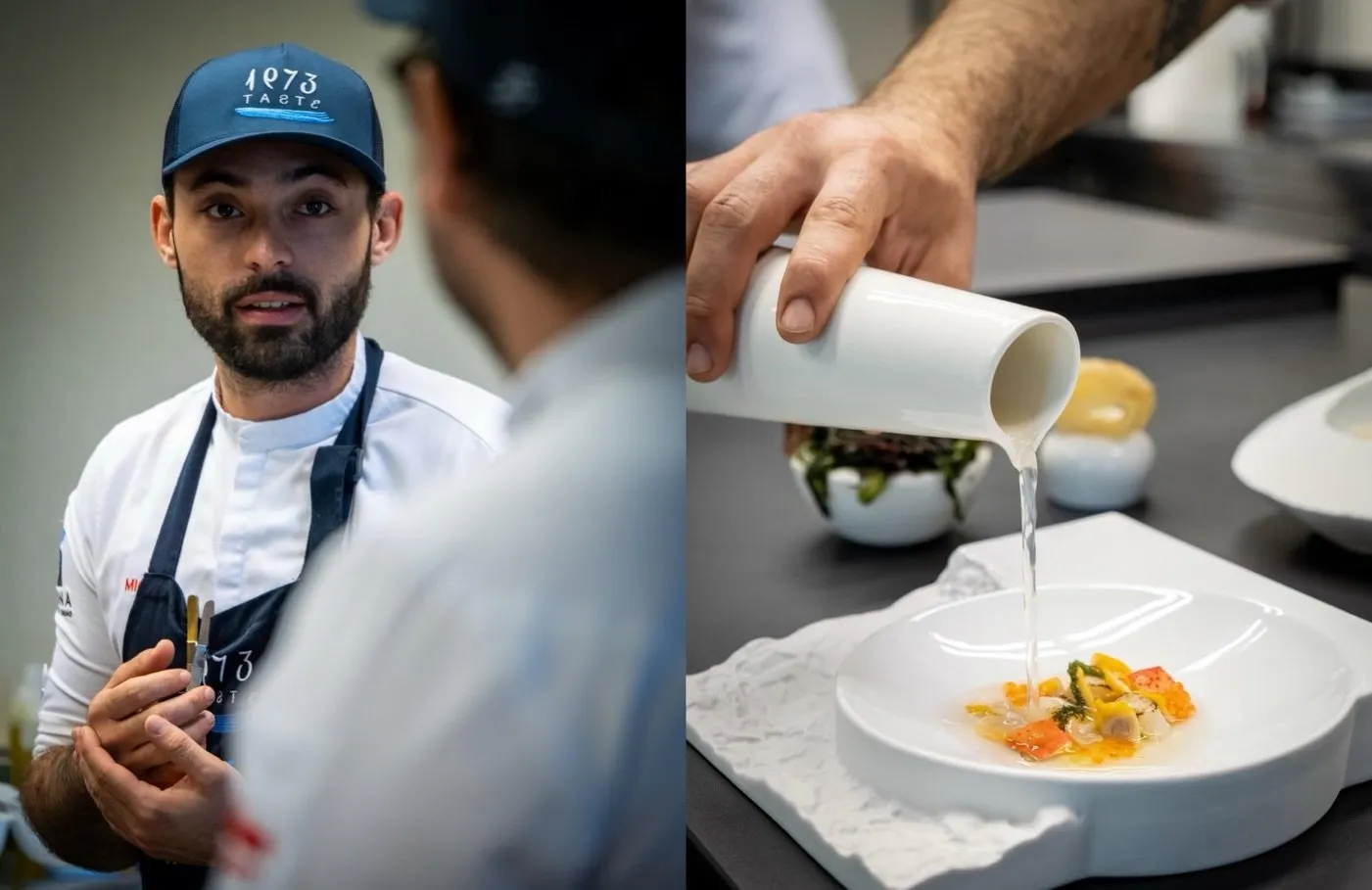
Then came the subject that has occupied us in Arona for years and which gave plenty to talk about in Donostia: “We also talked about time as an invisible ingredient, especially in fish: understanding each species, each structure, each reaction, and respecting its rhythm to reach the produce’s fullest expression.” That idea of time as an ingredient is exactly what underpins our work on fish maturation in Tenerife, and explains why at Taste 1973 there is an ageing chamber before there is a recipe.
Eight, Twenty, Forty, Fifty-Two
Three days after the session it was the Basque Culinary Center itself that reported the session from its own account, and it did so putting figures on the table: “Diego, from Tenerife, has revolutionised tradition by teaching us that fish does not always have to be consumed ultra-fresh. Eight, twenty, forty or fifty-two days… these are just some of the maturation periods he experiments with, achieving surprising flavours and textures that transform seafood cuisine with creations [sic] like these.”
We’re grateful for the headline, though at home we’d put it less dramatically: it isn’t about denying ultra-fresh fish, but about no longer treating it as the only possible answer. Eight days and fifty-two days are not the same produce, nor do they call for the same cooking method, and between those two extremes there is far more room than is usually recognised in Canarian gastronomy and in any other coastal cuisine.
Thanks to Our Hosts
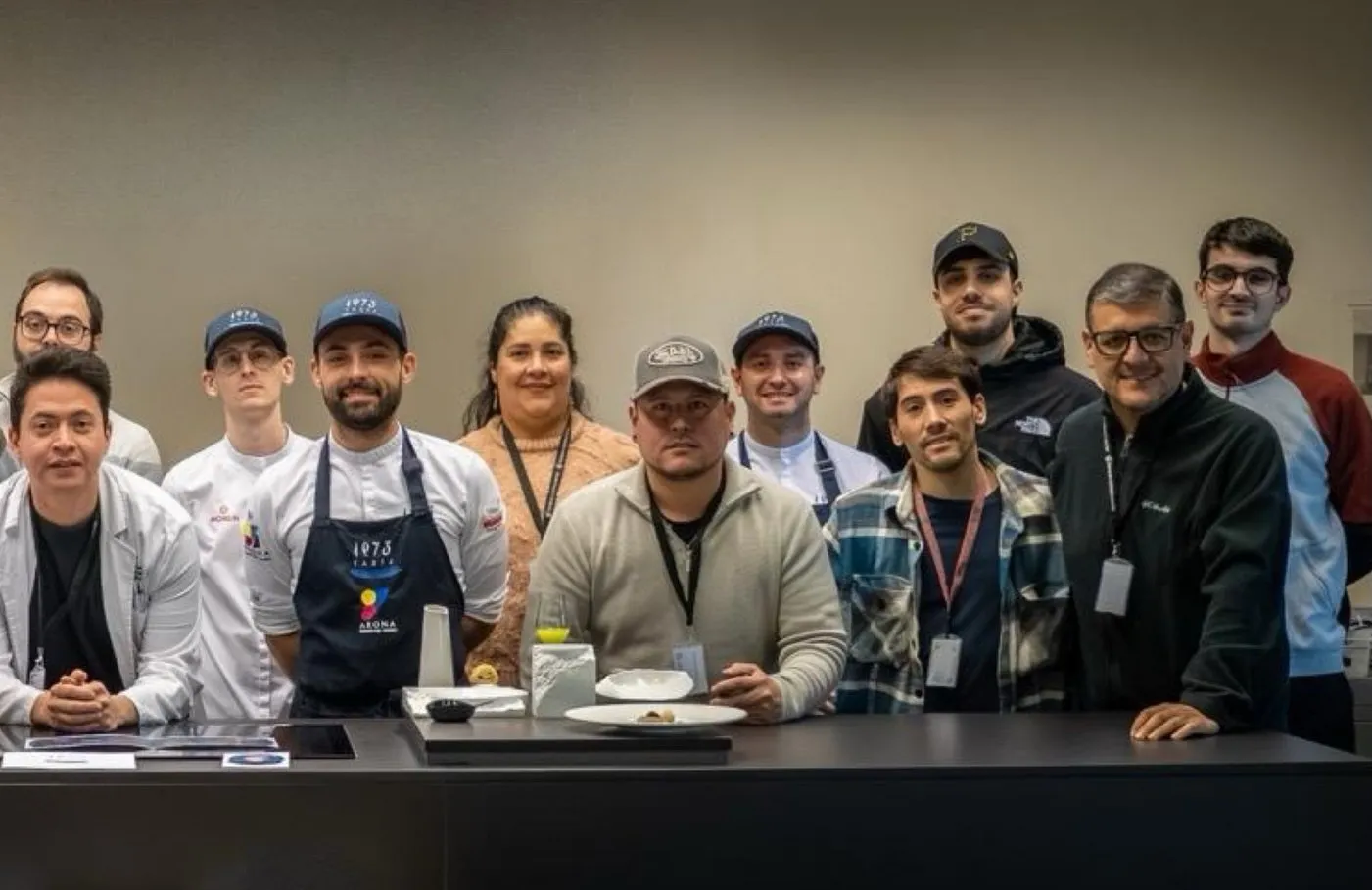
A session like this isn’t carried by the speaker, but by whoever organises it. We wrote it exactly like this: “Thank you to the Basque Culinary Center, thank you to Cristian, to Luis Arrufat, and to that whole great family led by Joxe Mari, for creating spaces where knowledge is shared, questioned and raised higher.” Behind those names are Cristian Marquina, Luis Arrufat and Joxe Mari Aizega, of the Basque Culinary Center, to whom the post also added @john.regefalk. We owe all of them a day that flew by.
We put it in writing that same day and repeat it now: “A privilege to be part of this.”
Both accounts of the day are on Instagram: ours, at @1973taste.restaurant, and the one from the Basque Culinary Center.
The science behind meat maturation
Diego Schattenhofer, among the Revolucionarios of Spanish gastronomy
Frequently asked questions
What was Diego Schattenhofer's masterclass at the Basque Culinary Center about?
How many days is fish matured at Taste 1973?
What is the Basque Culinary Center?
You may also like
Diego Schattenhofer at Madrid Fusión 2026: judge of "Cocinando el Mar" and the Dreams panel on matured fish
Congresses
Diego Schattenhofer at the VIII Encuentro de los Mares: new horizons for seafaring cuisine
Congresses
Reinventing the hot buffet: Diego Schattenhofer at the VI Congreso Nacional CLAVE F&B
Congresses