Diego Schattenhofer in El Digital Sur: first findings on matured goat meat
- Published
- Section
- In the press
Study on Goat Meat: here are the first findings from Chef Diego Schattenhofer and Dr Marichu Fresno
By Dux Garuti in El Digital Sur, 7 May 2024
After months of laboratory and kitchen work, El Digital Sur reports the first findings of the dry-maturation study on Canarian goat meat signed by Diego Schattenhofer and Dr Marichu Fresno. We’re glad to see the press of southern Tenerife cover a piece of work that brings science closer to the kitchen and gives value back to an ingredient our islands have always had.
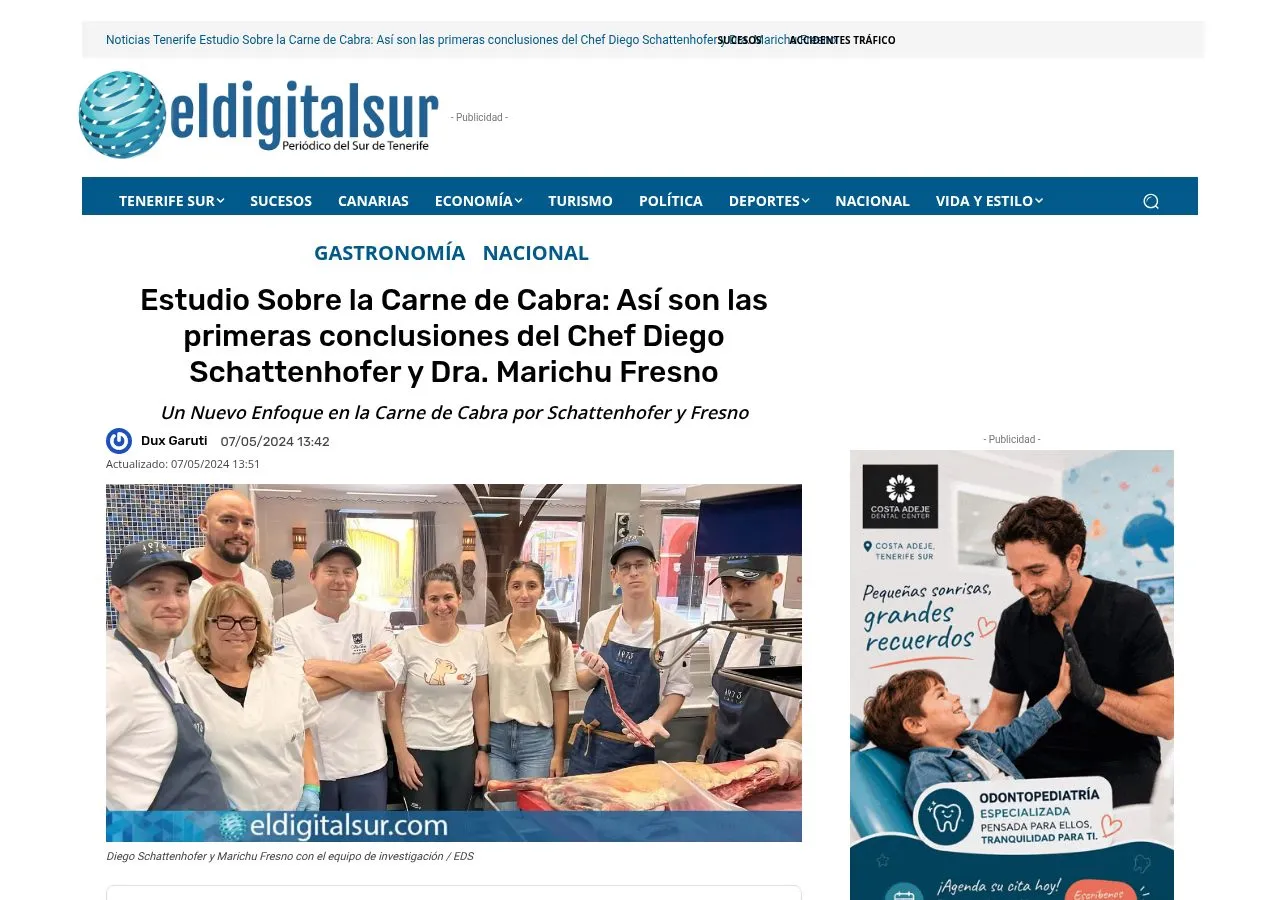
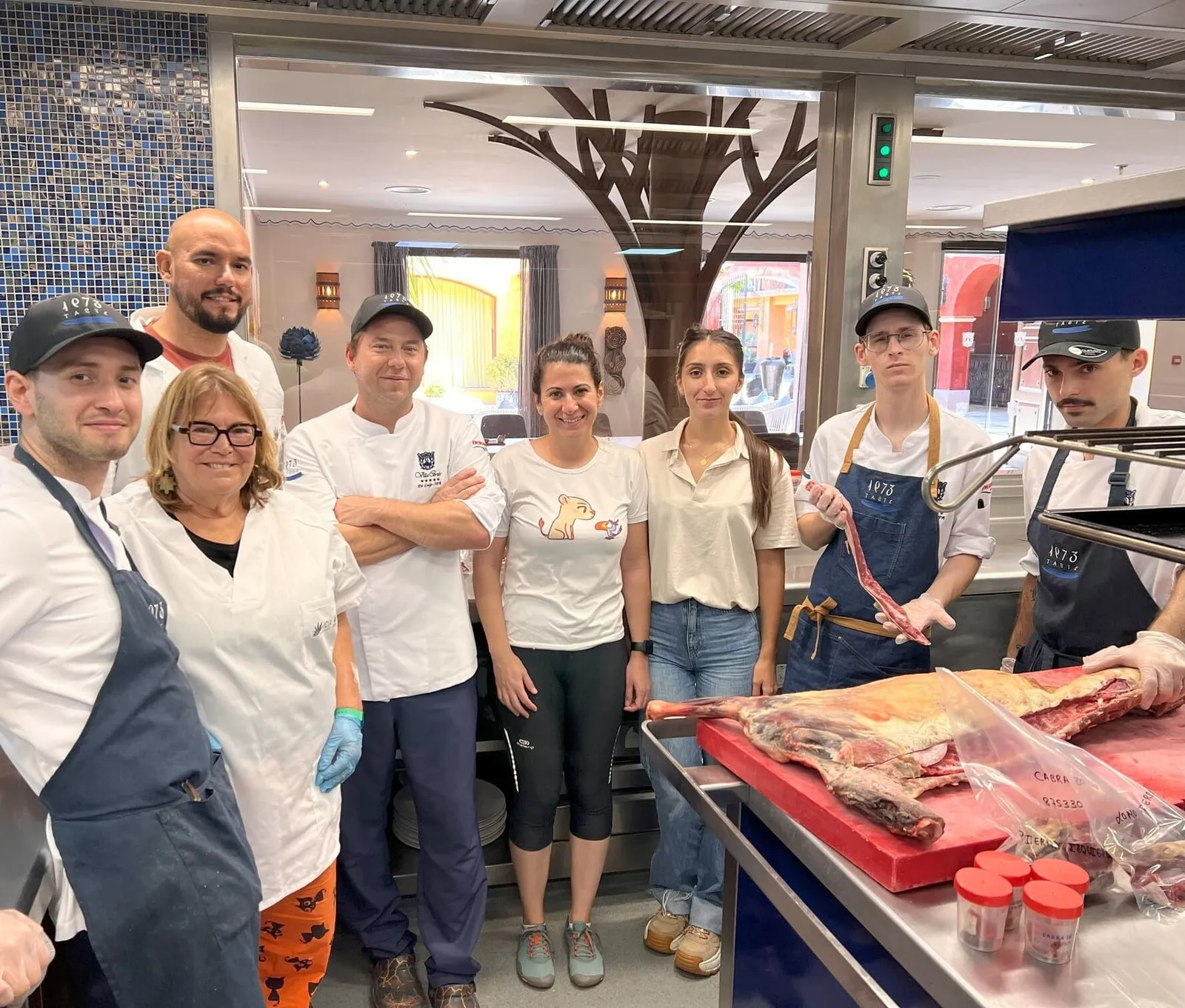
The piece, signed by Dux Garuti in the Canarian Gastronomy section, presents the work “Revaluing goat meat through maturation”, carried out jointly by Diego Schattenhofer, executive chef of Hotel Villa Cortés and of Taste 1973, and Dr Marichu Fresno, doctor of veterinary medicine at the Canary Islands Institute of Agricultural Research (ICIA). The trial started from thirty adult females of the Tinerfeña breed, Sur ecotype, slaughtered at the Matadero Insular de Tenerife, the island abattoir.
The experimental design compared three controlled maturation times — 48 hours, 30 days and 60 days — in a chamber kept between 0 and 2 degrees Celsius and at a relative humidity of 85 ± 5%. At each of those points the pH, water-holding capacity, fat content and aromatic development of the meat were measured.
The analysis detected more than 130 aromatic compounds, which also increase with maturation. It’s largely uncharted ground, as the outlet notes: “as far as could be researched, this process has not been studied in this species.” The conclusion the newspaper highlights is that “controlled dry maturation, with a simple procedure, makes it possible to obtain a genuine product.”
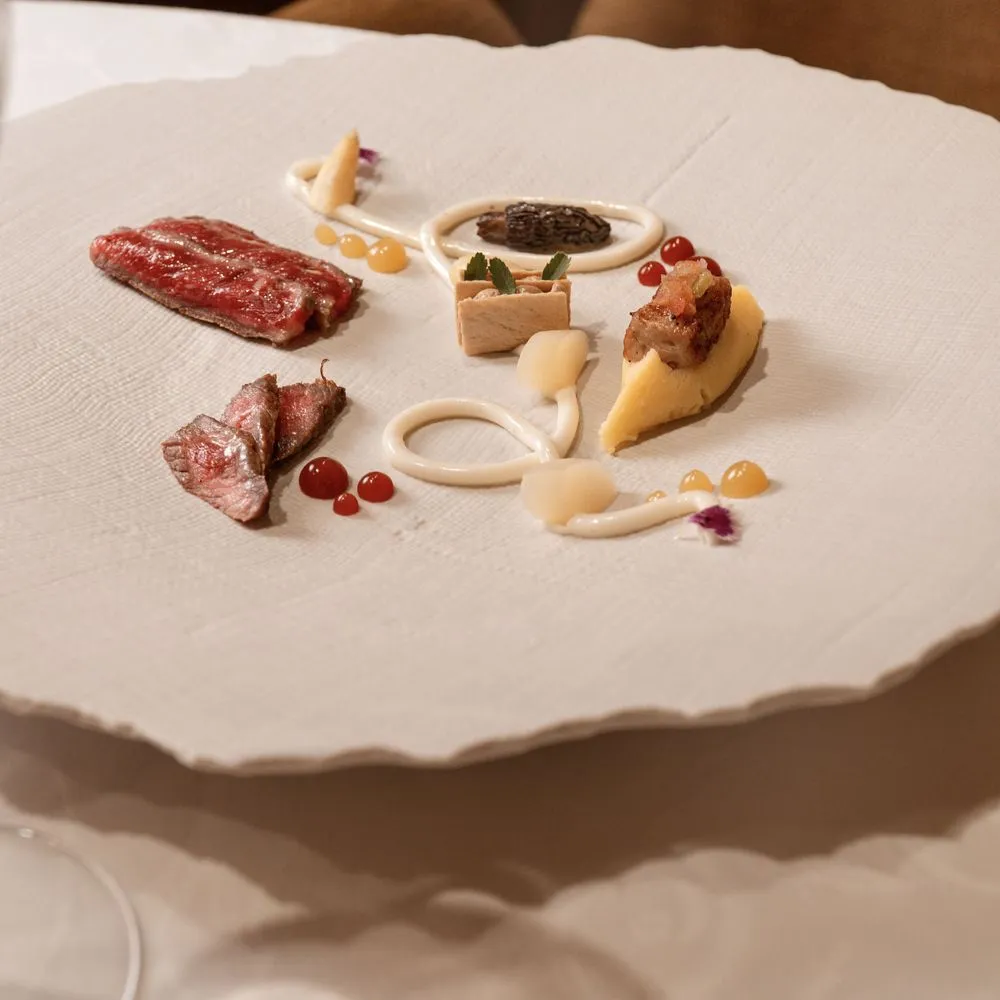
That nuance — simple procedure, genuine product — is what opens up new culinary uses for carcasses the sector treats as a by-product once the animal’s dairy life is over. It’s the line we follow in the study of matured goat meat and one that can’t be understood without the history and tradition of the Canarian goat: a meat much loved in the islands, almost always stewed, that maturation brings back to the table with a different reading. Having a local newspaper tell this story while the study is still under way encourages us to keep measuring, cooking and telling it.
Read the full piece at El Digital Sur: Study on Goat Meat: here are the first findings from Chef Diego Schattenhofer and Dr Marichu Fresno.
Matured goat meat: a delicacy full of promise, in 7 Caníbales