Vieja: the parrotfish of Canarian cooking
- Term
- Vieja
- Tags
- Fish · Canary Islands · Recipes
- Published
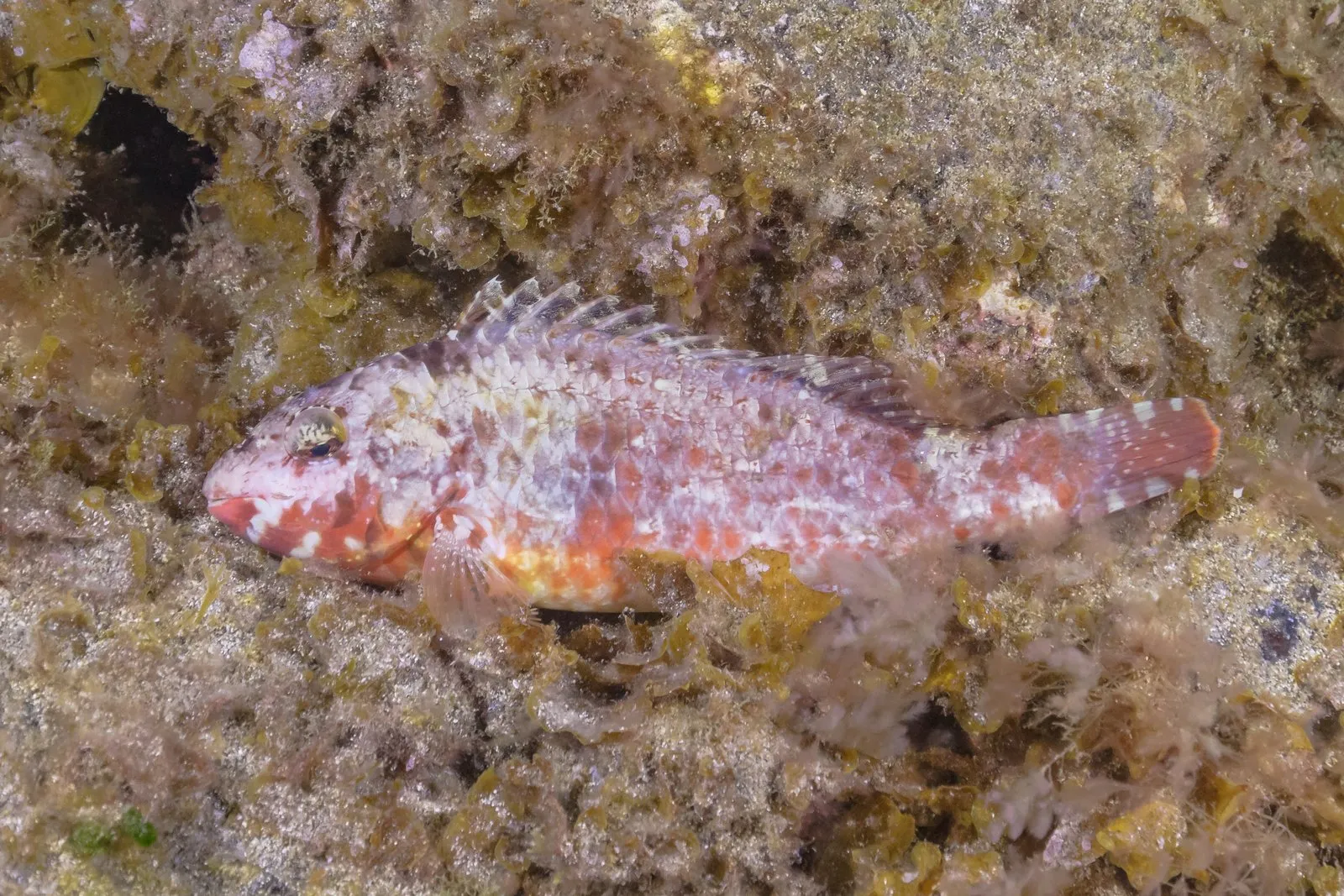
Vieja is the parrotfish Sparisoma cretense, a species of the eastern Atlantic and the Mediterranean, and one of the fish of Canarian cooking. The mouth is shaped like a beak and with it the fish scrapes the rock. At the market and in the pot the name is vieja. On the official lists it also appears as loro viejo or vieja colorada.
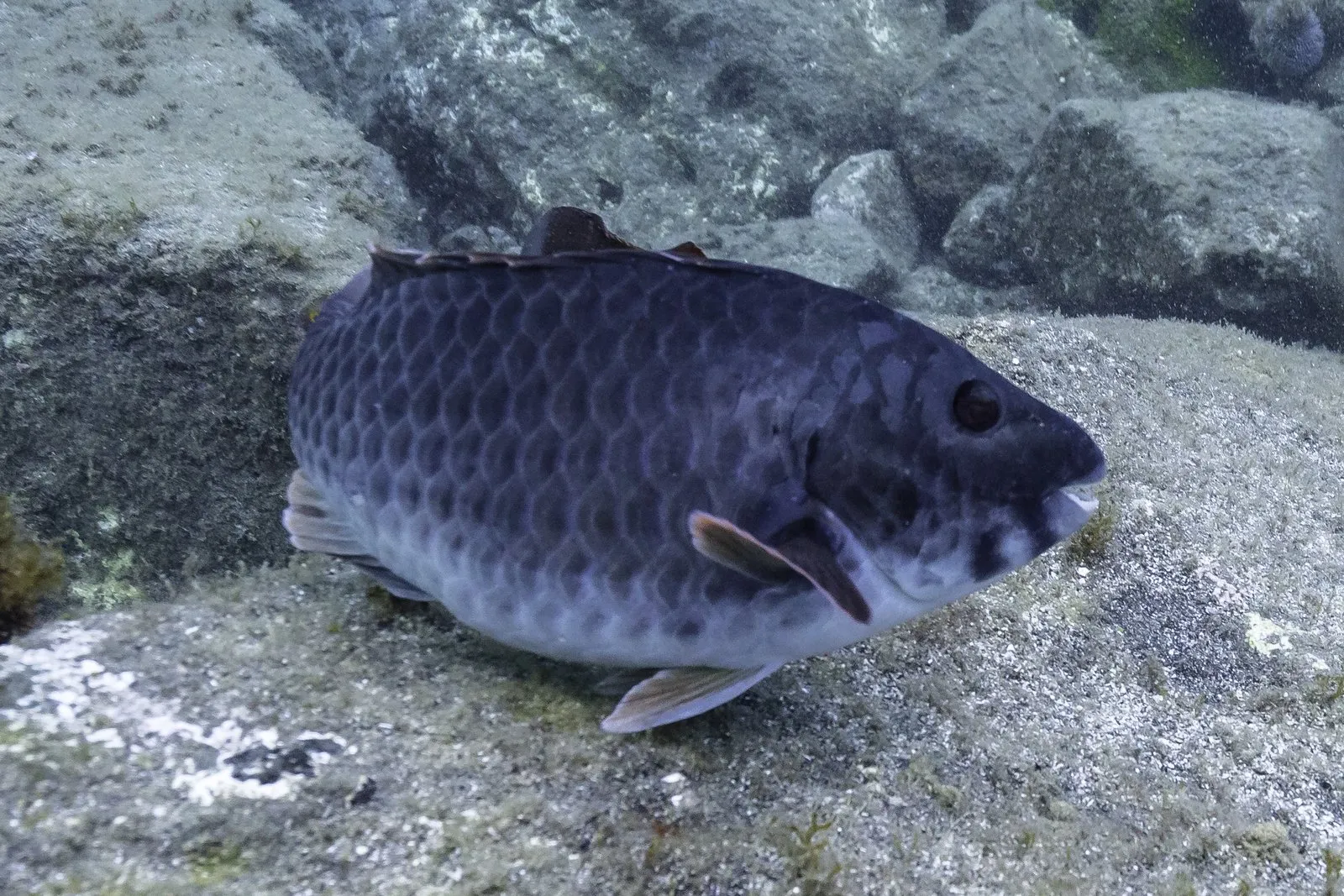
The three photographs are the same animal in three waters: the Teno-Rasca marine strip, in Tenerife; Monte da Guia, in Faial; and Madeira. The livery changes with sex and with the bottom. The species does not change. Anyone buying “vieja” in the archipelago is buying Sparisoma cretense, not a wrasse and not a sea bream of a similar colour.
The fish
The Canary Islands Biodiversity Data Bank accepts Sparisoma cretense (Linnaeus, 1758) as valid and gives it the local name vieja. FishBase places it in the family Scaridae, extends it through the eastern Atlantic and the Mediterranean — the Canaries inside that range — and marks it as a fishery species. The IUCN assessment that FishBase reproduces is Least Concern, dated 15 September 2009.
That fixes the animal and does not fix tomorrow’s quota. The distribution record says where it lives. Size is stated by the fishing rule, and in the Canaries there are two, because internal water and external water are not written by the same administration.
The Spanish Institute of Oceanography follows the artisanal fishery of this species. In 2025 IEO-CSIC published a report on nominal catch and effort for three demersal species of that fleet: vieja, bocinegro and sama de pluma, with series from 2007 to 2024. The abstract analyses trends. It is not a minimum size and it does not replace the order of the day on which one goes out to fish.
Two sizes, two waters
The regional ministry responsible for fisheries publishes the sizes on two pages, and the two name this fish with a different measure:
| Water | Where the ministry publishes it | Name on the list | Size |
|---|---|---|---|
| External waters of the Canarian grounds | National rules | Loro viejo, vieja colorada | 22 cm |
| Internal waters of the archipelago | Autonomous rules | Vieja | 20 cm |
The national page refers, for several of those sizes of the Canarian grounds, to Royal Decree 560/1995 and to later amendments. The autonomous page refers to Decree 155/1986, on minimum sizes in internal waters. The scientific species is the same in both rows. The common name in the column changes and the centimetre changes, because the competence changes.
Measuring is work for the market and for inspection, not for the eye on the plate. A vieja under the size that applies to that water is not “used up” in the kitchen. The piece that enters the pot has already passed that filter. Madeira and the Azores, where the other two photographs were taken, have their own rule: the chart above is the Canarian one.
Vieja sancocho
The Gran Canaria Tourist Board publishes vieja sancocho among the main courses of the traditional recipe book. The piece is a medium one. It is cleaned and put in a low vessel with the onion and the tomato whole, covered with water, and parsley, saffron, salt and a little oil are added. It is left on the heat until the fish is cooked. It is taken out and served with mojo and wrinkled potatoes. The same text says that vieja is also done in the oven or opened along the back.
That is a short boil with vegetables, not a long-sauced stew and not an escabeche. The point is that of cooked fish, with the flesh still in flakes. Too long a boil dries it: the Tourist Board does not give a minute, it gives the criterion of “until it is cooked”. The mojo and the wrinkled potatoes are the garnish that recipe book writes, not a later ornament.
In the Canaries
The root is the market and the pot on the islands with a fishery for this parrotfish. Tenerife, Gran Canaria, Lanzarote, Fuerteventura, La Palma, La Gomera and El Hierro share the name vieja and the frame of the two sizes, each in its water. La Graciosa depends on Lanzarote and, inside the marine reserve, the rule of that space governs.
On a menu, the honest name is vieja or Sparisoma cretense, with the season and the size already settled at purchase. “Parrotfish” alone can be another species of the family. Pollack is another fish of the archipelago and another page. Canarian limpets share a table of Canarian produce and do not share anatomy: one is Patella, the other is this Scaridae.
In Diego’s work
In 2026, at Madrid Fusión, Diego Schattenhofer was a juror of the contest in which the finalists cooked vieja. The article on that edition of the congress tells it: the product was this fish, and the winning dish named it in the title. The maturation of fish, which he spoke about at the other table of those days, is another process, distinct from the sancocho.
Related terms
- Wrinkled potatoes — the garnish the Tourist Board’s recipe book puts beside vieja sancocho.
- Canarian limpets — another product of the Canarian sea, with another size and another animal.
- Pollack — a different fish of the Canarian market, which is not this parrotfish.
- Omega-3 fatty acids — the page that cites vieja among the local catch, beside mackerel.
- Sensory appreciation — how the mouthful is described without changing the scientific name.
Sources
- Canary Islands Biodiversity · Sparisoma cretense, local name vieja
- FishBase · Sparisoma cretense
- WoRMS · Sparisoma cretense
- Fisheries ministry · sizes, national rules
- Fisheries ministry · sizes, autonomous rules
- IEO-CSIC · catch and effort for vieja, bocinegro and sama de pluma
- Gran Canaria Tourist Board · vieja sancocho, archive copy
 — view the full-size photo
The same species at Faial, Azores. The fish is not a Canarian endemic: the eastern Atlantic spreads it beyond the archipelago. 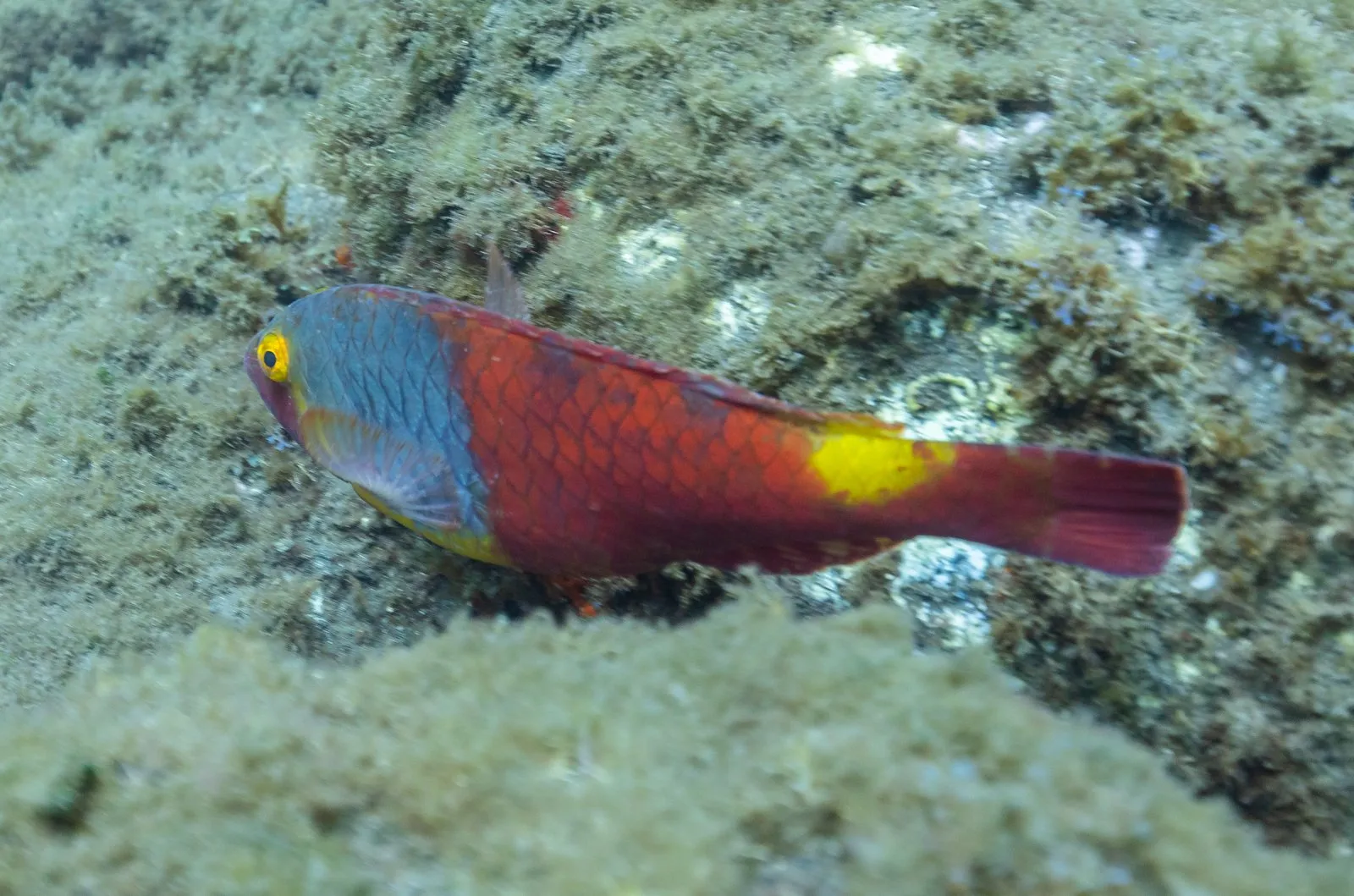 — view the full-size photo
Vieja in Madeira. Another Macaronesian island, the same species and another water. The legal size of the Canaries does not travel to this coast.
Photos: 1. Diego Delso (opens in a new tab) (CC BY-SA 4.0 (opens in a new tab)) · 2. Diego Delso (opens in a new tab) (CC BY-SA 4.0 (opens in a new tab))
Frequently asked questions
What is vieja?
What is the minimum size of vieja?
What is vieja sancocho?
Is vieja an oily fish rich in omega-3?
Where does it live?
Who watches the fishery in the Canaries?
Also in the glossary
Wagyu
Wagyu is the meat of four Japanese breeds and of their crosses with one another, graded by the JMGA with a yield grade and a quality grade.
Water activity (a_w)
Water activity (a_w) is a crucial concept in food science that refers to the amount of free water available to take part in chemical reactions and microbial growth in food.
Xanthan gum
Xanthan gum is a natural polysaccharide used as a thickening and stabilising agent in food.